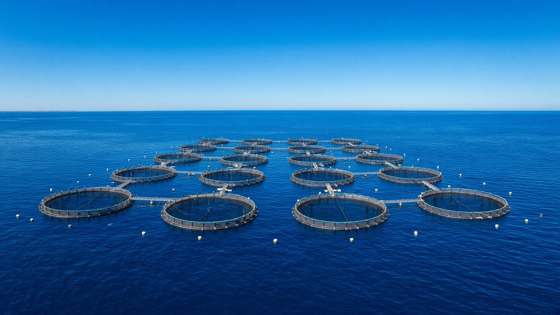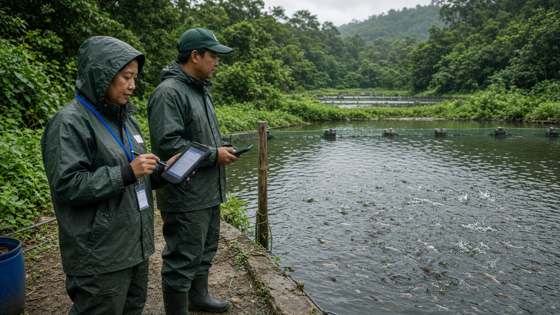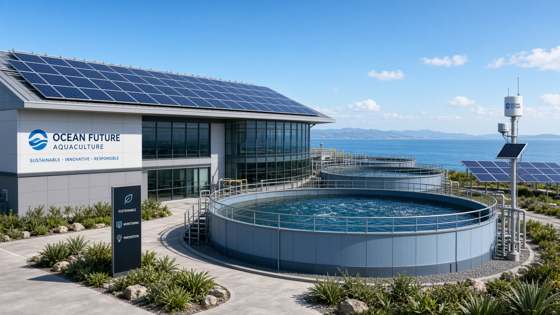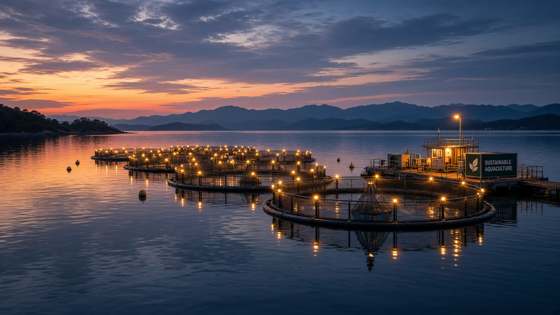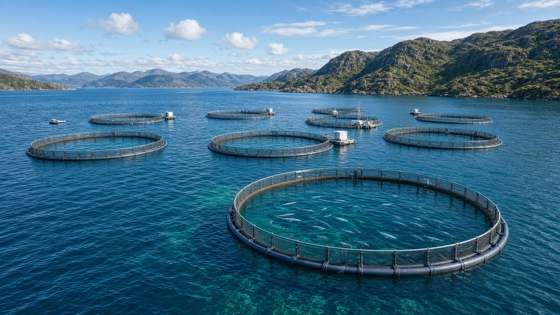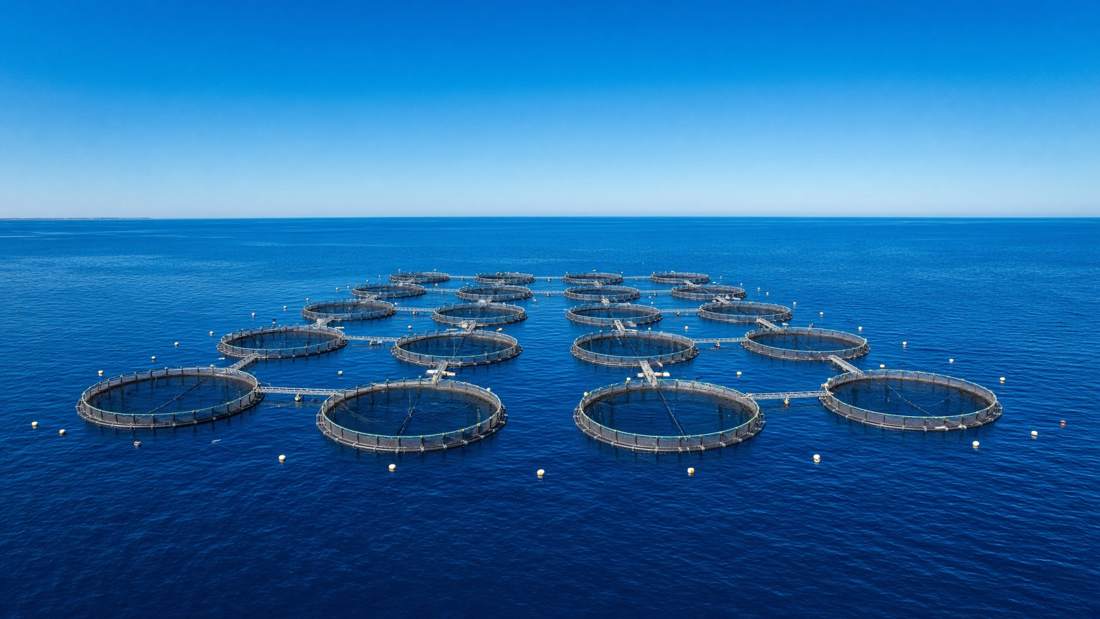
The environmental impact of fish farms is not one story. It ranges from very low for some shellfish and seaweed to significant for others, depending on species, location and methods. For shoppers, that means farmed does not automatically mean good or bad; the details decide, and you can use them to choose well.
Where the impacts come from
- Feed. Carnivorous fish such as salmon eat feed that has historically included fishmeal and fish oil from wild-caught fish. Producers have been shifting to plant and other ingredients; see alternative proteins in aquafeed.
- Waste. Uneaten feed and waste can enrich the water and seabed under open pens, depending on currents and farm density.
- Disease and parasites. Open pens can exchange pathogens with wild fish, which is why parasite control matters.
- Escapes. Escaped fish can compete or interbreed with wild fish, a topic in escapes and genetic pollution concerns.
- Habitat change. Some shrimp farming has been linked to mangrove loss; read about it in mangrove destruction and shrimp farming.
- Energy and carbon. Tank systems use electricity; open pens and ponds use less, but all contribute emissions through feed, transport and equipment.
What lowers the environmental impact of fish farms
Shellfish and seaweed farming generally have the lightest footprint among farmed foods, because oysters, mussels and clams feed on natural algae and need no added feed, and seaweed takes up nutrients from the water. Filter feeders and plants can also improve water clarity locally, though results depend on scale and location. Among finfish, species that eat low in the food chain, such as tilapia and catfish, need less marine-based feed. Better-run salmon farms use lower densities, better siting, cleaner feed and closed systems that capture waste.
Reading the environmental impact of fish farms as a shopper
- Start with species. Oysters, mussels and clams are widely regarded as among the lower-impact choices.
- Check origin. The same species can be raised well in one country and poorly in another.
- Look for certifications that audit environmental performance, such as the ASC and BAP.
- Check Seafood Watch for current ratings by farm type and country.
Farmed versus wild: not a simple winner
Wild fisheries have impacts of their own, including overfishing, bycatch and seabed damage, as covered in our sustainability guides. Farmed seafood can reduce pressure on wild stocks, but only if feed and farm practices are sound. NOAA's overview at NOAA Fisheries aquaculture explains how U.S. farms are regulated and monitored, and FishWatch offers species details. Compare options rather than assuming one method always wins.
Budget-friendly low-impact choices
Farmed mussels and clams are often among the least expensive seafood options and tend to rank well for sustainability. Frozen farmed fillets from certified farms are another sensible option. For more ideas, read sustainable seafood on a budget.
The environmental impact of fish farms is manageable when you choose by species, origin and certification, and ask questions at the counter. Sustainable choices are available at many price points, and your questions encourage better practice.