Offshore aquaculture means raising fish in deeper, more exposed ocean waters, farther from the coast than traditional bay and fjord farms. The pitch is that strong currents flush away waste and keep fish healthy, which could ease some of the concerns about nearshore farms. For shoppers, the honest answer is that offshore farming is still a small and developing part of the seafood supply, so most of what you buy today comes from other methods.
What offshore aquaculture is
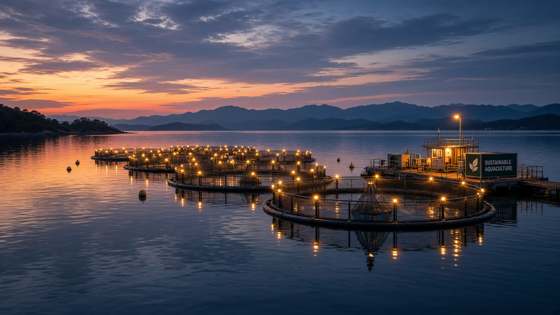
Instead of net pens in sheltered waters, offshore farms use sturdy cages or submersible pens designed to handle waves and storms. They are positioned in deeper water where there is more current and often cooler, cleaner conditions. Species grown this way, in various parts of the world, include salmon, cobia, amberjack and other marine finfish. NOAA outlines US policy and research on marine farming on its aquaculture topic page.
Why companies are interested
- Space. Sheltered coastal sites are limited and often shared with fishing, boating and homes.
- Water flow. Strong currents dilute waste and may reduce the buildup of disease and parasites.
- Scale. Larger, stronger pens may support bigger harvests.
The trade-offs are cost and difficulty. Building and servicing structures in rough water is expensive, and storms are a real risk. That cost usually shows up as higher prices, and it is one reason offshore products remain a niche.
Offshore aquaculture: environmental questions
What supporters say
Supporters argue that offshore sites may spread waste over a wider area and reduce local impacts. They also point to the potential to grow more seafood domestically, which could reduce reliance on imports.
What critics of offshore aquaculture raise
Critics worry about escapes, disease transfer to wild fish, feed use and the lack of long-term data. The same concerns that apply to nearshore net pens are not automatically solved by moving farther out. Rules for offshore farms are also still evolving in many places.
What it could mean for price and availability
Because of the higher building and operating costs, offshore-farmed fish are likely to start as premium or specialty items, not bargain-bin staples. If more farms prove commercially workable, supply could grow and prices could ease, but that is a possibility and not a promise. Cobia and amberjack, two species associated with open-water farming, are firm, mild fish that suit grilling and searing. If you spot them, they are worth a try, and our guide to grilling fish without it falling apart will help with the cooking.
Also keep in mind that "farmed in deep water" says nothing by itself about feed, welfare or labor practices. Those are separate questions worth asking whichever method the farm uses.
How to evaluate an offshore claim at the store
- Ask where the fish was farmed and what species it is.
- Check the product on Seafood Watch for a farm-raised rating.
- Look for third-party certification, such as the ASC, rather than relying on the word "offshore."
- Compare price and freshness with other options. Offshore fish should be fresh and firm, with a clean ocean smell.
For a wider view of how farming methods compare, see our aquaculture basics.
Offshore aquaculture may become more common over time, and for now it is best treated like any other farming method: judge each product by its species, origin and certification, and not by the word "frontier" on the packaging.