Climate change and aquaculture adaptation affect what ends up in your shopping basket, because farmed fish and shellfish are sensitive to water temperature, oxygen, acidity and storms. Farms are adjusting, and shoppers can too, by understanding which products are most exposed and which are most resilient.
How climate change affects farms
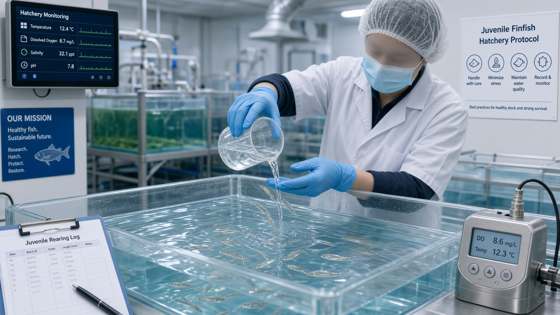
- Warmer water. Cold-water species such as salmon and trout become stressed when water warms, and warm water holds less oxygen; see water quality parameters for aquaculture.
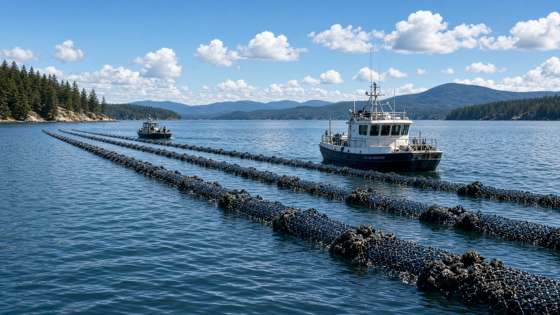
- Ocean acidification. More dissolved carbon dioxide makes seawater more acidic, which can make it harder for larval oysters and clams to build shells. See ocean acidification and shellfish.
- Algae blooms and disease. Warmer conditions can favor harmful blooms and some pathogens; see algae blooms and farm management.
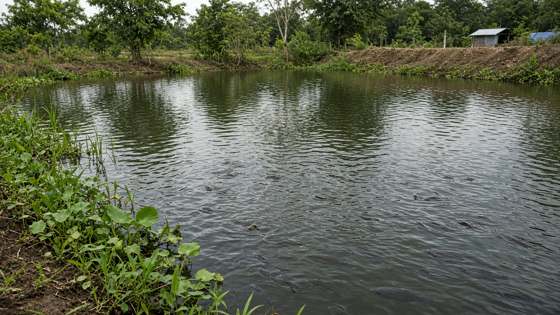
- Storms, floods and drought. Extreme weather damages ponds, pens and shellfish beds and affects water supply.
- Sea-level rise and salinity changes. Coastal ponds and estuaries face changing conditions.
How climate change and aquaculture adaptation work in practice
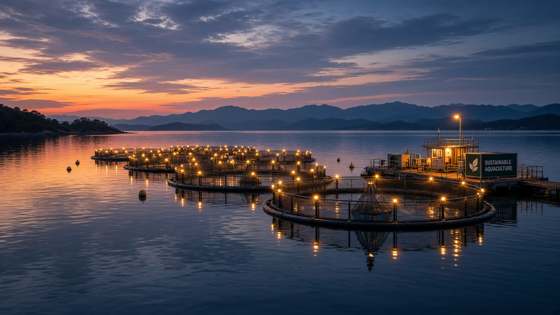
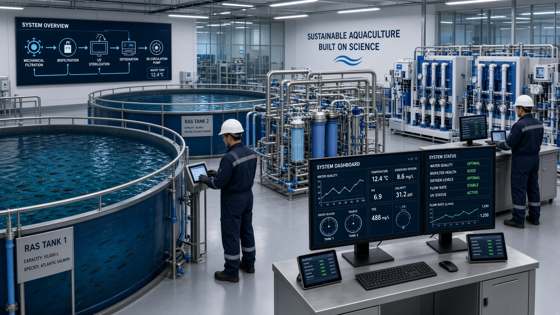
Farms and researchers are trying several responses. Hatcheries buffer or treat seawater so larvae can survive acidic conditions. Breeding programs select for heat tolerance and disease resistance; see selective breeding in aquaculture. Farms move to cooler, deeper or more sheltered sites, use shade, extra aeration and better monitoring, and diversify species. Some shift to land-based tanks, where temperature is controlled, at the cost of more energy use.
What climate change and aquaculture adaptation mean at the counter
- Prices of some species may become more variable when heat waves, blooms or storms cut supply.
- Seasonal availability of oysters and other shellfish may shift by region.
- New species and origins may appear as farms adapt.
- Labels and sourcing may matter more, since quality differs between regions.
Choices that tend to be more resilient
- Farmed mussels and clams have low inputs, though shellfish can still be hit by acidification and heat in some places.
- Warm-water species such as tilapia and catfish tolerate heat better than salmon.
- Diversify: rotate species through the month instead of relying on one favorite.
- Buy frozen when fresh prices spike, since freezing preserves quality and smooths cost.
Where to find reliable information
NOAA's aquaculture resources describe research and policy on adapting farms to changing conditions, and the FAO fisheries and aquaculture portal gives a global overview. Ratings at Seafood Watch reflect current farm practices, and are updated over time.
A balanced view
Farmers have adapted to changing conditions for as long as aquaculture has existed, and many of today's tools, from better monitoring to hardier strains, are practical rather than speculative.
Seafood production contributes to climate change too, and some farmed products, especially shellfish, have a low footprint compared with other animal foods. Climate pressure on wild fisheries is also growing, so farmed seafood will probably remain an important part of supply. Not all effects are well understood, so stay open to updated guidance.
Climate change and aquaculture adaptation will keep reshaping the seafood case in small ways. Staying flexible on species, buying frozen when it makes sense and checking origin will keep your meals varied and affordable.