The economics of small-scale aquaculture explain a common question at the market: why does a local farmed trout or oyster cost more than a bag of imported frozen fillets? The short answer is scale. Small farms carry higher costs per pound, and understanding them helps you decide when the premium buys real value.
What goes into the price
- Feed. For fed species such as trout, catfish and tilapia, feed is typically the largest ongoing cost. Oysters, mussels and clams are not fed, which is one reason they can be economical to grow.
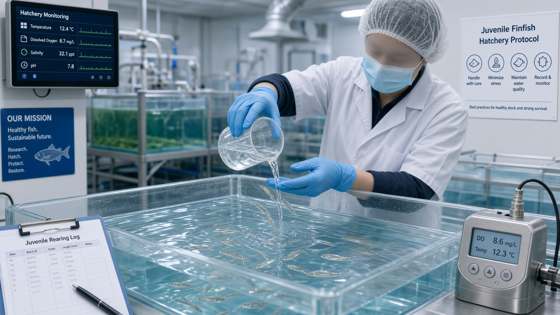
- Young stock. Fingerlings, seed or postlarvae must be bought or produced; see hatchery operations 101.
- Labor and time. Many species take months to years to reach market size, and farms pay for care throughout.
- Equipment and energy. Aerators, pumps, tanks, nets and boats all cost money to buy, run and replace.
- Losses. Weather, disease and predators can reduce what reaches harvest.
- Compliance. Permits, water testing and inspections add overhead, particularly for shellfish.
Economics of small-scale aquaculture: why small farms cost more per pound
Large operations buy feed and supplies in bulk, process large volumes and ship efficiently. A small farm spreads the same fixed costs over fewer fish. That is the central point of the economics of small-scale aquaculture: they often cannot compete on price with big producers or imports, so they compete on freshness, traceability and character.
What the economics of small-scale aquaculture buy you
- Harvest-to-sale times of a day or two, which is hard for imports to match.
- Knowing the farm, the water and the grower.
- Species and varieties not found in supermarkets, such as regional oyster types.
- Support for a local business and working waterfront; see aquaculture and local communities.
Ways to get good value
- Buy shellfish in season and by the dozen or bag, which is often cheaper than singles.
- Ask about seconds or odd-sized fish that taste the same but cost less.
- Join a share or subscription; see community supported fisheries explained.
- Buy whole fish and ask for fillets and frames; use frames for stock.
- Compare per-pound prices with grocery options to see whether the local choice is worth it.
How to judge whether it is worth it
Check for a harvest date, ask how the fish was raised, and look at quality: bright eyes, firm flesh and a clean smell for fish, tightly closed shells for live shellfish. Local does not automatically mean better, so ask questions. Certifications are less common among small farms because audits cost money, so look for state inspection or tags for shellfish. The FishWatch site profiles many farmed species, and Seafood Watch lets you check ratings.
Cooking and storage
Fresh, just-harvested fish should be kept cold and eaten within a day or two. Review FDA guidance on selecting and serving seafood safely for storage and cooking times, and cook fish to 145 F (63 C).
The economics of small-scale aquaculture mean you pay for freshness, traceability and local jobs. When those matter to you, small farms are well worth a visit; when budget comes first, frozen farmed fillets are a sensible alternative.