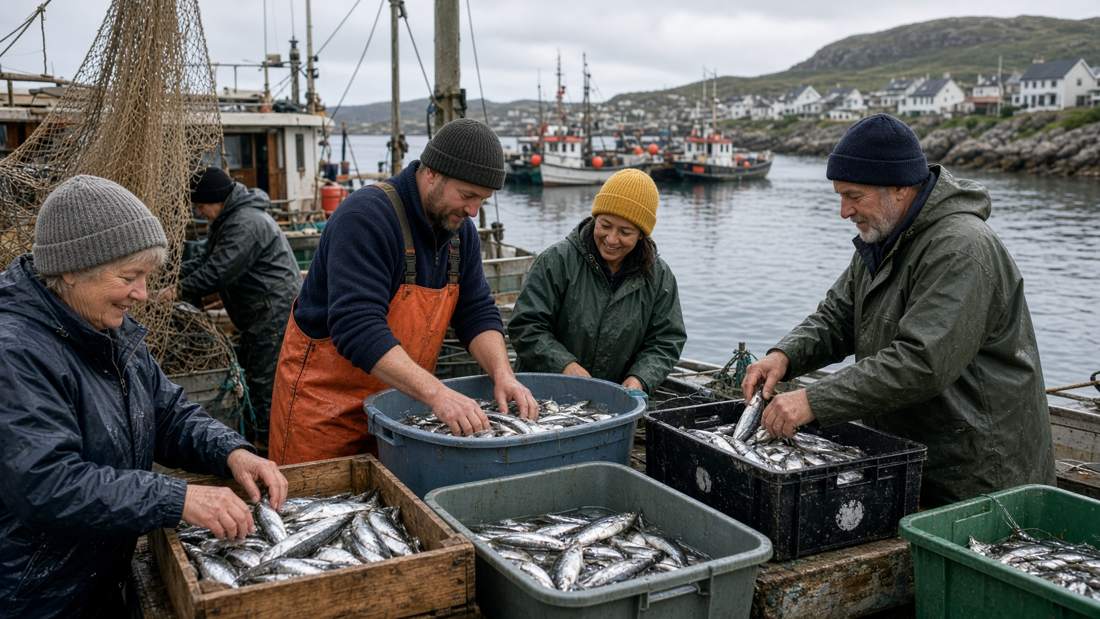
Ghost gear is fishing equipment that has been lost, abandoned or discarded at sea, and it matters to seafood shoppers because it keeps catching and killing marine animals long after nobody is collecting the catch. The term covers nets, longlines, traps, pots, lines and the floats and ropes attached to them. Because modern gear is mostly synthetic, it can drift or sit on the seabed for a very long time, snagging fish, crabs, turtles, seabirds and marine mammals.
How Fishing Gear Becomes Ghost Gear
Nobody sets out to lose a net. Gear goes missing for a handful of practical reasons, and understanding them shows why the problem is hard to eliminate.
- Storms and rough seas: strong weather can tear gear loose or drag it off its marker lines. Our piece on weather and seafood supply covers how storms disrupt fishing generally.
- Snags and entanglement: nets and lines can catch on rocks, wrecks or reefs and be cut away to save the boat or crew.
- Conflicts between gear: boats working the same grounds can run over and sever one another's equipment.
- Cut-off buoy lines: propellers can slice the line that connects a trap to its surface float, leaving the trap on the bottom with no way to retrieve it easily.
- Deliberate discard: in some cases worn-out or illegal gear is dumped. This is a regulatory and enforcement problem, and rules vary widely by country.
What Ghost Gear Does After It Is Lost
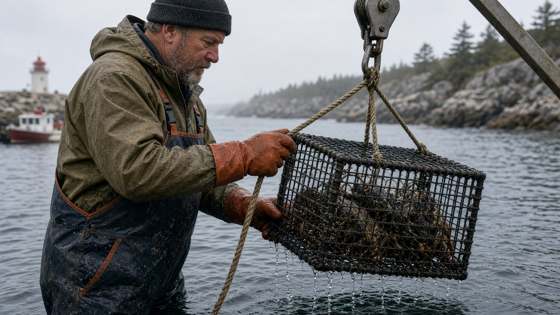
Lost gear can continue to fish, an effect often called ghost fishing. A gillnet hanging in the water can entangle fish, and as animals die and decay, they can attract scavengers that become caught in turn. A lost trap can keep attracting crabs or lobsters that enter but cannot leave, unless it has an escape mechanism. Gear can also damage seabed habitats such as coral and seagrass when it drags or settles on top of them, and it can break up into plastic fragments over time.
For shoppers, the practical impacts are indirect but real. Unwanted mortality reduces the number of fish and shellfish that survive to be harvested legally, which can affect stocks and, over time, availability and price. Ghost gear can also endanger boats and divers by fouling propellers and snagging lines.
How ghost gear connects to what you buy
Because ghost gear is a byproduct of fishing in general, not a feature of one species, it touches many items in the seafood case: crab, lobster, whitefish, tuna and more. Fisheries that use passive gear such as pots and gillnets are more often discussed in this context, but any gear can be lost. Read our guides on pots and traps and gillnetting for how those methods work.
What Fisheries and Governments Are Doing
Responses fall into three broad groups: prevention, recovery and design.
- Prevention: better marking of gear so owners can be identified, rules on setting and retrieval, and requirements to report lost equipment.
- Recovery: programs in which fishers, divers and volunteers locate and remove derelict gear. Some ports offer collection points so retrieved nets and ropes can be handled instead of discarded.
- Design: escape panels in traps that open when parts degrade, and experiments with materials that break down. See our article on biodegradable fishing gear for more.
Organizations such as the Global Ghost Gear Initiative bring together industry, governments and researchers on the problem. The Food and Agriculture Organization also publishes guidance on marking fishing gear and reporting its loss; its fisheries pages at fao.org/fishery are a good place to start. In the United States, NOAA's Marine Debris Program works on derelict fishing gear, and the agency's fisheries management overview explains the framework under which many gear rules are set. Specific requirements vary by region and fishery, so check current rules locally.
What Shoppers Can Do About Ghost Gear
You cannot see ghost gear in a fillet, but your choices still send signals.
- Favor certified fisheries. The Marine Stewardship Council standard looks at a fishery's overall environmental impact, and well-managed fisheries tend to have better gear practices.
- Use ratings. Seafood Watch recommendations consider habitat and bycatch effects tied to gear type.
- Ask suppliers about gear marking and recovery. Some fisheries and retailers talk openly about retrieval programs; those that do are usually proud of them.
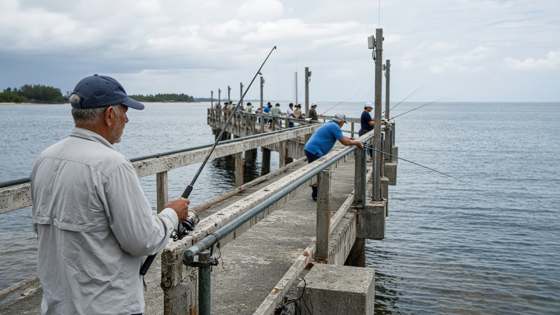
- Dispose of your own fishing line properly if you fish recreationally. Monofilament left on a pier or beach can become its own small version of ghost gear.
- Support clean-up efforts run by local ports, coastal charities and volunteer divers.
A realistic view of the problem
Reliable estimates of how much gear is lost each year are hard to come by, and figures quoted online vary widely, so treat any single headline number with caution. What is well established is the mechanism: gear designed to catch animals continues to do so when lost. That is why prevention, marking and recovery are all part of the response, and why consumers who ask questions help keep the issue on the agenda.
What This Means for Your Grocery Basket
- Crab and lobster prices: trap losses and lost-gear costs are part of what fishers must recover, so expect trap-caught shellfish to cost more than species taken in bulk.
- You will not find ghost gear on a label. Use certification and rating tools instead of searching packaging for a claim.
- Buy in season. Local, in-season catch is usually cheaper and fresher, and travels fewer miles.
- Check the shell and smell: live crab and lobster should be lively; cooked or frozen product should smell clean and of the sea.
Ghost gear is an unseen cost of putting seafood on the table, and it is one the industry is working to shrink. By choosing well-managed fisheries and asking where your seafood comes from, you support the boats and ports that treat lost nets as a problem worth solving.