Trap-caught lobster and crab cost more because they come out of the water alive and are sorted by hand, so you get sweeter, firmer meat; for everyday meals, frozen options can save money. Pots and traps are baited cages that lure lobster, crab, whelk and spot prawns, and the gear is gentle, selective and labor-intensive. Knowing how pots and traps work shows what that extra cost buys.
How pots and traps work
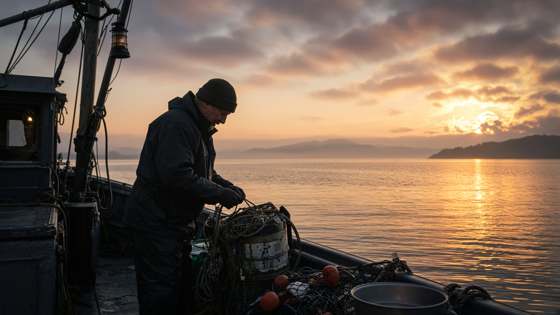
A trap is a frame, usually wire or wood, with netting or mesh and one or more funnel-shaped entrances. Bait inside, often fish scraps or other fish, draws animals in; the funnel lets them enter but makes exit difficult. Traps are set singly or in strings, marked by a buoy and left to soak for a day or more. The crew then hauls them with a winch, empties them on deck and rebaits them.
Gear varies by species. Lobster pots are often rectangular and built to hold hardy animals in short compartments. Dungeness and other crab pots can be round or square and may include escape rings. Spot prawn traps tend to have fine mesh and are fished in deeper water. For a design-focused look, see our guide on better trap design.
Why trap-caught seafood commands higher prices
Quality arrives alive
Trap-caught lobster and crab can be kept alive from the moment they come aboard until they reach your kitchen, in seawater tanks on the boat and in holding tanks on shore. Live shellfish avoid the rapid quality decline that begins at death, so the meat tends to be sweeter and firmer. For a closer look, see live storage.
Small catch per trip, high cost per pound
Each trap yields only a few animals, and fishermen must buy, repair, bait and move hundreds of traps. Fuel, bait, labor and licenses all add up. Because many trap fisheries have limits on the number of traps, seasons and sizes, supply is naturally restricted. Smaller supply plus higher costs equals higher prices, particularly for premium sizes.
Selective catch and sustainability
Pots and traps are generally regarded as a selective gear. Because animals are caught alive, undersized, egg-bearing or protected animals can be sorted and returned to the water. Escape vents allow juveniles to leave, and many traps include biodegradable panels so that lost gear stops fishing eventually. Management rules on size limits, seasons, and protection of breeding females are central to the sustainability of lobster and crab populations.
The main concern is entanglement, where lines connecting traps to buoys can snag large whales, and rules to reduce this risk, such as weak links and gear marking, are changing in some regions. Check current rules for the fishery you care about. For ratings by region, see Seafood Watch and for U.S. species profiles, NOAA FishWatch.
Buying live lobster and crab
- Choose animals that are lively. A lobster should curl its tail when picked up, and a crab should move its legs.
- Look for clean tanks and cool, well-circulated water.
- Ask about the harvest area and how recently the animals were landed.
- Cook the same day if possible, or keep them cold and damp, never in fresh water, until cooking.
Hard-shell lobsters, caught in the colder months in many regions, have denser meat; soft-shell lobsters that have recently molted have sweeter but less abundant meat and ship less well. Both are legitimate choices.
Is a trap-caught premium worth it?
Cooking and storing trap-caught shellfish
Plan portions and budget
A good rule is one lobster of about 1.25 pounds per person for a main course, or a 2-pound Dungeness crab for two with sides. Whole live animals cost less per pound of edible meat than pre-picked meat, but you do the work. Pre-cooked frozen tails and claw meat are convenient, and picked crabmeat can stretch into crab cakes, pasta or omelets. Check the label for added water or fillers.
Simple cooking guidance
For lobster, bring a large pot of salted water to a rolling boil, add the lobster head first and cook roughly eight minutes for the first pound plus about three minutes for each additional pound, then chill briefly in cold water if serving cold. Crab is typically boiled or steamed for about fifteen to twenty minutes for a whole Dungeness. Timing varies, so confirm with a reliable recipe and look for bright red shells and opaque, white meat.
- Keep live shellfish in the refrigerator wrapped in damp newspaper, never in fresh water or sealed in plastic, and cook within a day.
- Do not cook any that appear dead before cooking: limp, with an off smell.
- Refrigerate cooked meat promptly and eat within two to three days, or freeze for longer storage.
The FDA's advice about eating fish includes safe handling basics worth keeping in mind for any seafood you bring home.
For special occasions, absolutely: the sweetness and texture of properly handled live shellfish are hard to match. For everyday meals, frozen cooked crab or lobster tails can be economical alternatives. Whichever you choose, knowing how pots and traps shape quality and price makes it easier to spend your seafood budget where it matters most.