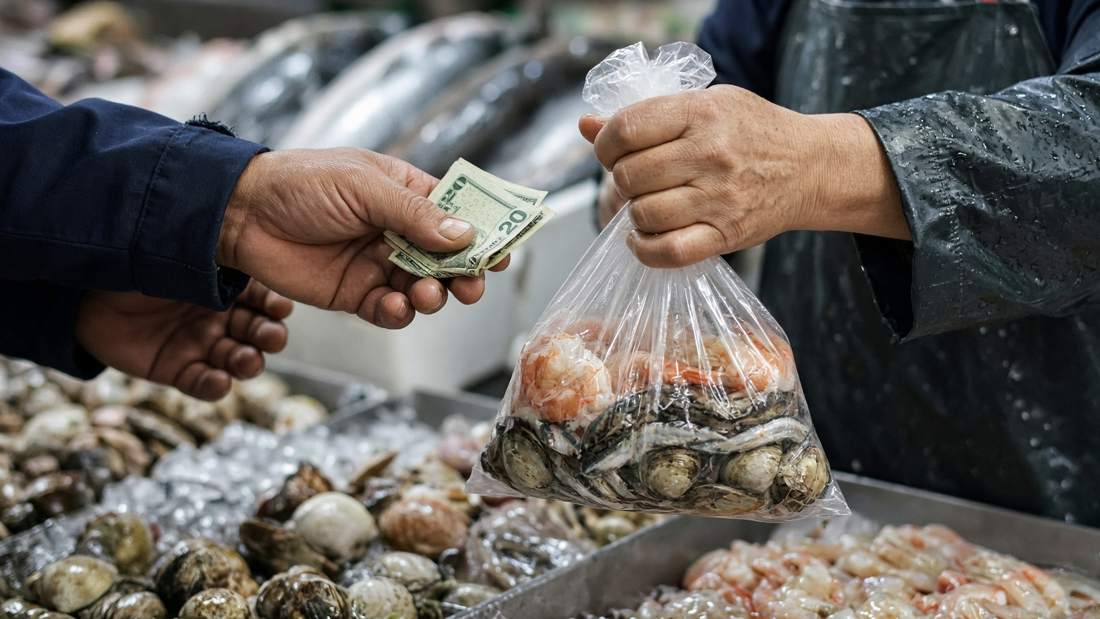
Seafood in American Samoa is both a daily food and an industry. Families fish the reefs and lagoons around Tutuila and the Manu'a islands for their own tables, and Pago Pago harbor has long been a base for tuna vessels and the canning that follows them.
What the territory is known for
Tuna is the best-known commercial product, landed by longline boats and processed in Pago Pago. For household eating, reef fish, crab, octopus and lobster are village staples, and fish is often cooked in coconut milk, grilled over fire or prepared raw in lime juice and coconut cream. Palolo, a seasonal worm that rises from the reef at certain moon phases, is a traditional delicacy that many families wait for each year.
Where shoppers buy
Most everyday buying is informal. Fishers sell from boats, coolers and roadside stands around Pago Pago and nearby villages, and the municipal market area is a common place to look for fish and produce. Supermarkets stock both local and imported seafood, including frozen fillets and canned tuna. Hours and stock change with weather and boat trips, so ask locally rather than relying on a posted schedule.
Buying fish for raw dishes
If you plan to eat fish raw, ask when it was caught, buy it cold or on ice and keep it chilled until you serve it. Eat it the same day. Raw preparation is only as safe as the fish and the handling behind it.
How to buy local and buy safe
- Look at the fish: bright, clear eyes, firm flesh, red gills and a clean sea smell.
- Ask which reef or area it came from and whether the seller knows the species is safe to eat.
- Ask local fishers and neighbors about ciguatera before buying large reef predators, since the risk varies by place and species.
- Put fish on ice immediately and refrigerate or cook the same day.
Our guides to recognizing fresh fish, raw fish safety and overfishing and solutions cover the basics in more detail.
Fish advisories and fishing rules
No single advisory covers every fish, and advice can change. For consumption guidance, start with the federal FDA advice about eating fish and the EPA guidance on choosing fish and shellfish, then check with the territory's environmental agency, AS-EPA, for local notices. For recreational fishing, gathering reef animals and any season or gear limits, check the current rules with the Department of Marine and Wildlife Resources before you go.
Money-saving and quality tips
Buying whole fish from a fisher is usually cheaper per pound than buying fillets, and you can ask for it to be cleaned. Compare prices between stands and supermarkets, but pay attention to how fish has been kept: a fish sitting in the sun on a roadside table loses quality quickly. Bring a cooler with ice if you are traveling across the island, and avoid leaving seafood in a parked vehicle. Frozen and canned tuna from the supermarket is a dependable everyday option when fresh catch is scarce after rough weather. If you are a visitor, ask your host or accommodation which sellers locals trust, since reputation counts for a great deal in a small community.