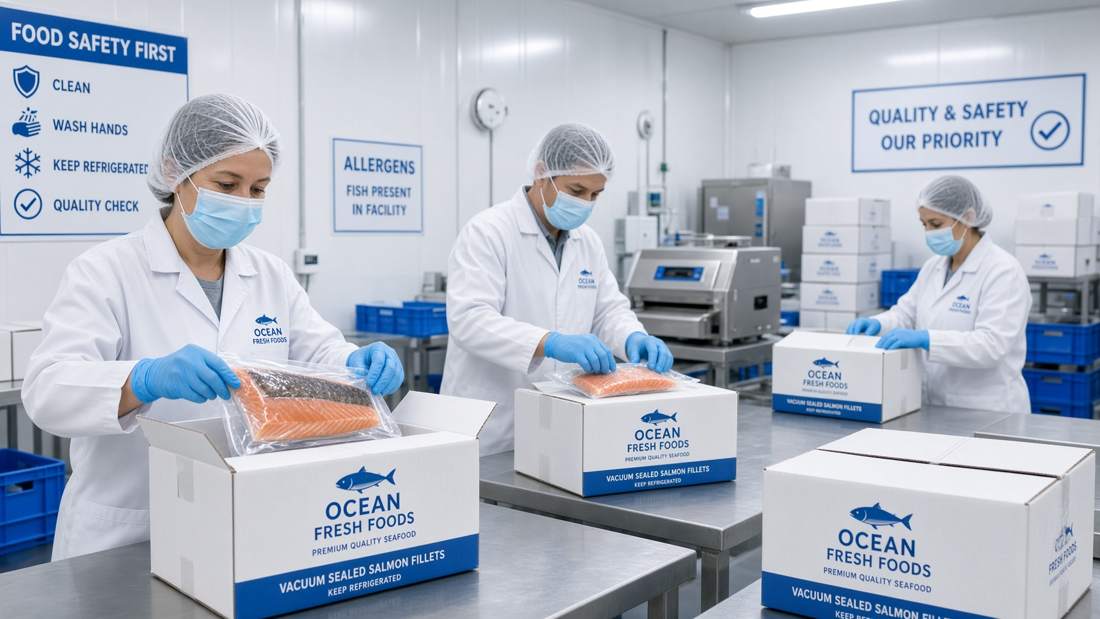
Seafood shipping insulation is what stands between your fish and a warm delivery truck, and the type a seller uses tells you a lot about how seriously they treat freshness. Opening a box and understanding what you see inside helps you judge whether the order was well packed.
Main seafood shipping insulation materials
Most shipments combine an insulating layer with a coolant. The insulator slows heat from getting in, while the coolant absorbs the heat that does.
- Rigid foam boxes are common because they are light and hold their shape. Some are made from recyclable or compostable materials, though local acceptance varies.
- Padded liners made from paper, fabric or recycled fibers are used by some sellers who want a more recyclable option.
- Gel packs stay cold for hours and can be refrozen. They are generally sealed, and many are non-toxic, but follow the instructions printed on them.
- Dry ice is solid carbon dioxide and keeps products frozen. It needs careful handling, as it can cause cold burns and should not be used in a sealed space or tight container. Follow the seller's directions.
- Ice in bags or sealed packs is used for fresh fish, but melting water can leak, so good sellers seal fish in a separate bag.
Why seafood shipping insulation does not work forever
Every box has a time limit. A well-packed box can keep a product cold for a day or more, depending on the design, the outside temperature and how much coolant is inside, but the seller should state the intended transit time. Delays, heat and a long wait on a porch all use up that margin. The FDA's safe food handling advice sets the two-hour limit for perishable food, or one hour in hot weather.
What to check when the box arrives
- Is the contents cold to the touch, and are gel packs still at least partly frozen?
- Is the seafood in a sealed, leak-resistant bag?
- For frozen fish, is it hard and free of large ice crystals?
- Does fresh fish smell clean and mild?
The FDA recommends keeping your refrigerator at 40 F or below and your freezer at 0 F, and explains why in its refrigerator thermometer guidance. For more detail on how coolants work, read insulated boxes and gel packs explained.
Reusing and disposing
Wash gel packs and liners with soap and hot water if you plan to reuse them, and keep them away from raw food contact. Do not reuse packing that held leaking raw fish for food storage. Disposal rules differ by area, so check your local waste and recycling guidance. Our guide to recycling programs for seafood packaging gives general pointers.
Dry ice safety at home
If your box includes dry ice, let it sublimate in a well-ventilated space, wear gloves or use tongs, and keep it away from children and pets. Do not put it down a drain or in a closed container.
Knowing how seafood shipping insulation works helps you inspect a delivery with confidence, decide whether your order is safe to keep, and reuse the parts that stay useful long after dinner is done.