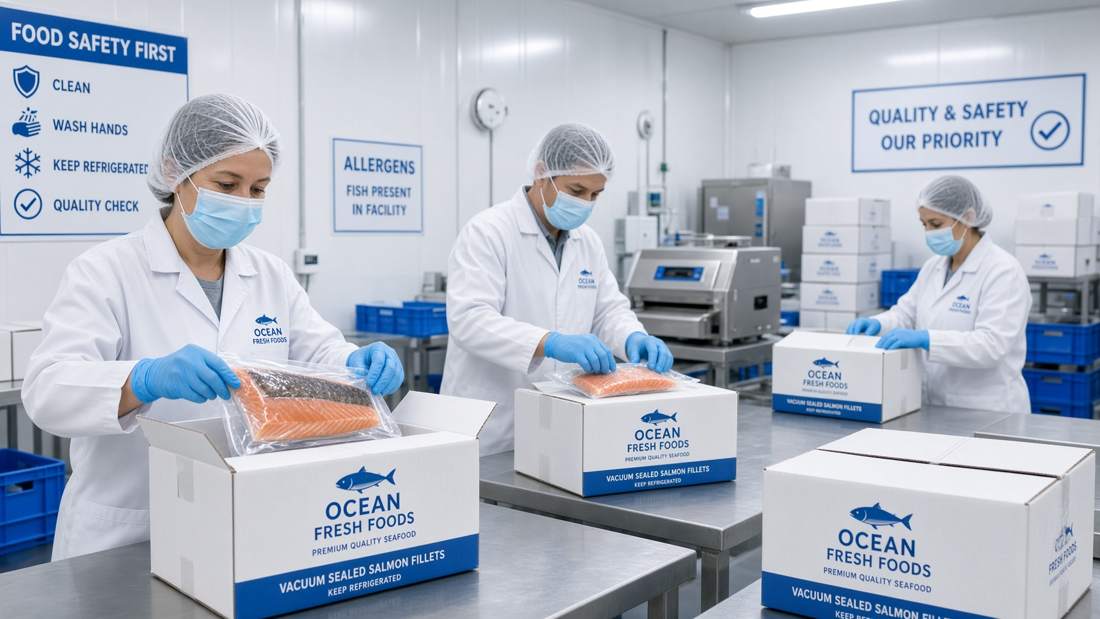
Seafood packaging costs are part of the price of every shipped order, and they explain why a pound of fish can cost more online than at the counter. The box, the liner, the cold packs and the labor to pack them all have to be paid for, either in a shipping fee or built into the product price.
What seafood packaging costs actually pay for
A typical cold shipment might include an outer carton, an insulating liner, one or more coolants and a wrapped or vacuum-sealed product. Heavier, better-insulated packaging protects fish for longer, but it also adds weight, and carriers charge more for heavier parcels. That is why shipping is often priced by weight and distance.
Are higher seafood packaging costs worth it?
Sometimes yes. A seller that spends more on a sturdier liner and enough coolant may have fewer warm deliveries and refunds. A rock-bottom shipping price with a thin box is not a bargain if the fish arrives warm. On the other hand, a very high fee on a small order is a reason to compare. Look at the total cost per pound after shipping, not just the sticker price.
How to compare offers fairly
- Add the shipping cost to the product price and divide by the weight of the fish.
- Check whether there is a free-shipping threshold and whether you would use the extra food before it spoils.
- Look for shipping included in the price, which makes comparison easier.
- Compare with the store or counter price. Local fresh fish may be cheaper once you factor in shipping, though a specialty item you cannot find nearby may be worth the premium.
Our guide to inventory turnover explains why fast-moving stock tends to be fresher, which matters when you compare shipped and in-store fish.
Ways to lower the cost sensibly
- Order more at once if you have freezer space. Frozen seafood keeps well, and one larger shipment spreads the packaging cost.
- Share an order with a neighbor or family member.
- Choose frozen over fresh for shipping when it suits the recipe. Fresh-versus-frozen quality is discussed in fresh vs frozen: nutrition and taste.
- Pick slower, cheaper shipping only when the seller says the product is frozen solid and packed for it.
What not to skimp on
Do not trade away safety for price. If the seller offers a cheaper pack with no coolant for a perishable product, that is a red flag. The FDA says perishable food should not sit out for more than two hours, or one hour in hot weather, in its safe food handling advice.
Reusing and recycling the packaging
Many liners and gel packs can be reused for picnics or lunch bags once cleaned. Check local rules for the rest. Our article on recycling programs covers what is usually accepted.
For storage once the box is open, the FDA lists the 40 F fridge and 0 F freezer targets on its refrigerator thermometer page, and a cheap appliance thermometer is worth owning if you order often.
Once you see how seafood packaging costs are made up, you can judge a shipping fee on its merits, compare the real cost per pound and choose the offer that gives you cold, safe fish for a fair price.