Seafood transparency varies enormously between supermarket chains, and the difference is easier to see than you might expect. Some chains publish detailed, public sourcing profiles that anyone can read. Others publish a general policy and little else, and a few share very little, which is why independent scorecards often reward disclosure as much as practice.
The main tool for seafood transparency
The Ocean Disclosure Project (ODP) is a voluntary program from the Sustainable Fisheries Partnership. According to SFP's ten-year summary, each participant publishes a common profile that covers, for wild-caught and farmed seafood, the species and location, production method, certification and improvement status, sustainability ratings and environmental impact. It launched in 2015 with the UK retailers ASDA, Morrisons and Co-op and two feed manufacturers, and Publix was its first US retailer participant. SFP notes participation has fluctuated from year to year.
Seafood transparency: chains that say they use it
Aldi UK states on its seafood page that it has an Ocean Disclosure Project profile, and Lidl GB says it is transparent about sourcing through the project. Both statements are on the companies' own pages, which are summarised in our piece on Aldi and Lidl's seafood approach. SFP also names Ahold Delhaize USA and Aldi Australia among participants. A profile tells you what a chain says it sources; it is not an audit.
Other ways chains show their work
- Published figures. Sainsbury's reports on its sourcing page that 86.8% of its wild-caught seafood sales were MSC certified in 2024/25 and 100% of farmed sales met ASC or another credible standard, with a target of 100% MSC wild by 2025. Reporting numbers that fall short of a target is itself a form of transparency.
- Dated supplier rules. Walmart's 2023 tuna policy sets 2025 and 2027 requirements; Greenpeace says Walmart publishes more than some competitors but still has no public vessel list.
- Detailed standards. Whole Foods publishes lists of prohibited ingredients and practices on its seafood standards page.
Where information is thin
Greenpeace USA's 2025 tuna scorecard, presented on its High Cost of Cheap Tuna page, notes that seven of 16 retailers did not complete its survey and were scored on public information only: Costco, H-E-B, Publix, Walmart, Trader Joe's, Meijer and Wegmans. Greenpeace describes Trader Joe's public documentation as scant. A lack of published information does not prove poor sourcing, but it does leave shoppers unable to check.
How to look up your own store
- Search the chain's corporate site for "seafood policy" or "sustainability report" and note whether it gives dates, percentages and certification names.
- Check whether it lists an Ocean Disclosure Project profile.
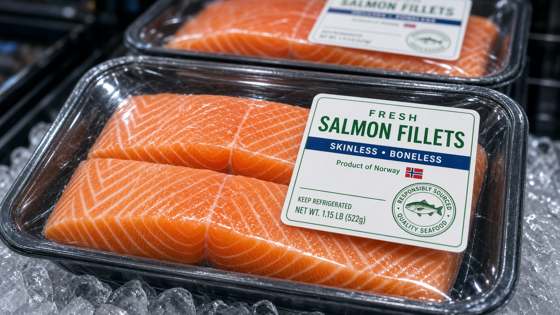
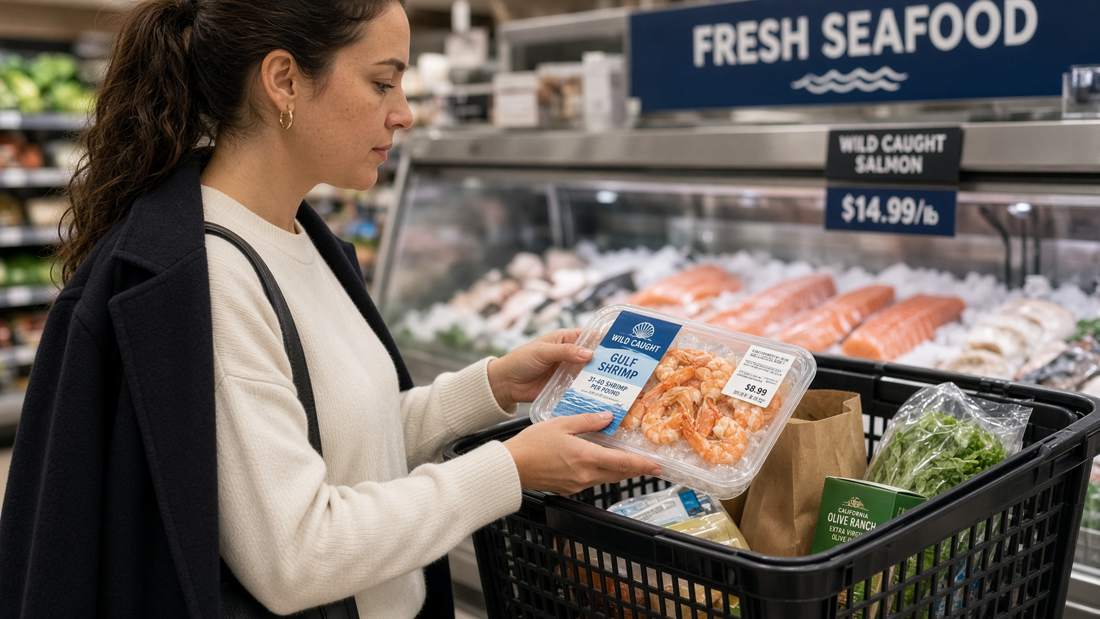
- Read the pack: origin and production method are required on many fish and shellfish in US stores, as explained in our COOL guide.
- Ask customer service a specific question, such as which fishery or farm standard a product comes from, and judge the quality of the answer.
This list is not a complete ranking, and absence from it says nothing on its own. For a related look at certified claims, see certification versus transparency.
Clear disclosure gives you a way to hold a retailer to its word. When you compare chains, favour the ones that publish dated targets, report their shortfalls and name the standards behind their claims, because seafood transparency is what lets everyone else check the work.