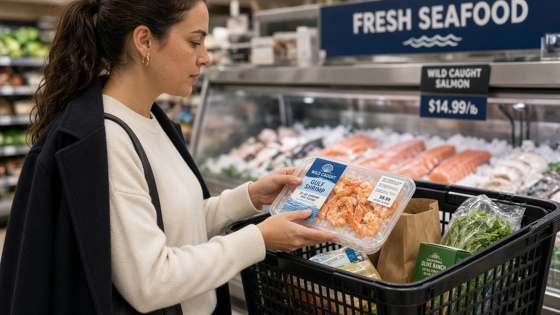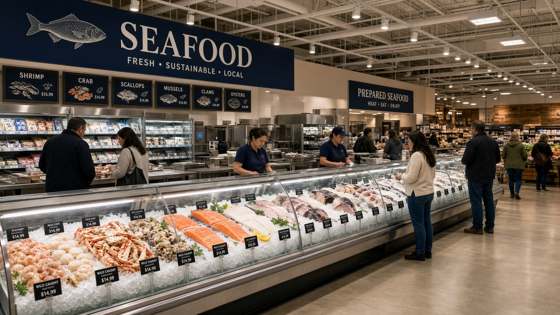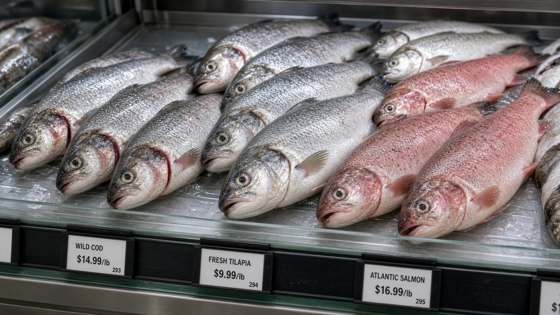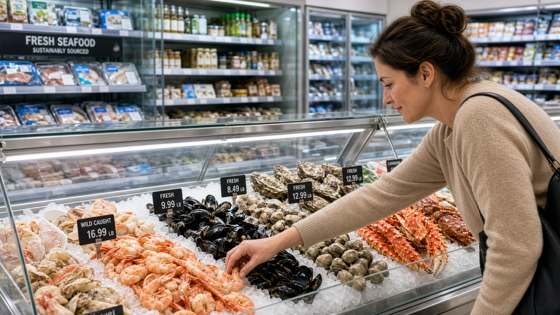
The supermarket seafood supply chain behind a single fillet is longer than most shoppers imagine, and the key practical point is that traceability tools exist but are uneven. This guide follows the journey in general terms and shows where you can see evidence of checks.
The basic journey
- Catch or harvest. The fish is caught from a wild fishery or raised on a farm.
- Processing. It is cleaned, filleted, frozen or packed, often in a different country from where it was caught.
- Import and distribution. Most seafood eaten in the US comes from abroad; Greenpeace's 2026 report cites the US importing 80 to 90% of its seafood in 2023, worth 25.3 billion dollars.
- Retail. The retailer's buyers and quality teams set specifications, and the product arrives at the store.
Each step is a chance for the fish to be mixed, mislabelled or mishandled, and each step is also a point where a record can be kept.
Transshipment in the supermarket seafood supply chain
Walmart's tuna policy defines transshipment as moving fish or fish products from one fishing vessel to another, at sea or in port. Retailers and campaigners watch it because it can extend time at sea and make it harder to link fish to a specific vessel. Greenpeace argues in its High Cost of Cheap Tuna report that even observed transshipment lacks labour monitoring.
Where traceability and safety checks sit
- Chain of custody. The MSC says certified seafood is kept physically separate from non-certified seafood and recorded at every step, so a labelled product can be traced back to a certified fishery, as described on its blue fish label page.
- Food safety plans. In the US, the FDA runs a seafood HACCP program, a preventive system for controlling hazards in fish and fishery products. See the FDA Seafood HACCP page.
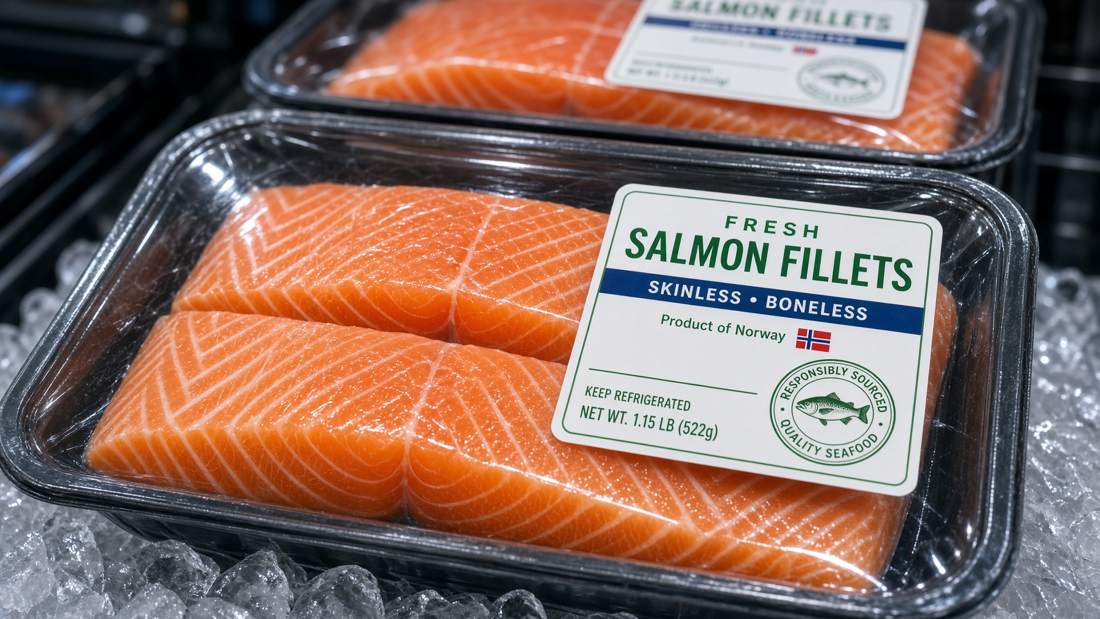
- Origin labelling. COOL requires origin and production method on covered fish and shellfish at many US retailers, which is a visible record at the end of the chain. Our COOL guide has the detail.
- Voluntary disclosure. Some chains publish public sourcing profiles through programs like the Ocean Disclosure Project.
Why supermarket seafood supply chains matter to you
Long chains mean the label is your main window into what happened. The practical effects are:
- Freshness. Time and temperature matter. The FDA advises using fresh fish within two days at 40 F or below, so check dates and keep it cold.
- Accuracy. Look for specific origin and method statements rather than vague claims.
- Accountability. A chain that names its standards and publishes updates is easier to check; see the transparency gap.
How retailers influence the chain
Large retailers set requirements for suppliers, and those rules travel back down the chain. We look at how this plays out in our article on grocery giants and fishing practices.
You cannot trace every fillet yourself, and you do not need to. Read the label, use the supermarket seafood supply chain's visible markers such as logos, origin and dates, and treat any pack with little information as a prompt to ask questions at the counter.