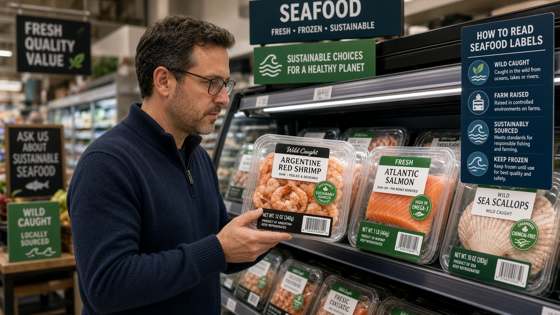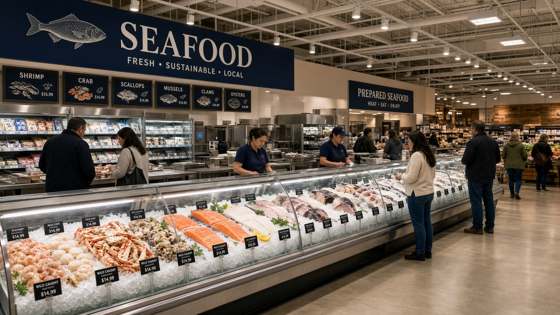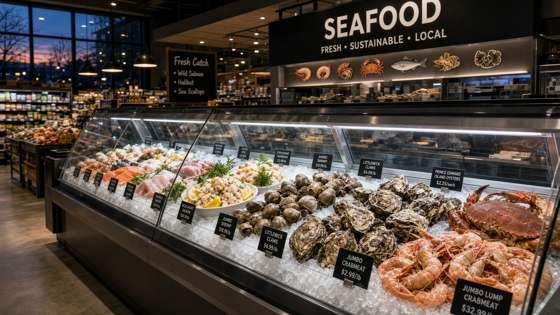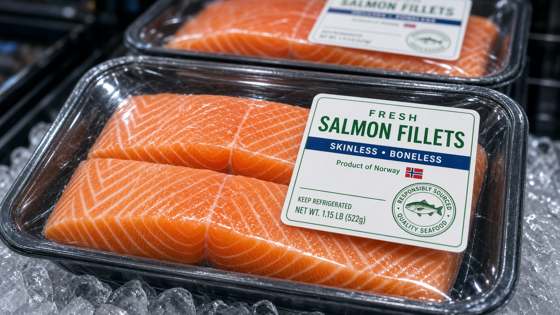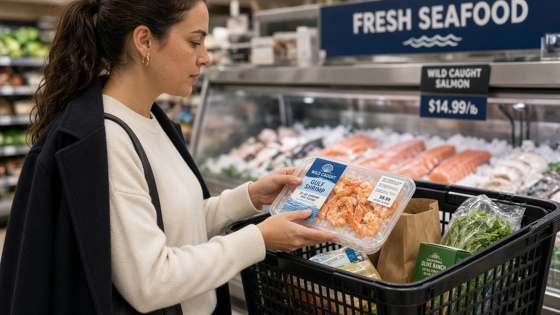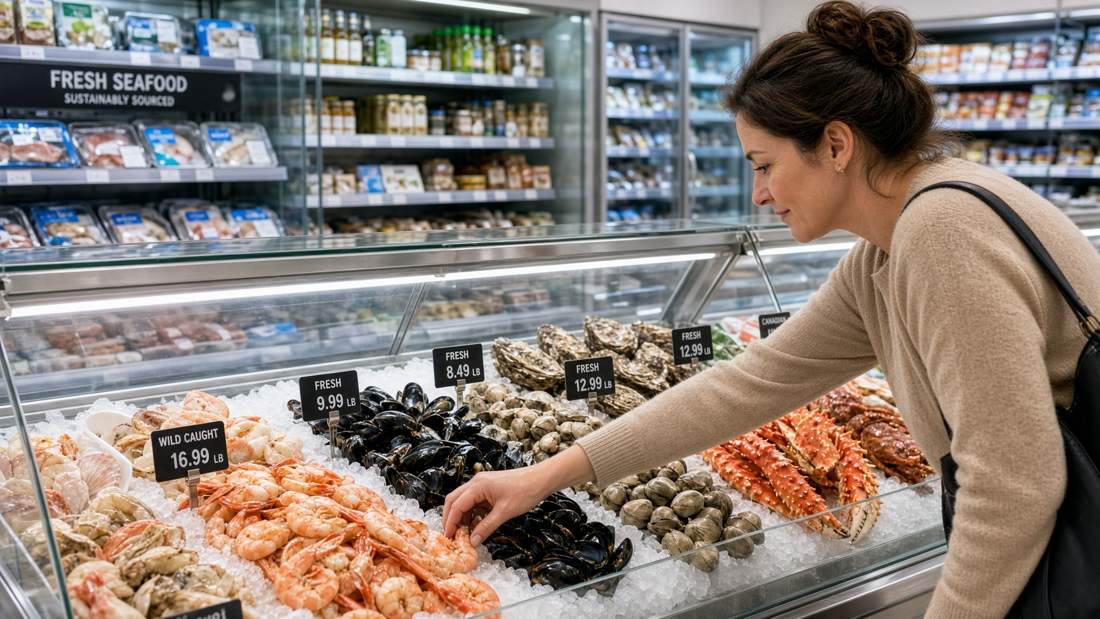
Chain store seafood is popular because it is convenient, widely available and often published against clear sourcing policies, but whether it is cheaper than an independent fishmonger depends on the fish, the store and the week. We did not find reliable price data comparing the two, so this guide sets out the real trade-offs rather than a blanket claim either way.
What chain stores do well
- Convenience. One trip covers your groceries and your fish, often with long opening hours.
- Published policies. Many chains name certification programs and targets. For example, Sainsbury's reports 86.8% of its wild-caught seafood sales were MSC certified in 2024/25 on its sourcing page, and UK shoppers spent a record 1.5 billion pounds on certified seafood in 2023/24 according to the MSC.
- A frozen and canned range. These are often the most practical, storable choices.
- Standard labelling. Origin and wild or farmed status are required on many unprocessed fish in US stores.
What you may give up with chain store seafood
- Personal knowledge. A counter team may or may not be able to tell you which boat or farm supplied a fish.
- Choice of species and cuts. Chains tend to stock reliable sellers rather than unusual local catch.
- Detail on sourcing. The pack label may say little beyond origin and method.
What independent fish shops offer
Independent sellers often offer filleting to order, advice on cooking, and more specific sourcing conversations. Prices can be higher or lower depending on the fish. Our section on local sellers explores this in the questions to ask your fishmonger, and why small fish markets can cost more.
Getting value from chain store seafood
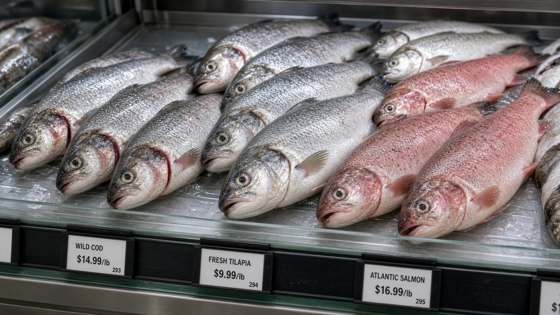
- Compare unit prices. Check price per pound or kilogram, not pack price.
- Use frozen. Frozen fillets let you buy when it is cheap and cook when you are ready; the FDA says to choose undamaged packages without heavy frost.
- Check the date and condition. Use fresh seafood within two days, kept at 40 F or below, or freeze it, as the FDA advises.
- Look for logos. MSC and ASC logos give independent assurance, as explained in our label decoder.
- Do not pay extra for a vague word. A premium for "sustainable" with no logo is worth questioning.
Mixing both approaches
Price per pound is not the same as price per portion. Whole fish and bone-in cuts usually cost less per pound than fillets, but you throw away the head, bones and skin, so compare what you will actually eat. Canned and frozen fish avoid that problem and keep for months, while fresh fish must be eaten within a couple of days. Whatever you pick, a good recipe and correct cooking matter too: the FDA says most seafood should reach an internal temperature of 145 F.
You do not have to choose one. Many shoppers buy staples such as frozen fillets and canned fish at a chain, and visit an independent shop for a special fish or advice. Compare and decide per purchase.
The best approach to chain store seafood is to use its strengths, which are convenience, frozen value and published standards, while keeping an independent seller in mind for the occasions when advice and sourcing detail matter more than speed.