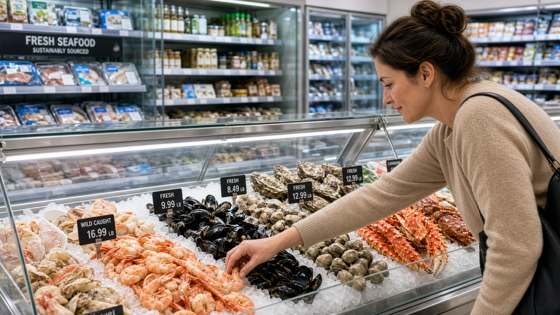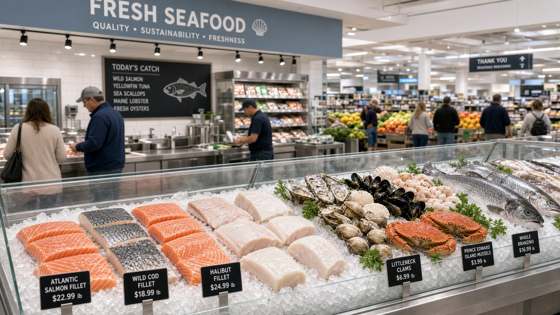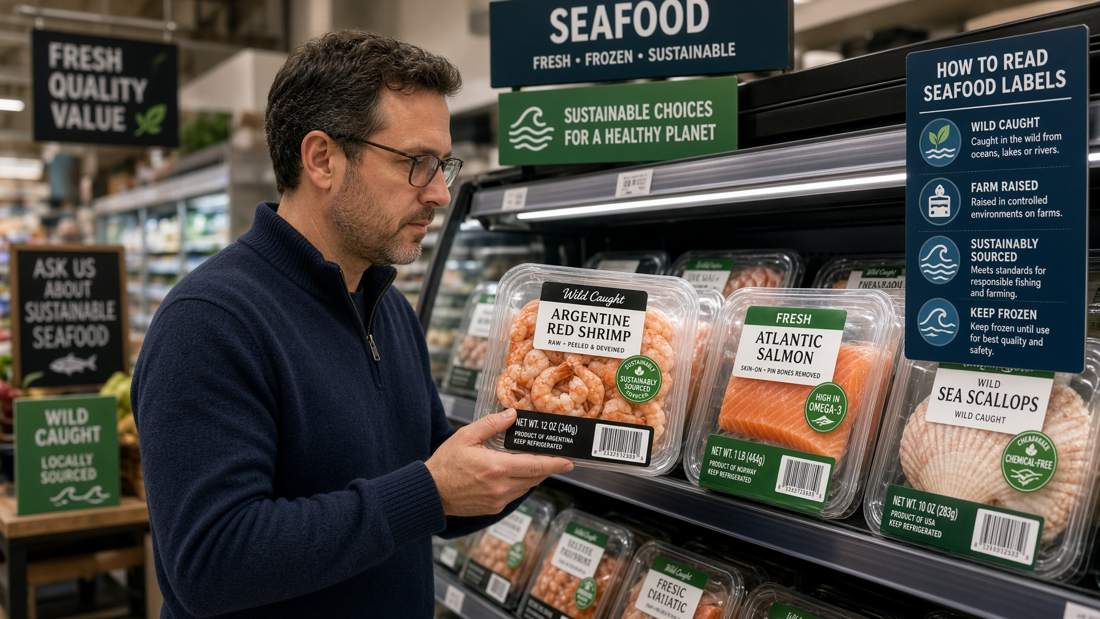
A supermarket fish counter can offer excellent fish or tired fish, and the chain's name on the sign is a poor predictor of which you will get on a given day. We found no independent data comparing sales turnover or freshness between chains, so rather than guess, this guide gives you checks that work at any counter and any time.
What the FDA tells you to look for
The FDA's guidance on selecting fresh and frozen seafood is the most reliable checklist available to shoppers.
- Display: buy fish only if it is refrigerated or on a thick bed of fresh ice.
- Smell: it should be fresh and mild, not fishy, sour or ammonia-like.
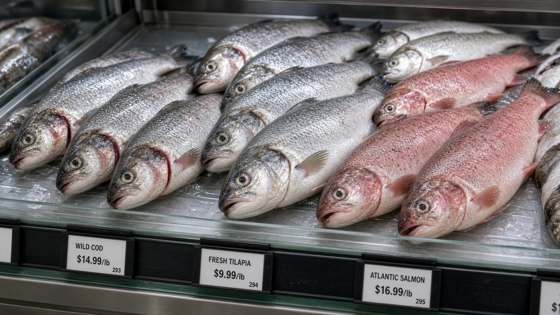
- Eyes and gills of whole fish: clear and shiny eyes, red gills without odour.
- Flesh: firm and springing back when pressed, with no discolouration or drying at the edges of fillets.
- Shrimp, scallops and lobster: clear flesh with a pearl-like colour and little or no odour.
The FDA adds that colour is not a reliable freshness signal on its own, so do not choose by brightness alone.
Supermarket fish counter checks for shellfish
The same guidance says live clams, oysters and mussels should close when tapped, cracked or broken shells should be discarded, and live crabs and lobsters should show some leg movement. Shucked shellfish should be in labelled packages showing the processor's certification number.
Questions to ask at the fish counter
- When did this arrive? A confident, specific answer is a good sign.
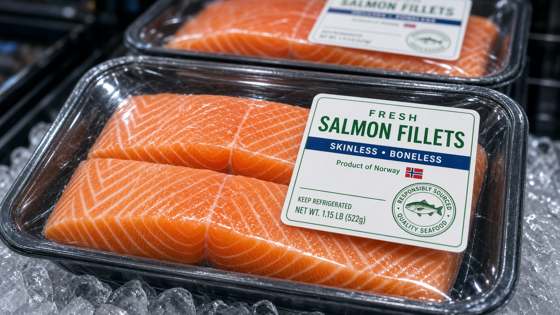
- Was it previously frozen? Many fish sold as fresh were frozen earlier, which is not a problem if it is labelled correctly and handled well. See how labelling works in our guide to fresh versus frozen-thawed labels.
- Where is it from, and is it wild or farmed? Origin and production method are required for many unprocessed fish at US stores.
- Can I smell it? Staff should be willing to let you check, or to hand it over the counter in a bag.
When frozen is the better supermarket fish counter choice
If the fresh case looks tired, the freezer aisle is a good alternative. Frozen fish is sealed and kept cold; the FDA says to choose packages that are not open, torn or crushed, and to avoid frost or ice crystals, which can indicate long storage or thawing and refreezing. The flesh should be hard. NOAA's FishWatch profiles are useful if you want to learn about a species before you buy it. Our comparison of fresh vs frozen nutrition and taste explains why frozen can win on quality.
Getting it home safely
The FDA says to refrigerate seafood at 40 F or below, use fresh seafood within two days or freeze it, and cook most seafood to an internal temperature of 145 F. Put fish in the cooler section of your bag, shop for it last, and go straight home. More detail is in our guide to ideal storage temperatures for fresh fish.
Big chain or independent shop?
The same checks apply to independent fishmongers, which may have different strengths such as in-house filleting. Large chains can have good certification records; see our look at UK certified seafood leaders. But certification speaks to sourcing, not to the state of the fillet in front of you.
The reliable way to judge any supermarket fish counter is to trust your senses over the brand: check the ice, smell the fish, read the label, ask when it arrived, and walk to the freezer aisle if the answers do not satisfy you.