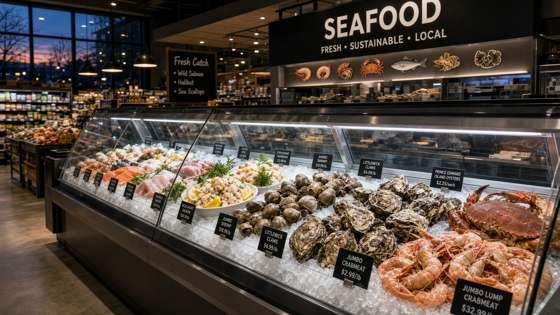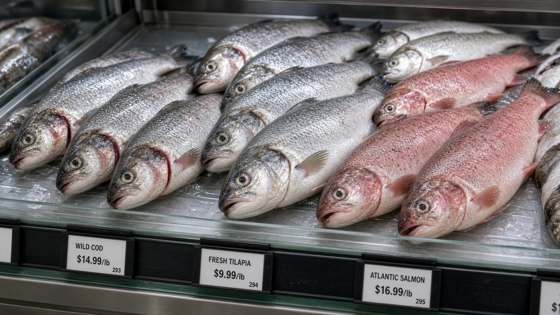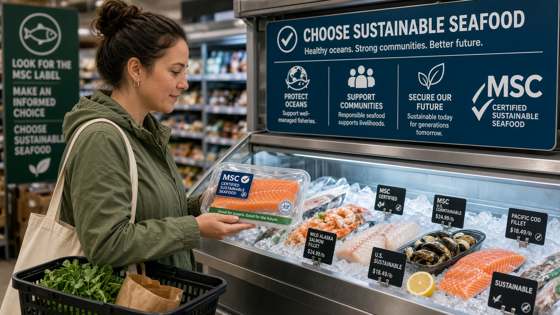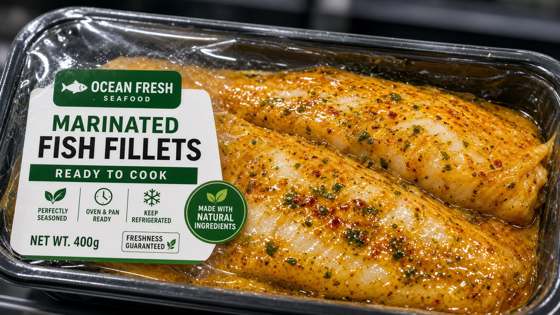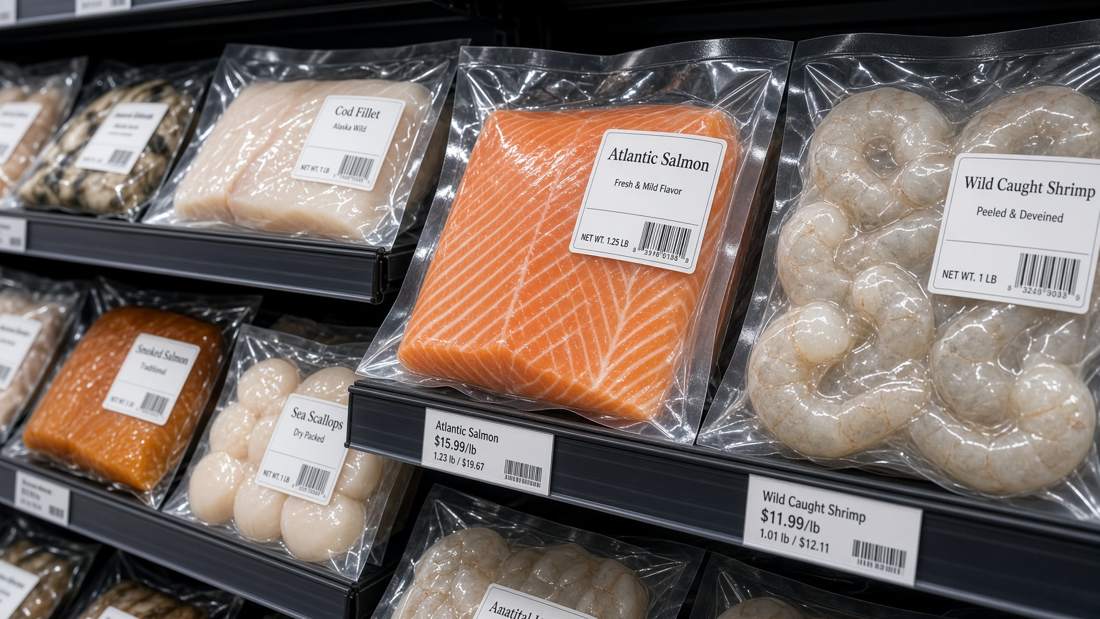
Supermarket seafood labels pack a lot of information into a small space, and some of it is legally required while some is voluntary marketing. Once you know which is which, a chain-store fish case becomes much easier to read, whether you are buying a fresh fillet, a frozen bag or a tin.
The label the law requires: origin and production method
In the United States, the Country of Origin Labeling (COOL) program is a food labeling law covered on the USDA Agricultural Marketing Service COOL page. Its covered commodities include wild caught and farm raised fish and shellfish, and for these the retailer must declare the method of production, meaning wild or farm-raised, as well as the country of origin. Full-line grocery stores, supermarkets and warehouse clubs that hold a PACA licence are among the retailers that must provide the information at the point of sale. COOL does not extend to processed foods or multi-ingredient items, so a breaded fish stick or a seafood salad may not carry the same detail. Our COOL explainer goes further into what you should expect to see.
Why wild versus farmed matters on supermarket seafood labels
Wild or farmed is not a quality grade. It tells you which standards to look up. Wild fish can be checked against the MSC program or a species rating, while farmed seafood is usually covered by farming standards such as ASC. Knowing the category tells you which logo to look for.
Voluntary logos on supermarket seafood labels
According to the MSC comparison of seafood labels, the main programs break down like this:
- MSC blue fish: wild-caught fish from a fishery independently assessed for stock health, impact on other species and habitats, and management. The MSC says the product must also come from a certified chain of custody.
- ASC: responsible fish farming. Some packs carry both the MSC and ASC logos.
- Seafood Watch: a species-level recommendation service used by shoppers and some retailers; it is not a pack logo as such, so look species up yourself.
- Fair Trade USA and similar programs: focus on labour and social conditions, which the MSC says its own label does not cover.
- Dolphin-safe: speaks only to interactions with dolphins, not to other species or the wider environment.
Farmed seafood may also show standards such as Best Aquaculture Practices or GLOBALG.A.P., which several chains name on their sourcing pages.
Claims without a logo
Phrases such as "responsibly sourced", "sustainably caught" or "ocean friendly" may describe a retailer policy rather than a certified product. They are not automatically wrong, but they are not an independent check either. Ask the counter or customer service what standard sits behind them. Legal challenges have targeted this area; for example, a class action filed in 2026 alleges that Hannaford's "sustainable" farmed salmon signs were misleading, a claim the court has not decided. See our explainer on the Hannaford salmon lawsuit for the details.
Condition and handling labels
Do not forget the practical labels. The FDA's seafood buying advice says to avoid frozen packages that are torn or crushed, and to be wary of frost or ice crystals, which can mean long storage or thawing and refreezing. It says fresh seafood should be used within two days of purchase if kept at 40 F or below, and otherwise wrapped tightly and frozen.
A quick routine for the fish case
- Find the origin and wild or farmed line.
- Look for a logo and match it to the right category (MSC wild, ASC farmed).
- Check for a catch method, especially on tuna.
- Check the date and condition of the pack.
- If a claim has no logo, ask who verifies it.
For the bigger picture of what the word on a sign can mean, read what "sustainable" really means at the counter.
With a short routine like this, supermarket seafood labels turn from clutter into useful signals. Spend the extra ten seconds on origin, the logo and the condition of the pack, and you will make better buying decisions in any chain.