The Hannaford salmon lawsuit is a proposed class action over whether a supermarket can call farmed salmon sustainable, and it is at the very start of its life. Everything below describes allegations in a court filing. Hannaford and its parent company have not been found liable, and we did not find a published response from either company in the sources we checked.
What the Hannaford salmon lawsuit says
According to a class action tracking site, a New York shopper filed a proposed class action on 13 October 2026 in the US District Court for the Northern District of New York against Hannaford Bros. Co. and its parent, Ahold Delhaize USA Services, as Boyle v. Hannaford Bros. Co., No. 1:26-cv-02108. The same source says no class has been certified and there is no settlement. SeafoodSource reports that the plaintiff is represented by FarmSTAND, the Center for Food Safety and two law firms.
The Hannaford salmon lawsuit allegations
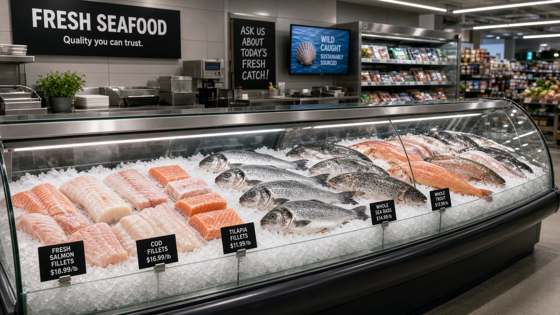
The tracking site's summary says the plaintiff bought Hannaford farm-raised salmon products in 2025 and 2026 and that the complaint focuses on in-store signs using phrases such as "sustainable seafood". It alleges that farmed salmon from net pens, including supply it links to Cooke Aquaculture in Maine and Atlantic Canada, causes problems such as nutrient pollution, chemical use, escapes and die-offs, and that the sustainability marketing let the retailer charge more. SeafoodSource reports the complaint states that no reasonable consumer would believe such farmed salmon is sustainable. Those are the plaintiff's claims, and a court has not decided them.
Why seafood sustainability claims face legal scrutiny
This is not the first case of its kind. SeafoodSource reported that two 2021 lawsuits over Aldi's "sustainable" farmed salmon labelling were dismissed after mediation. A judge had denied Aldi's motion to dismiss in one case, finding consumers could reasonably view the word "sustainable" as misleading. Aldi denied the labelling was misleading, but agreed to revise its marketing and begin shifting some supply to ASC or Global Animal Partnership certified farms. Separately, in August 2026, a suit against Amazon alleged that its seafood sustainability wording and MSC logos on products were misleading; Supermarket News reports the case is ongoing and that the MSC said it stands behind its program. The pattern is that plaintiffs are testing broad sustainability words on farmed fish.
What shoppers can do
- Distinguish a general sign from a specific, verifiable label. A named standard such as ASC is easier to check than the word "sustainable" alone.
- Look at the farmed salmon's origin and the farming standard on the pack. The ASC website explains its program.
- Check the species and source on Seafood Watch before buying.
- Compare prices; a premium for a vague claim may not be worth paying.
Our guides to salmon farming and to what "sustainable" means at the counter cover the background.
Whatever happens in court, the Hannaford salmon lawsuit is a useful reminder to ask what stands behind a sustainability sign. If a claim names a standard, check it; if it names nothing, ask the store, and let the answer guide your purchase.