Whole Foods seafood standards are among the most detailed published by a US grocery chain, and they spell out specific things the store will not sell. They also come with limits that are worth understanding if you are paying a premium for peace of mind.
What the Whole Foods seafood standards prohibit
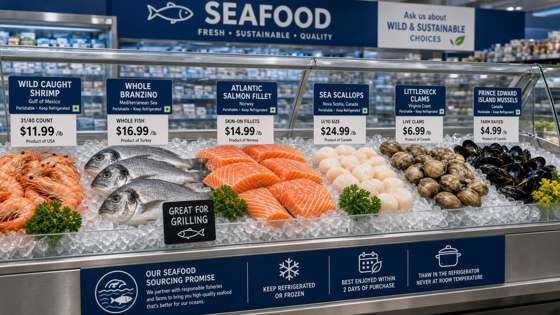
According to the chain's seafood standards page, all seafood must be "responsibly farmed or sustainable wild caught", and anything that does not meet the standards is not sold. The page lists these specifics:
- No cloned or genetically modified seafood.
- Sodium bisulfite and sodium tripolyphosphate (STPP) are among the more than 300 food ingredients prohibited when used to treat seafood.
- Carbon monoxide and filtered wood smoke are not allowed for colour retention.
- Farmed shrimp operations may not convert sensitive ecosystems such as mangrove forests.
- Farmed salmon may not be genetically modified or cloned, and antibiotics, synthetic pesticides and added growth hormones are not allowed.
- Live lobsters are sold only at the Portland, Maine and Hyannis, Massachusetts stores.
For wild-caught seafood, the page says it must come from MSC-certified fisheries or be rated Green or Yellow by Seafood Watch. Seafood must be traceable to the farm or fishery, and the page says canned tuna suppliers must use electronic tracking from vessel to can. Those are company statements; the best independent check is still the label.
Why Whole Foods seafood standards cover additives
Some phosphate and bisulfite treatments are used to hold moisture or colour in fish and shrimp. A ban means these treatments should not appear on the fish you buy at that chain. If you are sensitive to sulfites, see our guide to sulfites in shrimp.
How Whole Foods scored with Greenpeace in 2025
In Greenpeace USA's tuna scorecard, published in March 2026, Whole Foods ranked first of 16 retailers with 71%, up from 58%, and was one of just two retailers to pass, according to the Greenpeace report page. Greenpeace credited the chain's new Seafood Code of Conduct, which addresses forced labour, but noted it still allows up to 11 months at sea, well above the three months Greenpeace recommends. So the chain leads a field in which no one scored perfectly.
What the standards do not promise
- MSC certification covers environmental performance, not labour conditions, as the MSC itself states.
- Whole Foods is not a defendant in the 2026 suit over Amazon's seafood claims; a Whole Foods private-label product was mentioned only because one plaintiff bought it through Amazon, according to Supermarket News. Those claims are allegations and the case is ongoing.
- Standards describe the sourcing rules, not the freshness of any given fillet on any given day.
How to use this when you shop
Treat the rules as a baseline and test it. Ask where a fillet came from, check the label, and compare prices with other chains. Our Greenpeace scorecard guide shows how the whole field ranked, and the label decoder shows what each logo means.
The fair verdict on Whole Foods seafood standards is that they are specific, public and demanding by US chain standards, with room to grow on labour. If those rules matter to you, they give you something concrete to check against what is in the case.