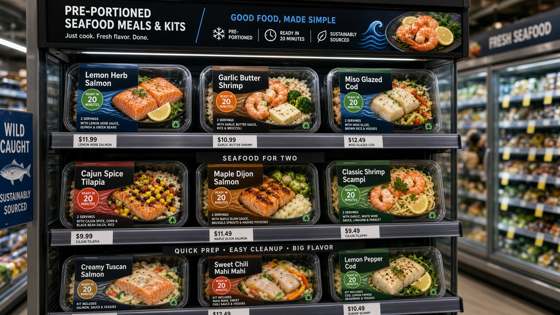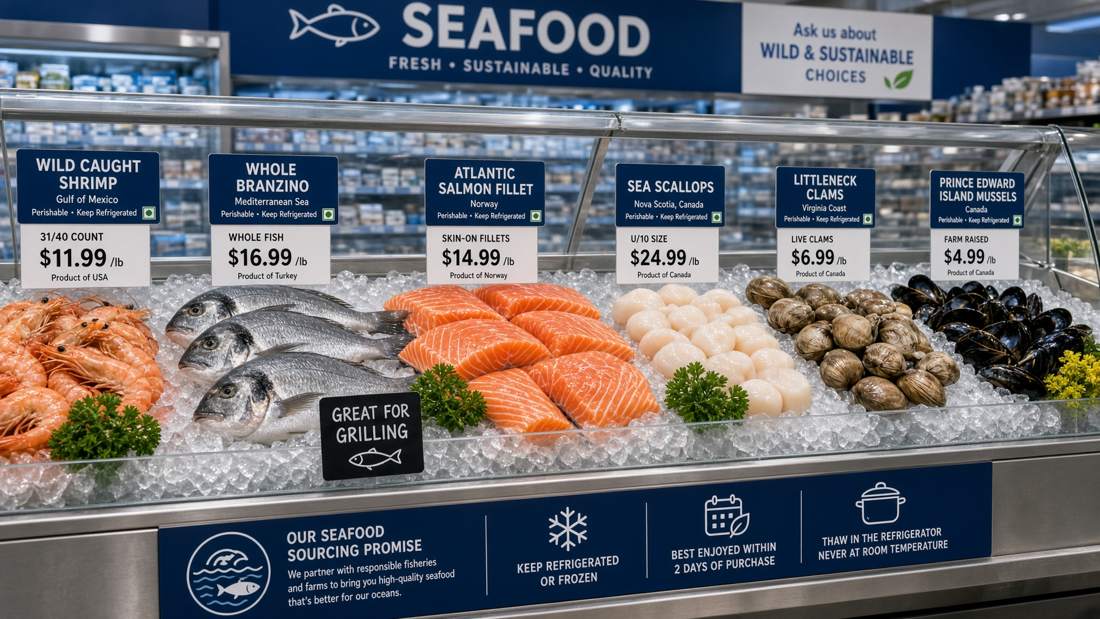
The Walmart seafood policy is one of the few big-box policies with dated, specific supplier requirements that you can read in full, even though much about the fish itself remains out of public view. We looked for a published breakdown of the seafood in Walmart stores and did not find one, so this article covers what the company and independent reviewers have actually published, mainly about tuna.
What Walmart's tuna policy requires
In June 2023 Walmart announced an enhanced seafood policy for tuna covering Walmart U.S., Walmart Canada and Sam's Club. According to the announcement:
- Suppliers are to source only from vessels with 100% observer monitoring, using human observers or electronic monitoring, by 2027.
- Suppliers are to source from fisheries that avoid high-seas transshipment, meaning the transfer of fish between vessels, unless it is covered by full observer monitoring, also by 2027.
- The companies aim for all shelf-stable private and national brand tuna to come from a Fishery Improvement Project or an MSC certified source by 2025.
The announcement does not describe enforcement mechanisms or penalties. We could not verify from public sources whether the 2025 goal was met, so check Walmart's latest sustainability reporting for progress.
What Greenpeace made of the Walmart seafood policy
Greenpeace USA's fourth tuna scorecard, published in March 2026 and available on its High Cost of Cheap Tuna page, scored Walmart 40% and placed it seventh of 16 retailers. Walmart did not complete the survey, so Greenpeace scored it from public information. The report credits Walmart with publishing more policies and reports than some competitors, taking part in the Seafood Task Force and joining The Nature Conservancy's Tuna Transparency Pledge. It criticises the high-seas transshipment caveat, arguing that allowing transshipment even with observers extends time at sea, and says there is no public vessel list. This is one advocacy group's assessment of tuna only, not a verdict on every product in the store.
Shopping for Walmart seafood policy in practice
A written policy only helps you if you can connect it to what is in your hand. These steps work at Walmart or any big-box store:
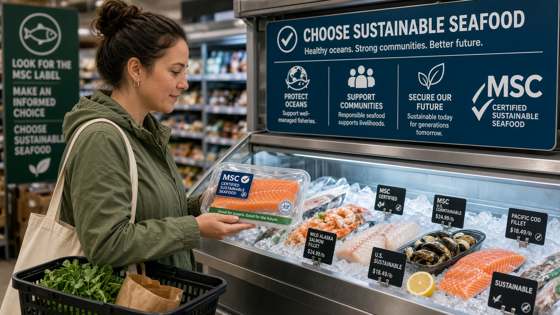
- Check the tuna tin for the MSC logo and the catch method. Pole-and-line and troll are more selective than some alternatives; our guide to purse seining explains the trade-offs.
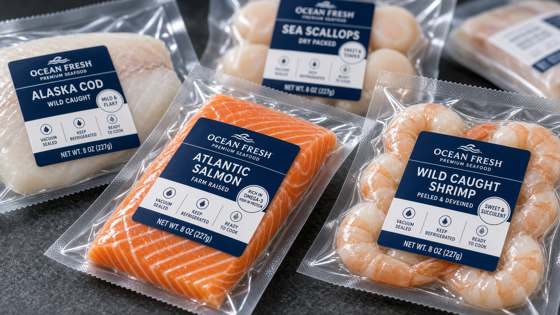
- Read the COOL line on fresh and frozen fish for origin and wild or farmed status.
- Look for an ASC or BAP logo on farmed shrimp and salmon.
- Look up the species on the Seafood Watch recommendation search before you buy in bulk.
Bulk and frozen buying
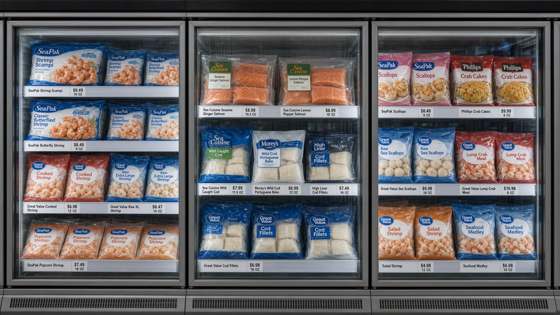
Big-box stores make bulk frozen bags tempting. The FDA says to avoid frozen packages that are torn or crushed and to be wary of frost, which can signal thawing and refreezing. Keep fresh fish at 40 F or below and use it within two days, or freeze it.
Where this fits
Costco takes a different approach, with a published policy focused on its Kirkland Signature products, covered in our Costco guide. For the broader question of which chains publish information, see the transparency gap.
The honest summary of the Walmart seafood policy is that its dated targets are specific and checkable, independent scoring on tuna is low, and the product-level data shoppers might want is not public. Use the pack label as your evidence, and revisit the company's progress reports as the 2027 deadlines approach.