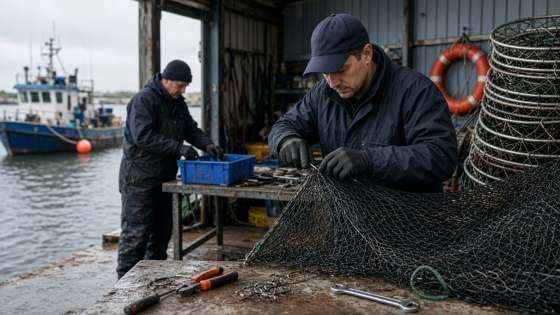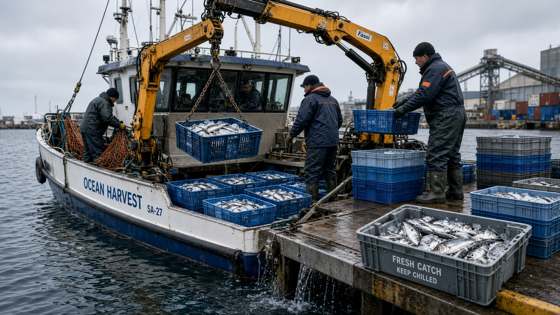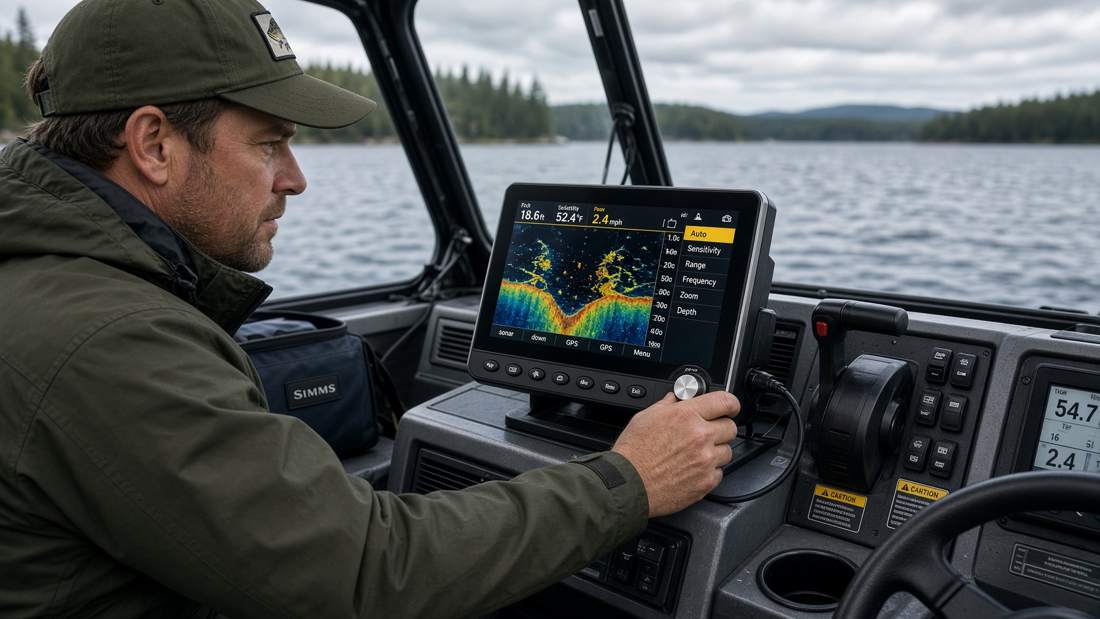
Purse seining is how most canned tuna, sardines and mackerel are caught, which is why they are cheap and widely available; check the can for "free school" or "pole and line" if you want lower-bycatch tuna. A vessel finds a school, a skiff pulls a long wall of netting around it, and a cable is drawn tight like the string of a purse. If you have opened a can of skipjack or albacore, it was probably caught this way.
How a purse seine set works
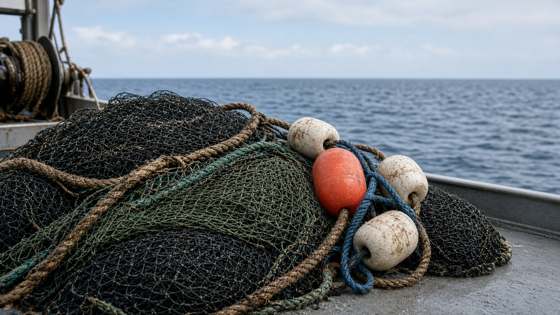
A purse seiner carries a very large net, sometimes well over a mile long, stacked on its stern. When the crew spots a school, either by sight, bird activity, sonar or helicopter, they launch the net in a circle around it. The bottom cable is pulled in so the net forms a bowl, and the net is then gradually hauled in until the fish are concentrated beside the hull, where they are lifted aboard with a large brailer or pumped into holds. The whole set may take an hour or two.
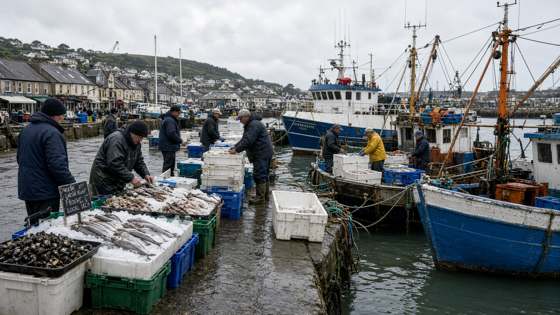
Fish destined for canning are frozen quickly in brine wells or cold storage on board, then offloaded in port for processing. For small pelagic fish such as sardines, smaller seiners work closer to shore and land their catch within a day for the cannery or fresh market.
Why canned tuna comes from purse seines
Volume and economics
Skipjack, the species most often found in canned light tuna, travels in huge, dense schools in tropical waters. A purse seine can capture thousands of pounds in one set, which makes it by far the most efficient way to supply canneries. That efficiency is what keeps a can of tuna inexpensive. Higher-priced albacore and yellowfin are also caught by seine in some regions, though troll, pole-and-line and longline fisheries play a part too.
Different ways to find tuna
Seiners set on tuna in two main ways. Free-school sets target tuna schools swimming on their own. Sets on floating objects use fish aggregating devices, or FADs, which attract fish to drifting structures. FAD sets can bring more bycatch of juvenile tuna, sharks and other species, so labels sometimes distinguish "free school" from FAD-associated catch. Our article on lights and fish aggregating devices explains this in more detail.
Bycatch and what the label can tell you
Purse seines can be quite selective when set on a single-species school, but they are not perfect. Concerns include dolphin interactions in certain regions, bycatch in FAD sets, and the capture of undersized fish. Many fisheries use measures such as dolphin-safe procedures, limits on the number of FADs, non-entangling FAD designs and observer coverage. Tuna cans in the United States may carry a dolphin-safe label governed by federal rules; check current rules or the agency's guidance if you want to know exactly what the label covers.
For ratings, consult Seafood Watch, which evaluates tuna by species, ocean region and gear, and the Marine Stewardship Council, which lists certified tuna fisheries. The FDA's advice about eating fish also notes that canned light tuna generally has lower mercury than albacore, which is useful for frequent eaters.
Purse seining beyond tuna
Sardines, anchovies, herring and mackerel are small, oily fish that school tightly near the surface, which makes them natural purse seine targets. They are rich in omega-3 fats, and because they sit low on the food web they are often considered efficient, lower-impact seafood when stocks are healthy and well managed. Stocks can swing sharply with ocean conditions, so quotas are adjusted frequently. See seasonal migration for when these fish are most available.
Smart tips for buying purse seine seafood
- Read the can for species, catch area and any method statement such as "free school" or "pole and line."
- Look for third-party certification where it matters to you.
- Compare brands that disclose the fishing method with those that only name the species.
- For fresh sardines, buy whole fish with bright eyes and a clean sea smell and cook the same day.
Buying and cooking canned and fresh purse seine fish
Reading a tuna can
A can tells you more than most shoppers notice. Check four things: the species (skipjack is labeled light, albacore is labeled white), the packing liquid (water or oil), the fish style (solid, chunk or flake) and any method statement. Solid or fillet packs cost more but give you whole pieces for salads and sandwiches; chunk and flake are cheaper and fine for casseroles, melts and pasta. Oil-packed tuna is richer and often tastes better straight from the tin; water-packed is leaner.
Making the most of sardines and mackerel
Canned sardines and mackerel are some of the best-value proteins you can buy. Mash them on toast with lemon, toss them through hot pasta with garlic and chili, or stir them into a quick fish cake mix with mashed potato. Skin-on, bone-in tins offer extra calcium, and the bones are soft enough to eat. Once opened, move leftovers to a covered container, refrigerate and use within two days.
- Store unopened cans in a cool, dry cupboard and check the date code.
- Skip dented, bulging or leaking cans.
- Fresh sardines should be firm, shiny and smell of the sea, and are best grilled whole the day you buy them.
Purse seining combines high efficiency with a range of environmental outcomes, depending on how it is practiced. Whether you reach for a budget can of skipjack or a premium tin of sardines, reading the label for method and region lets you decide which version of this gear you want to support.