Online seafood sales compliance sounds like a business topic, but it directly affects what shows up on your doorstep. Sellers who ship seafood must follow food safety, labeling and shipping rules, and shoppers who know the signs can pick reliable vendors and handle each delivery safely.
Online seafood sales compliance: what rules sellers follow
Selling seafood online does not remove the usual requirements. Processors must follow the FDA's Seafood HACCP rules, food businesses often have to register with the FDA, shellfish must come from approved sources and carry tags, and labeling rules apply, including country of origin for covered products, which USDA explains on its COOL page. State licensing and shipping rules can add more, so check current rules. The business side of paperwork is covered in licenses and permits.
How to vet an online seller
- The site shows a real business name, address and contact information.
- Product pages name the species, origin, whether wild or farmed, and whether previously frozen.
- Shipping details explain packaging, delivery time and what happens if something arrives warm.
- There is a clear refund or replacement policy.
- Reviews mention condition on arrival, not only taste.
What to check when the box arrives
- Open the box promptly. Do not leave it on the porch.
- Frozen seafood should be solid, or at least have ice crystals and feel as cold as a refrigerated item. USDA guidance says food that has thawed but remains cold may be refrozen, with some quality loss.
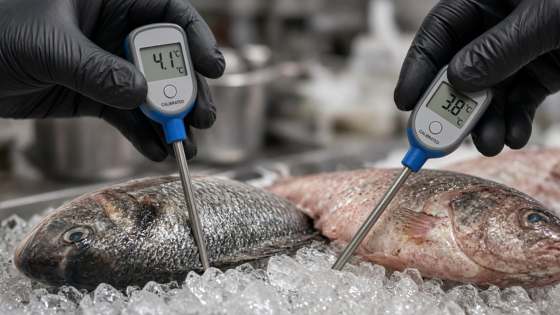
- Perishable seafood should arrive cold, with ice packs or dry ice still working. FDA and USDA guidance says to throw out perishable food that has been above 40 F for more than two hours, or one hour above 90 F.
- Check that packaging is intact, with no leaks, punctures or swollen bags.
- Check labels and lot codes and keep a photo.
- Live shellfish should smell of the sea, and shells should be closed or close when tapped.
Online seafood sales compliance and what to do if it arrives warm
Take photographs of the box, packaging and any thermometer reading, keep the packaging, and contact the seller right away. Do not taste to judge it. If in doubt, throw it out, and request a refund or replacement as the seller's policy allows. The basic cold rules are in the FDA's safe food handling guidance, and our article on temperature abuse in seafood explains why warm fish is risky.
If you think a seller broke the rules
Complain to the seller and your payment provider, and consider reporting to your state consumer protection office. For a safety issue, report to the FDA through its problem reporting page.
Choosing what to order online
Frozen is usually the safer bet for shipping
Seafood shipped frozen, vacuum-sealed and packed with dry ice or gel packs has a built-in buffer against delays. Fresh fish shipped overnight can work, but a delay of a day can ruin it. If you are ordering for the first time, start with frozen fillets or shrimp and judge the seller on packing and quality before spending more.
Read the product page like a label
- Species name and market name, not just "white fish".
- Wild or farmed, and country of origin.
- Weight before or after glazing (the ice coating on frozen fish), since glaze adds weight.
- Whether the fish is raw or cooked, and whether it is sold as ready to eat.
- Any sulfite, allergen or additive information.
Understand the true cost
Shipping can be a large share of the price because cold packaging is heavy. Compare the delivered price per pound with your local store, and watch for minimum order sizes, subscription terms and delivery fees. A subscription may save money if you cook fish weekly, but check how to pause or cancel. Avoid sellers who add unexpected charges at checkout, and keep screenshots of the terms you agreed to.
Delivery day plan
- Choose a delivery day when someone is home, or use a locker or secure address.
- Have freezer and refrigerator space cleared in advance.
- Bring the box inside and open it immediately.
- Move frozen items to the freezer right away and perishable items to the refrigerator.
- Record any problem with photos before moving things around.
Refunds and chargebacks
Reputable sellers offer a replacement or refund for items that arrive warm or damaged, usually if you report within a stated window, often with photos. If the seller does not respond, contact your card issuer to ask about disputing the charge. Keep your emails and order numbers. Rules and time limits vary, so check the seller's policy and your card agreement.
Red flags
- No physical address or phone number.
- Prices far below the market with no explanation.
- Claims that sound too good, such as "cures" or "guaranteed" health benefits.
- Reviews that are all identical in style.
- Refusal to say where the seafood comes from.
Handled well, shipping can bring good seafood to places far from the coast. Use our guide on packaging for shipping fresh seafood to understand what good packing looks like.
Online seafood sales compliance is a two-way street: sellers must follow the rules, and a prepared shopper knows what to look for when the box lands.