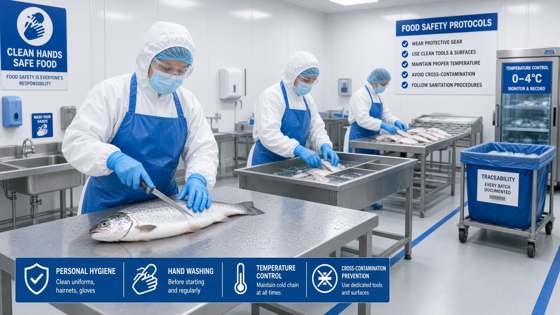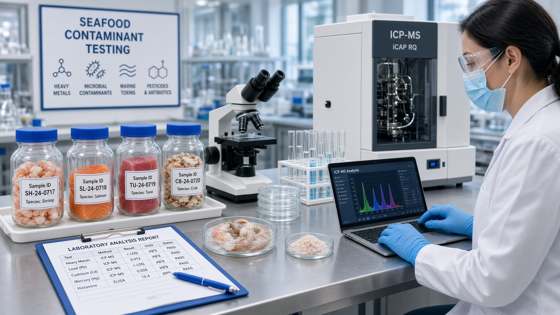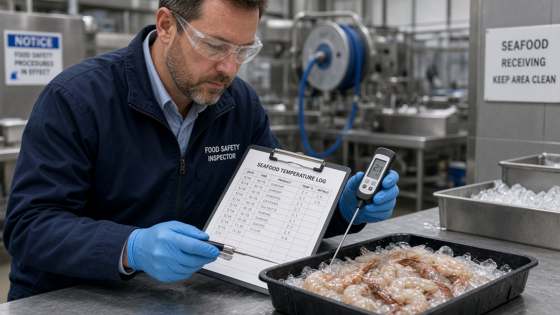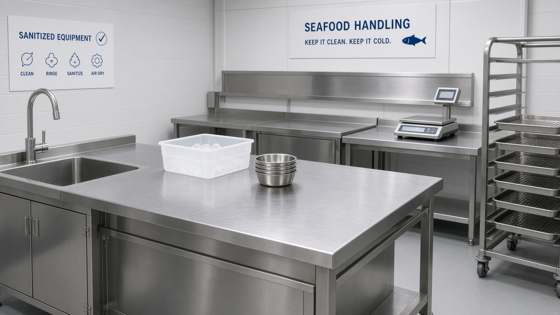
Seafood safety in food service covers everything a restaurant, caterer or cafeteria does to keep fish and shellfish safe, from receiving boxes on the dock to the plate at your table. Diners cannot see the kitchen, but a few clues and questions tell you a lot.
How restaurants are supposed to handle seafood
State and local health departments inspect restaurants, and most base their rules on the FDA's Food Code, though states adopt their own versions, so check current rules locally. Core expectations include buying seafood from approved sources, holding cold seafood at 41 F or below, separating raw and ready-to-eat foods, cooking to safe temperatures and keeping shellfish tags for 90 days. Our articles on retail display regulations and food safety inspections cover related points.
Seafood safety in food service starts with cooking temperatures
The FDA recommends cooking fish to an internal temperature of 145 F, and finfish should be opaque and flake easily with a fork. Shrimp, lobster and crab turn pearly and opaque, and clams, mussels and oysters should open during cooking, with unopened shells discarded. See the FDA's safe food handling guidance.
Seafood safety in food service when it is served raw
Raw and undercooked seafood carries more risk. The Food Code requires restaurants that serve raw or undercooked animal foods to give a consumer advisory, often a note on the menu with an asterisk. This matters most for oysters, which can carry Vibrio bacteria and norovirus, as discussed in managing Vibrio risk in oysters.
- Pregnant people, young children, older adults and people with weakened immune systems or liver disease are advised against eating raw shellfish.
- Sushi and sashimi should use fish handled for raw consumption, and FDA guidance describes freezing requirements for certain fish eaten raw. Ask about it.
- Raw does not mean unregulated, but cooking is the surest way to lower risk.
Questions you can ask your server
- "Where do the oysters come from, and what is the harvest date?" A good server can find the tag.
- "Is the fish fresh or previously frozen?"
- "Can the kitchen handle a seafood allergy safely?" Fish and crustacean shellfish are major allergens, covered in allergen labeling for seafood products.
Signs of careful handling
- The seafood smells clean, not fishy or sour.
- Hot dishes arrive hot and cold dishes cold.
- The restaurant displays its permit and a recent inspection result.
- Staff know the species, origin and preparation.
If you get sick after a meal
Note what you ate, when, and who else shared it. Seek medical care if symptoms are severe. Report to your local health department so it can look for others affected, and you can also use the FDA's problem reporting page.
Seafood safety in food service depends on both the kitchen and the guest, and a couple of calm questions are well within the diner's role.