Seafood in Connecticut centers on Long Island Sound, a sheltered estuary that has supported oystering for generations and still hosts working boats in towns from Stonington to Norwalk. The state is small, but its shoreline communities are deeply tied to shellfish, lobster and finfish.
Where to buy
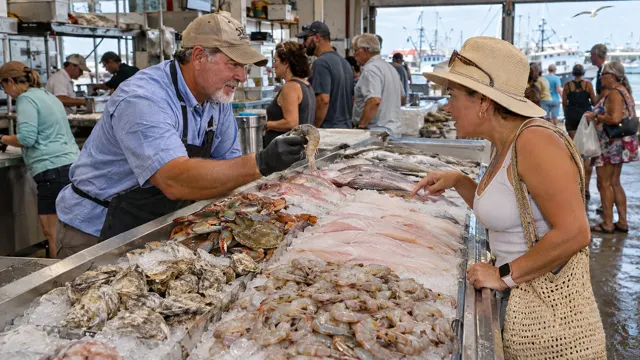
Coastal Connecticut has fish markets in shoreline towns, and oysters, clams and scallops are the standouts. Stonington dock sales and shoreline markets are good for scallops, fluke and squid. Farmers markets across the state often feature a seafood vendor. Restaurants buy oysters directly from growers, and some growers sell to the public at their farms; call ahead to confirm.
What is local and in season
Oyster farming is the state's best-known aquaculture activity, and Connecticut growers harvest from leased beds in the Sound, including waters off Norwalk, Stratford and Milford. Hard clams, bay scallops and mussels are also part of the shellfish scene. Stonington is widely recognized as Connecticut's main commercial fishing port, with boats landing scallops, squid, fluke and other species that go to markets across the Northeast. American lobster has been part of the state's heritage, though the Sound's lobster population has suffered, and the fishery is much smaller than in northern New England.
Shellfish classification and safety
The state agriculture department's aquaculture bureau classifies shellfish growing areas and regulates harvest, which means oysters and clams from the Sound are subject to monitoring and conditional closures after heavy rain. Buyers should look for harvest tags and dealer certification numbers on shellfish bags. During warm months, rapid chilling matters because bacteria grow quickly in oysters held above refrigeration temperature.
How to choose and what to ask
- Look for tags showing harvest date and location on any shellfish bag.
- Fresh-shucked oyster meats should be plump and smell clean, never sour.
- Ask your fishmonger which fish came from local boats this week.
Safety and rules in plain terms
Commercial harvesters need state licenses and shellfish growers hold leases or franchise rights, with rules on size limits and seasons. Recreational shellfishing is limited to designated towns and beds, and municipal permits often apply. State marine fisheries staff coordinate with regional bodies such as the New England and Mid-Atlantic councils, and the Atlantic States Marine Fisheries Commission.
Useful background before you shop: oyster farming techniques, New England seafood traditions and shucking oysters safely.
Shopper resources: markets, sellers and trade groups
- East Coast Shellfish Growers Association
- Cape Cod Commercial Fishermen's Alliance (regional fishing community)
- Local Catch Network
- LocalHarvest