Oyster farming is the source of most oysters you will find at restaurants and fish counters today. Oysters are filter feeders, so they need no feed: they simply strain algae and nutrients from the water around them. That makes farmed oysters one of the lower-impact seafoods, and it also means that where an oyster grew shapes how it tastes.
How oyster farming works
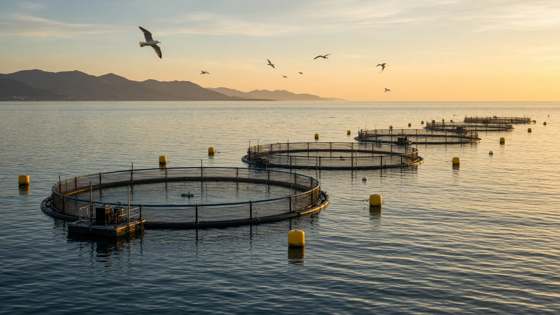
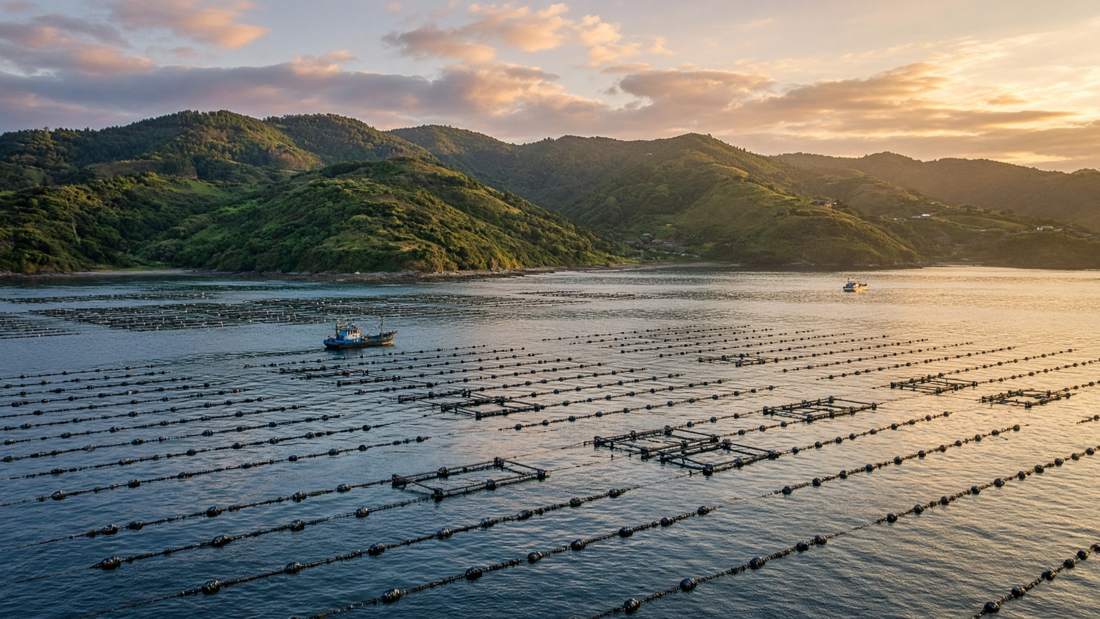
Farmers start with tiny oyster seed from a hatchery. The young oysters are placed in mesh bags or cages, often held off the seabed on racks, or suspended in floating gear so they stay in nutrient-rich water. Some are grown on the bottom of the bay. Over a year or two they reach market size. Farmers tumble and sort them to shape the shell and keep growth even, which is why farmed oysters often have deep cups and tidy shapes that are ideal for serving on the half shell.
Why farmed oysters taste different
Merroir
Oysters taste like their water. Salty open-ocean sites give briny, crisp oysters; calmer, fresher bays often give sweeter, milder ones. Water temperature and growing time add to the effect. Naming an oyster by its bay or farm lets you find your favorite style.
Oyster farming and seasonal variation
Oysters are plumper and sweeter in cool months, and they may be thinner and creamier after spawning in warm weather. Experienced buyers use that rule of thumb, but quality varies by region, so ask your fishmonger.
What oysters cost and why
Price is shaped by how long the oyster took to grow, the labor of handling, the distance to market and demand for named varieties. Larger, deep-cupped, well-known brands cost more. For cooking, such as grilling, stews and frying, choose cheaper, smaller or unnamed oysters; the best ones are worth saving for raw service. Our grilled oysters with chile butter is a good use for budget oysters.
Buying and eating oysters safely
Raw oysters can carry bacteria such as Vibrio, especially in warm months, and people with certain health conditions are at higher risk. The FDA's fish advice and public health agencies recommend caution; check current guidance. In the US, shellfish are harvested from classified waters under the National Shellfish Sanitation Program, which the Interstate Shellfish Sanitation Conference helps coordinate. Practical steps:
- Buy from a reputable seller that can tell you the harvest area and date.
- Look for shells that are closed or that close when tapped. Discard any that stay open.
- Keep oysters cold, on ice and covered with a damp cloth, not submerged in fresh water.
- Shellfish tags on bags or boxes show the harvester and harvest location; ask to see them.
- If you are in a higher-risk group, cook oysters fully.
See our guide to shellfish storage and how to shuck oysters safely.
How many oysters to buy and how to serve them
For a raw appetizer, plan on three to six oysters per person, depending on size and the rest of the meal. Serve them on crushed ice with lemon wedges and a mignonette, a simple sauce of minced shallot and vinegar. A good oyster should smell like clean seawater and have plump, glossy flesh with clear liquor in the shell. Keep the shuck knife sharp, protect your hand with a thick towel or glove, and discard any oyster that smells off or looks dry. For cooked dishes, baking, grilling and frying all work well, and cooking is the safest way to enjoy oysters if you are in a higher-risk group.
Oyster tips for budget shoppers
- Buy by the dozen or half-peck rather than by the piece, since bulk pricing is usually lower.
- Ask for the day's best value; fishmongers often have unlabeled "house" oysters that are fine for cooking.
- Shucked oysters in a jar are handy for stews and stuffing, but check the date and keep them cold.
Oyster farming offers a low-impact, flavor-rich seafood, and when you buy from a trusted source and follow safe handling, farmed oysters are a treat worth savoring.