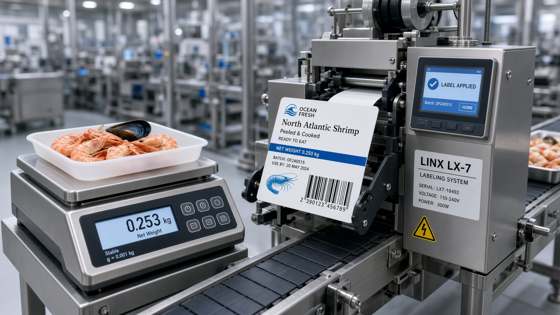
The essential equipment for a seafood shop is not a secret, and as a shopper you can see most of it from the customer side of the counter. Knowing what each piece does lets you judge whether a seller is serious about keeping fish cold and clean before you hand over any money.
Essential equipment for a seafood shop: the cold chain
Fish spoils faster than most foods, so cold is the foundation. A good shop has a walk-in or reach-in cooler for storage, a display case or ice bed for the front and, for frozen products, a freezer that holds product firmly frozen. Behind the scenes, thermometers and, in many shops, temperature logs make sure the equipment stays in range. You will not always see these, but you can ask. Understanding how cold is maintained from catch to sale is explained in our guide to the cold chain from boat to plate.
Ice and display cases in the essential equipment for a seafood shop
Whole fish and fillets are often displayed on a bed of crushed or flaked ice, with drainage so melting water does not sit around the fish. Look for clean, plentiful ice with fish nested into it rather than slumped on a tray at room temperature. Fillets in a mechanically chilled case should feel cold when you hover a hand above them. Our article on display ice machines explains why ice type matters.
Tools at the cutting station
- Sharp, clean knives of several sizes for filleting, skinning and portioning.
- Color-coded or separate cutting boards for raw seafood and for cooked items.
- A scale that is certified and visible so you can see the weight you are paying for.
- Scalers, pin-bone pliers and shucking tools for shellfish.
- Handwashing and sanitizing facilities within reach of the staff.
Packaging and take-home gear
A thoughtful shop wraps fish in paper or bags that contain leaks, adds ice for longer trips and may offer insulated bags. For vacuum-packed products, check that the seal is tight and the package is cold. Some vacuum-packed or reduced-oxygen fish products need strict refrigeration, so follow the storage directions on the label, and see the FDA's guidance on selecting seafood and the FishWatch site for species information.
Equipment you may notice at a great shop
Some shops also have live tanks for lobster or crab, smoking equipment, a band saw for cutting steaks and a dedicated shellfish storage cooler. These are signs of a seller who handles a wide range of products and cares about quality, though they are not required for a good shop. Tanks should have clear water and active, lively animals. Our guide on live lobster and crab care shows what healthy looks like.
Quick checklist to carry with you
- Is the case cold and clean, with ice or a chilled surface?
- Are raw and ready-to-eat items separated?
- Is there a visible thermometer or can staff tell you the case temperature?
- Are knives, boards and scales clean?
- Does the staff wrap fish properly and offer ice for the trip home?
If a shop passes these tests, you can be fairly confident that its essential equipment for a seafood shop is up to the job, and you can spend your attention on the fun part: choosing what to cook.