Broodstock management is the care of the adult fish and shellfish kept to produce eggs and young, and it quietly shapes almost everything about farmed seafood: how fast it grows, how healthy it is, how steady the supply is and how much it costs. You will never see broodstock at the counter, but you taste the results.
What broodstock are
Every farmed animal starts as an egg. Broodstock are the mature males and females chosen to supply those eggs and milt. They are kept separately from the fish raised for market, fed special diets, and monitored closely, because a problem at this stage is multiplied across thousands or millions of offspring. A single female salmon, trout or shrimp can produce a large number of eggs, which is why a small number of well-managed parents can supply an entire farm.
How broodstock management works
- Selection. Breeders choose parents for growth, survival, disease resistance and fillet quality; see our article on selective breeding in aquaculture.
- Diet. Parent fish eat nutrient-rich feeds because egg quality depends on what the mother eats.
- Timing. Light and temperature are adjusted to bring fish into spawning condition at the right time of year, which is why some farmed fish is available year-round.
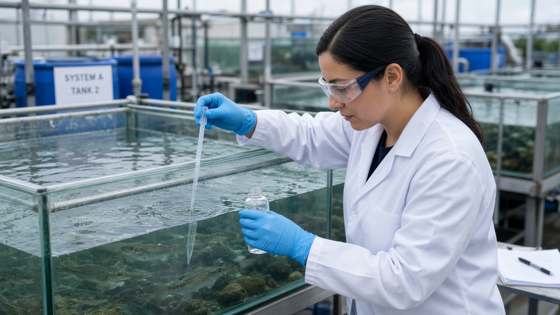
- Health screening. Parents are tested so that diseases are not passed to eggs and young.
- Records. Family lines are tracked to avoid inbreeding.
Why broodstock management matters for supply and price
Good broodstock management means farms can plan production and deliver the same species all year. It also explains price movements: if a disease hits breeding stock, or supply of quality juveniles tightens, fewer fish reach harvest months later. Shrimp is a clear example, since disease-free breeding stock is a major factor in the global industry described in our shrimp farming snapshot.
Wild-caught parents versus farm-bred parents
Some species are still produced using parents taken from the wild, while others are fully farm-bred over many generations. Salmon, trout and tilapia are farm-bred. For others, such as certain marine species, wild-caught parents may still be used, which can add pressure on wild populations. Seafood ratings take this into account: look at Seafood Watch recommendations for a specific species and country, which consider how the animals were sourced as well as how they were raised.
Does it change the taste?
Not directly. Flavor and texture come mainly from species, diet, water and harvest handling. Broodstock management shows up in consistency, meaning more fish reaching market size at similar quality, with fewer losses and less need for medication. Healthy parents produce hardier young.
Questions worth asking when you buy
- Is this species farm-bred from start to finish, or are wild animals taken for parts of the cycle?
- Does the product carry a third-party certification? The Aquaculture Stewardship Council standards cover responsible sourcing and farm practices.
- Which country and farm did it come from?
- Is it labeled as farmed or wild? Labels for fish and shellfish at retail generally have to say.
The next stage of the chain is the hatchery, which you can read about in hatchery operations 101. When you buy farmed seafood, good broodstock management is the unseen reason the product is steady, affordable and, when done well, easier on wild populations.