Cooperative fishing is an arrangement in which a group of fishermen, boats or businesses agree to work together on quotas, information, marketing or processing instead of racing one another for the same fish. For shoppers, the practical benefits can include steadier supply, more careful handling and a clearer story about where the seafood came from.
What Cooperative Fishing Looks Like
Cooperatives take several forms. Some are marketing groups, where members sell through a shared brand or dock. Others are quota cooperatives, where members pool their allowed catch and decide among themselves who fishes when. Some also share equipment such as ice machines, cold storage and boats or processing space, which a single small operation might struggle to afford.
Models differ by country and by fishery, so it is best not to assume every cooperative works the same way. The common thread is that members coordinate instead of competing in a rush.
The Problem Cooperatives Try to Solve
In a classic open fishery with a total catch limit, every boat has a reason to catch as much as possible as quickly as possible before the limit is reached. That race can mean fishing in bad weather, landing too much at once and flooding the market, which lowers prices and quality. Cooperative fishing replaces the race with agreed shares and schedules.
How Cooperative Fishing Benefits Shoppers
- Better timing: boats can choose calmer weather and fish when markets are ready, instead of rushing. That ties directly to weather and seafood supply.
- Smoother supply: when landings are spread over a season, shops can offer a species for longer.
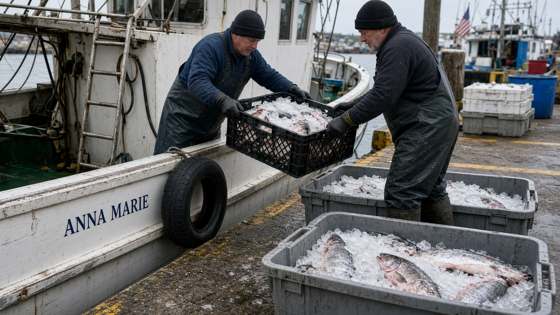
- Fresher, better handled fish: shared icing, cold storage and quick unloading help preserve quality.
- Less waste: coordinated fishing can reduce discarding when members share information about where undersized or unwanted species are found.
- Traceability: a cooperative often keeps records of who landed what, which helps shops answer your questions.
Sharing Information at Sea
Some groups share real-time data about areas with lots of bycatch, so other boats can avoid them. This kind of voluntary cooperation can reduce unwanted catch without needing new gear. It works alongside technology described in sonar and fish finding.
Catch Shares and Management
Many cooperatives operate within a larger management program, such as catch shares, where fishermen or groups receive a portion of the total allowable catch. NOAA Fisheries explains how US fisheries management works, including the role of regional councils and science-based limits. Whether a particular program improves outcomes depends on its design and enforcement, and results vary by fishery.
Cooperatives are not automatically sustainable. They are one tool, and a group can still overfish if the overall limit is set too high or enforcement is weak. Independent ratings from groups such as Seafood Watch help you judge the fishery as a whole.
What You Can Do as a Shopper
- Ask if the seafood comes from a cooperative or community-supported fishery. Some sell shares or direct boxes.
- Look for named boats, ports or groups on labels and menus.
- Support shops that buy directly from local fleets, since that shortens the chain and often improves freshness.
- Be flexible on species. Cooperative landings often reflect what is abundant this week.
Cooperatives and Small Boats
Small-scale fishermen benefit particularly from pooling resources, because they can access cold storage, markets and administrative support they could not manage alone. For a closer comparison of boat types, read small-boat versus large-vessel seafood.
Price and Freshness Tips for Cooperative Seafood
Seafood sold through a cooperative or direct from a dock often costs the same as or a little less than the grocery store, because fewer middlemen are involved. The bigger gain is freshness: fish that goes from boat to your cooler in a day or two usually keeps better in your fridge.
- Buy the species the dock is pushing. A big landing means good value; ask what is plentiful.
- Bring a cooler with ice packs. Direct-from-boat fish should be kept near 32 to 38 F (0 to 3 C) on the ride home.
- Ask for whole fish or fillets cut to order. Whole fish is often cheaper per pound, and the shop can fillet it for you.
- Cook or freeze within a day or two. Wrap tightly, press out air, and freeze extras.
- Check community-supported fishery options. Some groups offer weekly or monthly shares with set pickup days, so you know what you are paying before the season starts.
Also compare unit prices: a pre-portioned share can look pricey until you account for trimming, bones and waste you are not paying for.
A Realistic View
Cooperatives can involve disagreements, shared costs and complex rules, and not every community has one. But when they work well, they turn a competitive scramble into a managed supply chain. The result on your plate is often fresher fish, fewer surprises and a clearer link back to the people who caught it.
Next time you see a dock-direct label or a fishing group's name on the sign, take a moment to ask about it. Cooperative fishing is one of the quieter reasons some seafood counters stay well stocked, and understanding it makes you a more confident buyer.