The best shrimp handling and peeling advice is simple: keep shrimp very cold, thaw them gently in the fridge or under cold running water, and peel only when you are ready to cook, since the shell protects the meat from drying out and absorbs some of the knocks. Treated this way, even a bag of frozen shrimp cooks up firm and sweet.
Buying Shrimp
Most shrimp in stores were frozen soon after harvest, even if they are sitting on ice at the counter labeled "fresh" or "previously frozen". Frozen in the bag is often the better buy, because you control the thawing. Look for:
- Shells that are intact and translucent, not yellowing or with black spots on the shell edges (some melanosis is a quality issue, not necessarily unsafe, but it signals age).
- A clean, mild smell. Any ammonia or sour odor means pass.
- Bags with little ice crystal buildup, which suggests they have not thawed and refrozen.
- Firm, moist-but-not-slimy flesh.
Shrimp are sold by count, such as 21/25 per pound, meaning about 21 to 25 shrimp in a pound. Smaller counts mean bigger shrimp. Check the ingredient list too: some shrimp are treated with phosphates to hold water, and a few contain sulfites, which matter for people who are sensitive; see sulfite use in shrimp.
Thawing Without Wrecking Texture
The safest method is overnight in the refrigerator. In a hurry, put the shrimp in a sealed bag and submerge it in cold water for around 15 to 30 minutes, changing the water if it warms. Do not thaw on the counter or in warm water, and do not use hot water or the microwave unless you will cook them immediately. More detail is in thawing seafood safely. Pat shrimp dry before cooking so they sear rather than steam.
Shrimp Handling and Peeling Step by Step
- Rinse the shrimp in cold water and keep them chilled in a bowl set over ice if the kitchen is warm.
- Pinch the legs and shell at the underside, pull off the shell from the head end toward the tail. Leave the tail on for dishes like cocktail or skewers, or pull it off for pasta and stir-fries.
- With a small knife, slit along the back, curved side. Lift out the dark vein, which is the digestive tract. It is harmless but can be gritty, and it looks unappealing in larger shrimp.
- Rinse and pat dry.
Keep the shells. Simmered with water, a bay leaf and onion trimmings for 20 minutes, they make a quick stock for soup or risotto, and the stock freezes well.
Shrimp handling and peeling: before or after cooking?
Shell-on cooking gives more flavor and a juicier result, since the shell shields the meat. It is a good call for grilling and boiling. Peeled shrimp cook faster and take on marinades better, which suits stir-fries and scampi. For a sauce-heavy dish, try garlic butter shrimp. Our related guide on how to peel and devein shrimp adds more technique detail.
Storing Raw and Cooked Shrimp
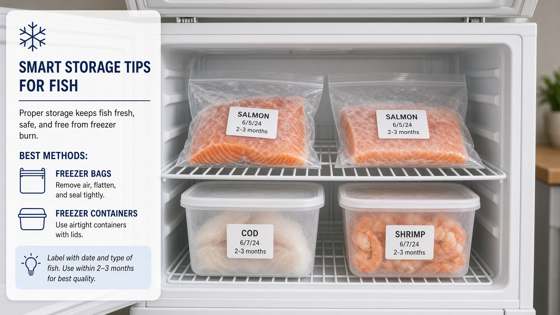
Raw shrimp in the fridge: use within one to two days, kept in a sealed container on the bottom shelf. Cooked shrimp: refrigerate within two hours and use within three to four days. Freeze raw shrimp in a bag with as much air pressed out as possible, ideally for no longer than a few months for best quality. Shrimp are done when they turn pink and opaque and curl into a loose C; a tight O means overcooked.
The NOAA FishWatch site covers where shrimp come from and how they are produced, and the Seafood Watch guide rates farmed and wild shrimp, which helps with buying choices. Good shrimp handling and peeling habits take only a few minutes, and they protect both flavor and food safety.