Seaweed spoils quickly once it leaves the water, so the way it is handled after harvest decides whether you get a fresh, crisp ingredient or a slimy, sour one. Post-harvest handling of seaweed comes down to speed, cold, and drying or salting, and it explains why you will find the same plant sold fresh, dried, salted, or frozen. Knowing which form you are holding tells you how to store it.
What Happens After Harvest
Seaweed is rinsed of sand and shells, then it is either kept cold for fresh sale or preserved. Common routes are drying in the sun or in dryers, salting, blanching and freezing, or turning it into flakes and powders. Each method removes or locks up moisture, which is what stops spoilage.
- Fresh seaweed: sold chilled and short-lived, often at fish counters or Asian grocers.
- Dried seaweed: sheets, strips, or flakes, such as nori, kombu, and wakame, with a long shelf life.
- Salted seaweed: packed in salt, usually rinsed and soaked before eating.
- Frozen seaweed: blanched and frozen to hold color and texture, sold in salads and sea vegetable packs.
Post-Harvest Handling of Seaweed You Can Check at the Store
Fresh seaweed should look glossy and vividly colored, smell clean and of the sea, and feel firm rather than slimy. Dried seaweed should be dry, crisp or brittle, and sold in sealed packaging. Avoid any package with condensation, damp patches, or a musty smell, because moisture lets mold grow.
Storing Each Kind at Home
- Fresh: keep in the refrigerator, loosely wrapped in damp paper or a container, and use within a few days. Check the label for guidance.
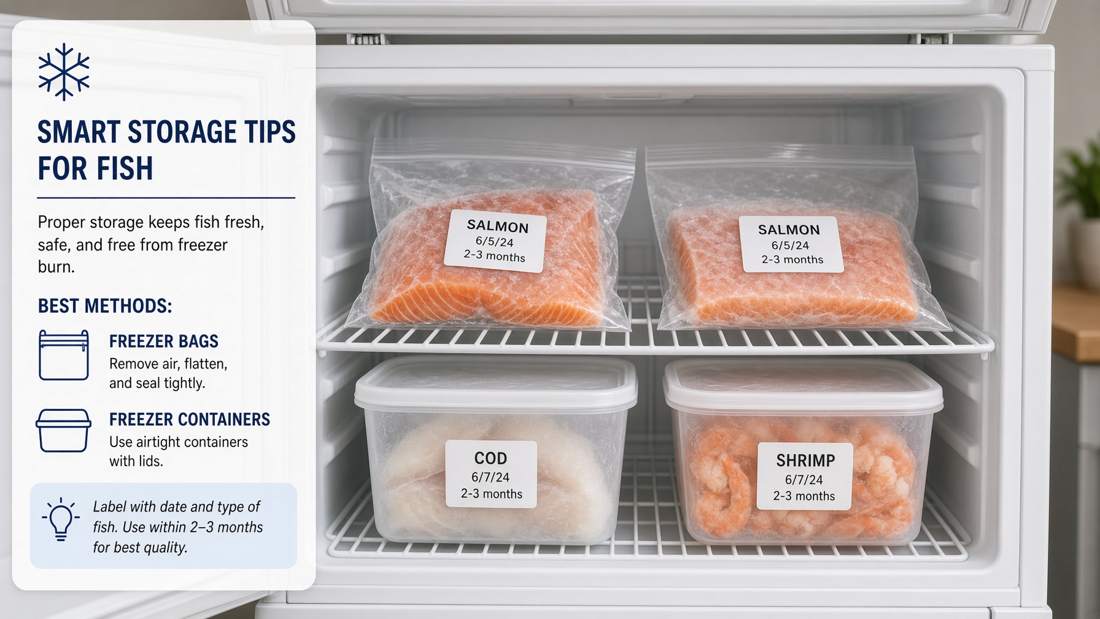
- Dried: store in an airtight container or resealable bag in a cool, dark, dry place. Nori in particular goes soft quickly in humid air, so many cooks add a food-safe desiccant packet.
- Salted: keep cold if the package says so, rinse well, and soak before use.
- Frozen: keep it frozen until needed and use it soon after thawing.
Dried seaweed expands a lot when soaked, so a small handful becomes a large bowl. Soak wakame for only a few minutes, and kombu is often used to flavor stock rather than eaten.
A Few Safety and Shopping Notes
Seaweed can absorb minerals from the water it grows in, and some kinds contain a lot of iodine. People with thyroid conditions, or who are advised to limit iodine, should ask their doctor before eating kelp and kombu often. Choose products with clear labels that show species and origin, and use our guide to reading seafood labels and certifications to understand what the marks mean. NOAA's overview of aquaculture explains how farmed seaweed fits into the seafood supply, and the Aquaculture Stewardship Council is one certification you may see on farmed products.
Using It Well
Tear nori over rice and soups, simmer kombu with water for a quick broth, toss wakame into miso soup, or dress soaked sea vegetables with rice vinegar and sesame. For more ways to store seafood in general, see our page on refrigerator organization for seafood. Good post-harvest handling of seaweed starts at the farm, but your storage is the last link, so keep it dry, cool, and sealed.