Scallop storage and shelf life is short for fresh scallops: plan to cook them within one to two days of buying, keep them at the coldest part of the fridge, and freeze anything you cannot use by then. Scallops are mild and delicate, and the meat deteriorates quickly once it is out of the shell.
Dry or Wet Scallops: Check Before You Buy
This matters more than most shoppers realize. "Dry" scallops are shucked and sold with no added solution. "Wet" scallops have been soaked in a phosphate solution, often sodium tripolyphosphate, which makes them absorb water, look plump and white, and last a bit longer. You then pay for water, and wet scallops release liquid in the pan, so they steam instead of forming a golden crust.
- Dry scallops look slightly off-white, ivory or pinkish-tan, and feel tacky.
- Wet scallops are bright white and sit in a milky pool of liquid.
- Ask the seller. If the label says "treated" or lists additives, that is wet.
Dry scallops cost more per pound, but you lose less weight when cooking. For searing, they are well worth it; the technique is covered in scallops with a seared crust.
Scallop Storage and Shelf Life for Fresh Scallops
- Get them cold quickly. Bring a cooler bag if the trip home is long.
- Take them out of any wet packaging, drain liquid, and put them in a shallow container.
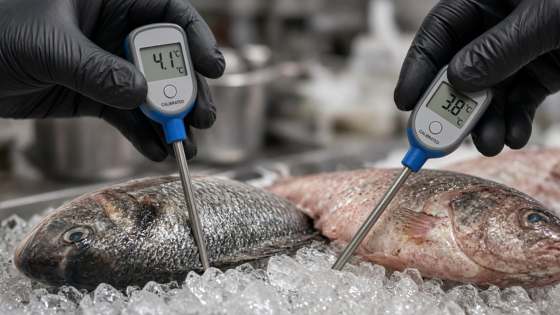
- Lay a paper towel on top, cover loosely or with a lid, and set the container on a bowl of ice in the fridge, or on the coldest shelf. Aim for 40 degrees F or below, and check with a thermometer.
- Cook within one to two days. Change the paper towel if it becomes wet.
Live scallops in the shell are rarely sold in the US, but if you find them, treat them like other bivalves and see shellfish storage for clams, mussels and oysters for the damp-cloth method. Scallops with roe (coral) attached should be handled the same way.
Freezing and Thawing
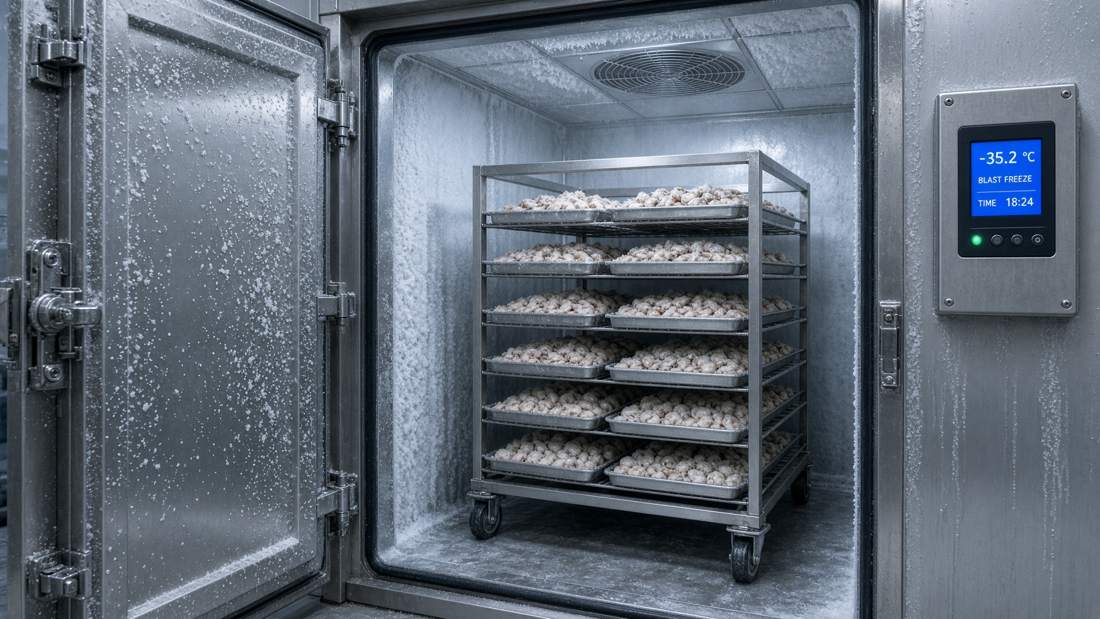
Scallops freeze well. Many sold at the counter were frozen at sea and thawed for display, so ask whether they were previously frozen; if they were, do not refreeze them. If buying fresh to freeze at home, pat dry, arrange in a single layer on a tray until firm, then pack in a freezer bag with the air pressed out. Use within about three months for best quality. Thaw overnight on a plate in the fridge, covered. Never thaw at room temperature. Our thawing seafood safely guide covers faster methods.
Scallop storage and shelf life when cooked
Cooked scallops keep in the fridge for around three to four days in an airtight container, but they go rubbery when reheated. Eat them cold in a salad or warm very gently.
Signs Scallops Are Past Their Best
- A sour or ammonia smell. Fresh scallops smell clean and faintly sweet.
- Slimy or sticky surface beyond the natural light tackiness of dry scallops.
- Grayish or yellowing color, or flesh that is mushy or falling apart.
- Drying around the edges, or a shriveled look.
When in doubt, throw them out. Read more in spoilage signs you should never ignore.
Prep Tips
Remove the small, tough side muscle, a rectangular tab on the side of each scallop, which toughens when cooked and pulls off easily. Pat the scallops thoroughly dry just before cooking; this is the single biggest factor in a good sear. If you want to know which scallops are better choices environmentally, the Seafood Watch guide rates scallops by region and method, and NOAA's FishWatch profiles Atlantic sea scallops.
With a little care, scallop storage and shelf life will rarely trouble you: buy dry, keep them cold, cook within a day or two, and freeze the rest.