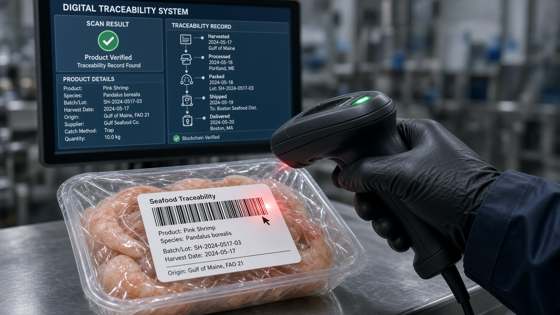
To protect your data online when you order seafood, treat a small seller like any other website that holds your name, address and payment details. Many seafood stores are family businesses with limited technical resources, which makes careful habits on your side more important.
How to protect your data online before you create an account
Check whether you really need one. A guest checkout means fewer places store your information. If you do open an account, use a unique password that you do not use anywhere else, ideally one generated by a password manager, and turn on two-step sign-in if the site offers it. A shared password that leaks from one store can unlock others.
Choosing a seller you can trust
- The site address begins with https and the business gives a real address and contact details.
- Prices are in a normal range. Deals that look too good are a common lure for scams.
- The privacy and returns pages exist and read like they were written by a real business.
- Independent reviews exist outside the seller's own site.
Watch for delivery and refund scams
Seafood orders involve a lot of messages: confirmations, tracking updates and delay notices. Scammers copy these. A text saying your fish is stuck and you must pay a small fee, or an email with a link to "confirm" your card, may not come from the store at all. Do not click. Go to the seller's website by typing the address yourself, or use the app you already installed, and check your order there. The Consumer Financial Protection Bureau lists general guidance on credit card tools and protections, which helps if you spot a charge you do not recognize.
Ways to protect your data online when paying
- Pay with a credit card or a mobile wallet instead of typing a debit card number into a stranger's page.
- Do not save your card on a site you rarely use.
- Check statements for small unfamiliar charges, which can be test charges.
- Never send your password or a code received by text to anyone, even someone claiming to work for the store.
Keep your delivery safe too
For the related question of which payment methods give you recourse, see paying for seafood safely.
An order on your porch is also a target. Use delivery notes, ask for a signature when it makes sense or arrange a neighbor to receive packages. After delivery, move fish to the refrigerator quickly. The FDA's refrigerator thermometer page lists the 40 F and 0 F targets, and our guide to buying seafood online covers checks on arrival.
If your information is exposed
If a seller tells you of a breach, change the password you used there and anywhere you reused it, check your card statements and consider asking your card issuer for a new card. The USA.gov site at usa.gov points to government resources for reporting scams.
Knowing how to protect your data online turns a risky checkout into a routine one, and a few minutes of care keeps your card details, your address and your dinner safe.