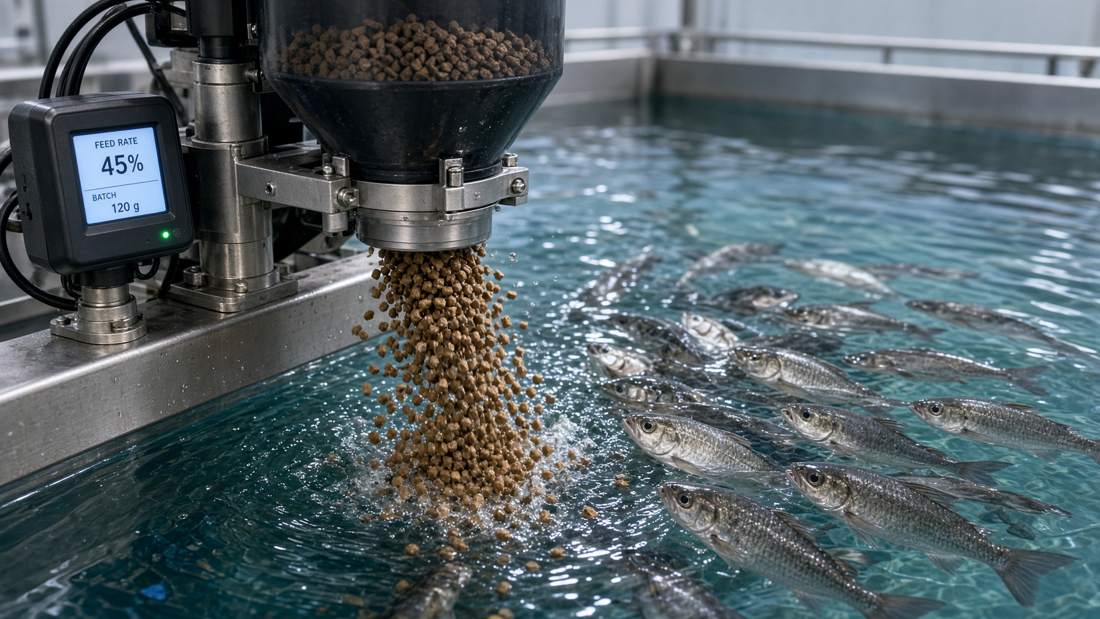
What farmed fish eat, in other words their fish feed, has a direct effect on what ends up on your plate. Feed influences the fat content, color and flavor of the fillet, and it is also the biggest factor in a farm's environmental footprint. Here is a plain-language look at how fish feed is put together and what it means for you.
What goes into fish feed
Feed for carnivorous or omnivorous fish is made into pellets, and a typical recipe is a blend of several ingredients, chosen to give the right balance of protein, fat, vitamins and minerals:
- Fishmeal and fish oil from wild-caught small fish and trimmings, which supply protein and omega-3 fats.
- Plant proteins and oils such as soy, wheat, corn gluten, peas and rapeseed (canola) oil.
- Other proteins such as poultry by-product meal, and increasingly newer ingredients, which we cover in alternative proteins in aquafeed.
- Vitamins, minerals and pigments to keep fish healthy and, for salmon and trout, to supply the carotenoids that give the flesh its pink color.
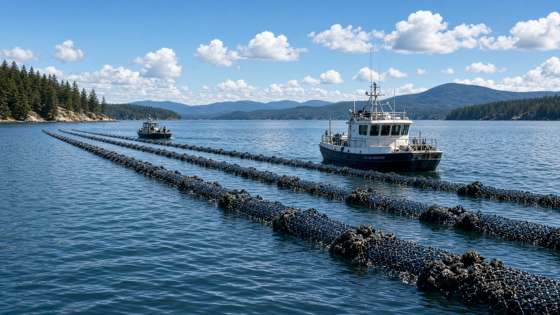
Some species, such as tilapia and carp, eat mostly plants, while shellfish like mussels and oysters need no feed at all.
How feed shapes taste and nutrition
Omega-3 content
Fish do not make most omega-3s themselves. They get them from the food chain. So farmed fish with feed rich in fish oil or marine algae oil have more omega-3s than those fed mostly plant oils. As the industry has shifted toward more plant ingredients, the omega-3 content of some farmed fish has changed, and producers often adjust feeds to protect it. If omega-3s matter to you, look at brand information, and see our omega-3s and seafood nutrition basics.
How fish feed affects flavor and color
Diet influences fat level and, in turn, richness and moisture. The pink color of salmon and trout is from added carotenoid pigments, a natural nutrient. Color is not a sign of freshness or safety.
Why feed matters for sustainability
Using wild fish to feed farmed fish has been a long-standing concern, since it can put pressure on small forage fish stocks. Many farms have cut their use of fishmeal and fish oil over time. The ASC includes feed-sourcing requirements in its standards, and Seafood Watch considers feed in its farmed-fish ratings. Our article on aquaculture and wild fish feed dependency explores the issue.
What you can do as a shopper
- Choose certified or well-rated farmed fish where possible.
- Consider species that eat low on the food chain, such as tilapia, catfish, mussels and oysters.
- Check brand websites for feed information; transparent producers often explain what they use.
- Know that in the United States the FDA regulates animal feed ingredients and approved animal drugs; check current rules if you have specific concerns about imports.
The FDA's advice about eating fish treats farmed and wild fish together, focusing on species and mercury levels.
Feed conversion and why it matters to you
Farmers talk about feed conversion ratio, which is how much feed it takes to grow a pound of fish. Fish are generally efficient at turning feed into body weight compared with land animals, partly because they are cold-blooded and do not spend energy keeping warm, and because water supports their weight. Better conversion means less feed use per pound, which lowers cost and environmental impact. You will rarely see it on a label, but it helps explain why farmed fish can be a relatively efficient protein.
Questions to ask when feed matters to you
- Does the producer share the main ingredients or the share of marine versus plant ingredients?
- Is any fish meal sourced from by-products, such as trimmings, or from certified fisheries?
- Does the feed include non-GMO or deforestation-free soy? Some certifications cover this.
Understanding farmed fish feed gives you a simple way to compare products: look for transparency, certification and species that suit your values, and you will know what your fish ate before it reached your plate.