Seafood recalls happen when a company or regulator pulls a product from the market because it may be unsafe or wrongly labeled. For you, the question is simple: is what is in my freezer affected, and what do I do? Understanding how recalls and traceback work makes it easier to answer quickly.
How seafood recalls begin
Recalls start in several ways. A company may find a problem in its own testing, an inspector may find one, or health officials may link illnesses to a product. Many recalls are voluntary, meaning the company agrees to pull the product, and the FDA can also request or, in some cases, order action. Reasons include undeclared allergens, contamination with pathogens such as Listeria, and problems with processing controls. Our article on Listeria in smoked seafood covers one common cause.
Who handles seafood recalls
Most seafood is regulated by the FDA. Catfish is the exception and falls under the US Department of Agriculture, so catfish recalls come from USDA. The FDA lists notices on its recalls, market withdrawals and safety alerts page.
What traceback means
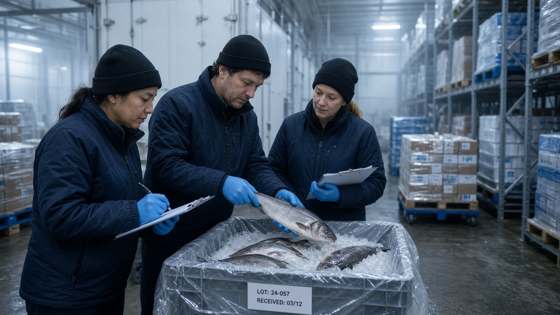
When people get sick, investigators work backward. They interview patients about what they ate, look for a common product, then follow shipping and purchase records back through stores, distributors, processors and finally the harvester or farm. Records at each stage make that path possible. Shellfish tags and lot codes are the clues that connect a bag of oysters at your market to a specific harvest area. The recordkeeping rules article describes those records, and the FDA's traceability rule aims to make them more consistent. Check current rules for dates.
What to do at home when a recall is announced
- Read the notice for the product name, brand, package size, lot or batch code and date range.
- Compare against your packages, including any in the freezer. Keep a photo of the label if you cannot find the original box.
- Do not eat, serve or give away the recalled product.
- Follow the notice: it will say to throw it away or return it to the store for a refund.
- Clean refrigerator shelves, drawers and surfaces the product touched with hot soapy water, and wash anything that contacted it.
- If you ate it and feel unwell, contact a healthcare provider and mention the product.
People at higher risk
Pregnant people, older adults, young children and people with weakened immune systems are more vulnerable to infections like Listeria, so recalls involving ready-to-eat items such as smoked fish deserve extra attention in those households.
Staying informed without effort
You can subscribe to FDA recall email alerts, and many stores post notices at the service desk. Loyalty-card programs sometimes notify buyers directly. If you suspect an issue, the FDA lets you report a problem. For the businesses side, see how seafood companies handle a crisis.
Seafood recalls are not a sign that seafood is unsafe in general. It is the system doing its job, and a freezer you can read at a glance is how you take your part in it.