Kosher and halal seafood certification helps observant shoppers confirm that fish and shellfish meet their religious dietary rules. Seafood is simpler in some ways than meat, because fish does not need ritual slaughter in either tradition, but the species, the processing and the cross-contact with other foods all still matter.
Kosher fish basics
Under kosher rules, fish must have fins and scales to be permitted, and the scales are generally understood to be ones that can be removed without tearing the skin. Salmon, tuna, cod, halibut and trout are commonly accepted. Shellfish, including shrimp, crab, lobster, clams and oysters, are not kosher, and neither are sharks, eels and catfish. Different communities may have different views on specific species, so ask your own rabbi or authority when in doubt. Certifiers such as the Orthodox Union publish guidance, and other agencies exist.
Why fillets need extra care in kosher and halal seafood certification
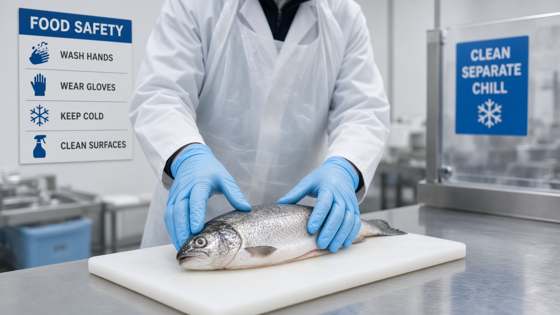
Because a skinless fillet does not show scales, kosher practice often requires that identity be maintained, for example through skin left on a piece, supervised processing or certification. That is why a kosher-certified fillet may look different at the counter than a standard one.
Halal fish basics and kosher and halal seafood certification
Halal views on seafood vary between schools of thought. Many authorities consider all fish halal, while some also allow shellfish and other sea creatures, and others take narrower positions on some species. Because of this variety, practicing Muslims often follow the guidance of their own school or community. If a halal mark is important to you, ask which standard the certifier follows.
What certification covers
- Species identification, so a mislabeled substitute does not slip in
- Processing equipment and cleaning, to avoid contact with non-permitted foods
- Ingredients in processed items such as breaded fish, sauces and surimi
- Packaging and storage practices
Species verification is where food authenticity and religious compliance meet. Our article on seafood fraud enforcement explains why substitution happens, and avoiding fraudulent seafood substitution gives practical tips.
Reading the marks
- Look for the certifier's symbol and name, not just the word kosher or halal.
- Check for qualifiers, such as "dairy" or "pareve" on kosher products.
- Confirm the mark applies to the product you hold, since some symbols cover only certain lines.
- If it is a restaurant or counter, ask about the supervising authority.
Other things to check
Certification is about religious rules, not food safety, sustainability or quality. Seafood still needs to be stored cold and handled safely, covered in the FDA advice about eating fish. A certified product can be paired with sustainability labels too.
Practical advice
For kosher and halal seafood certification, start with the species, then verify the certifier and what its mark covers. When traditions differ, trust your own authority over a package label, and ask the seller to show documentation if you cannot tell.