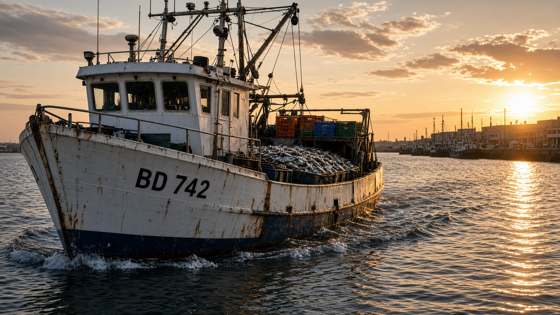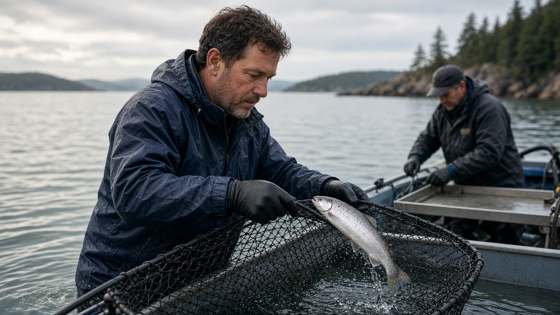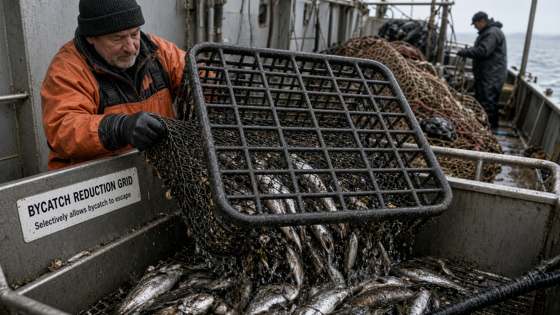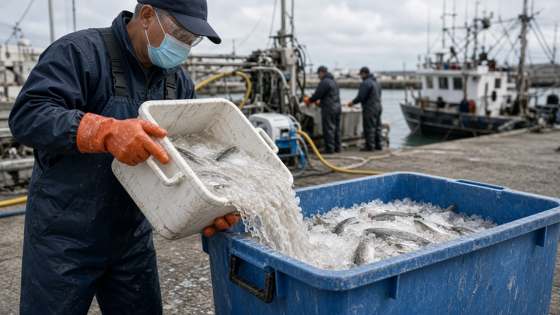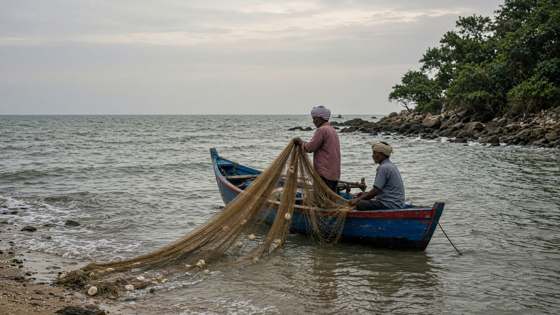
Fishing buoys and markers are the floats, flags and painted tags that show who owns a trap, net or line in the water, and they offer a handy way to understand seafood traceability as a whole. Just as a buoy ties gear to a licensed fisherman, labels and records tie the seafood in your cart to a source. Knowing both systems helps you find out where your fish really comes from.
Quick answer for shoppers: check the label for country of origin, wild or farmed, species and catch area, and ask the seller where and how it was caught.
What Fishing Buoys and Markers Do on the Water
A buoy keeps one end of a line at the surface so the crew can find and haul the gear later. It also serves as an identification mark. In many fisheries, regulations require buoys to carry a license number, a registered color scheme or both, so that enforcement officers and other fishermen can tell whose gear it is. Some fisheries also require tags on individual traps, and others use flags or radar reflectors on the main marker so the gear is visible from a distance.
Rules differ widely. A lobster fisherman in one state may have to paint buoys in a registered pattern, while a crab fisherman elsewhere may need a license number and a tag on each pot. Because requirements change, check current rules with the managing agency if you need the specifics for a given fishery.
Why Gear Marking Matters for Seafood Consumers
Why fishing buoys support ownership and accountability
Marked gear makes it possible to identify who set it, which helps authorities manage trap limits, find lost gear and respond when whales or other animals become entangled. It also discourages theft and illegal fishing.
A link in the chain
Marking is the first step in a chain of records that continues through landing, processing and sale. When the whole chain is documented, a shopper can learn the species, the region and often the fishing method. Our overview of how your fish was caught explains why that method matters.
How to Identify Where Your Seafood Comes From
You will not see a buoy on a fillet, so you have to rely on the paperwork and labels that follow it. Here is what to look for.
- Country of origin. In the United States, many fish and shellfish sold at retail must be labeled with country of origin and whether they are wild-caught or farm-raised. The USDA explains the rules on its country of origin labeling page. Some products, such as processed or prepared items, may be exempt, so read the details.
- Species name. A specific market name is more useful than a vague term such as "white fish." NOAA's FishWatch profiles help you match names to species and fisheries.
- Catch area. Some labels give a fishing area, such as an ocean region or a state. This is more precise than country alone.
- Method of capture. Wild-caught products may name the gear, such as trap, line or trawl.
- Certification marks. Programs such as the Marine Stewardship Council track certified product through a chain of custody so that the label on the pack can be traced to a certified fishery.
Examples of Marking in Different Fisheries
Marking looks different from one fishery to the next. Trap fisheries for lobster, crab and shrimp tend to have the most visible systems, since hundreds of buoys may float in a small area and each must be traceable to a license holder. Gillnet and longline fisheries often use end markers with flags, lights or reflectors so that vessels do not run through the gear at night. Some fisheries also require a tag attached to each trap, issued by the managing agency, which limits the number of traps any one license holder can fish. Hook-and-line and dive fisheries leave no gear in the water at all, so traceability depends more heavily on landing records and sales receipts.
These differences matter to you because they shape how easy it is to follow a product back to its source. A seafood item from a trap fishery with a strict tag system may carry a very clear paper trail, while an item sold through several auctions and processors may need a label or certification to prove its origin.
Questions to Ask at the Fish Counter
- What species is this, and what is its market name?
- Was it wild-caught or farmed, and in which country or region?
- How was it caught, and when did it land?
- Can you tell me the fishery or the boat if it is a local catch?
Small independent sellers often know the answers because they buy directly from boats or from a known dock. For larger retailers, ask whether the product is covered by a certification or a supplier traceability program. Our guide to sustainable gear certifications shows how to read those marks.
Limits of Traceability
Traceability is not perfect. Seafood often changes hands several times and may be processed in a different country from the one where it was caught. Mislabeling does occur in the seafood trade, so a label is a strong clue but not a guarantee. For safety and handling guidance, the FDA publishes guidance on fish and fishery product hazards and controls for the industry, which shows how much record keeping is expected behind the scenes. If an origin claim matters to you, buy from sellers who can back it up.
Reading the Water and the Label Together
The next time you see a row of colorful floats bobbing off a harbor, think of them as a signature. Fishing buoys tell the water who owns the gear, and labels tell you where your seafood comes from. Ask for both stories when you can, favor sellers who can provide them, and you will buy with more confidence and better flavor in the pan.