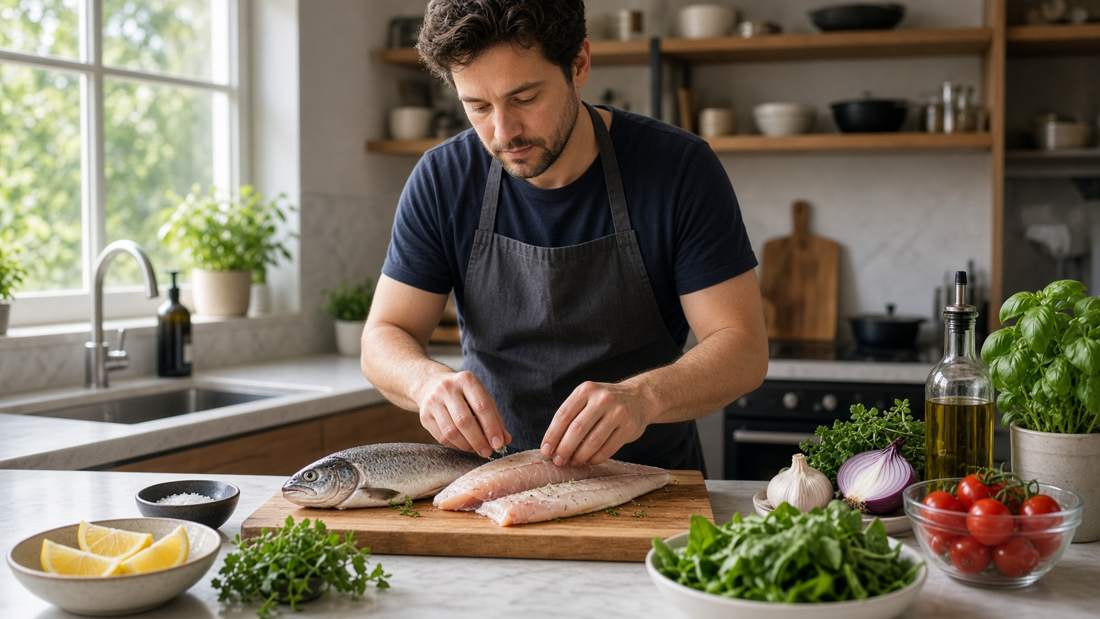
This sous vide seafood guide starts with the idea behind the method: seal fish or shellfish in a bag, cook it in a precisely held water bath, and finish with a quick sear. It gives very tender, evenly cooked results, but seafood cooked at low temperatures needs extra care.
Typical temperatures and times
Cooks choose temperatures for texture. These are common home starting points; adjust to your taste and your guests.
- Salmon (1 inch): 115 to 130 F for 30 to 45 minutes. Lower is silkier and translucent; 130 F is flakier.
- Cod and white fish: 125 to 140 F for 30 to 40 minutes.
- Shrimp: 130 to 140 F for 20 to 30 minutes.
- Scallops: 122 to 130 F for 30 to 45 minutes.
- Lobster tail: 130 to 140 F for 30 to 45 minutes.
Safety first
Fish cooked below 145 F is below the recommended FDA and USDA temperature for cooked fish, so this is a choice, not a default. People who are pregnant, older, very young or with weakened immune systems should cook seafood fully; check the FDA advice about eating fish.
Vacuum-sealed fish has its own concern: some bacteria that cause illness, including Clostridium botulinum, can grow in low-oxygen packaging if the fish is stored too warm for too long. Practical rules for home cooks:
- Start with very fresh or properly frozen and thawed fish.
- Keep fish refrigerated at 40 F or below until it goes into the bath.
- Do not seal and leave it at room temperature.
- Serve it right after cooking, or chill it quickly in an ice bath and refrigerate. Check current guidance before storing cooked-and-sealed seafood for more than a day.
Read more about vacuum packing in vacuum sealing for extended shelf life.
Method
- Set the circulator to the chosen temperature.
- Season the fish and add a small amount of olive oil or butter in the bag, with herbs or citrus.
- Seal using a vacuum sealer or the water-displacement method with a zip-top bag.
- Lower into the bath until fully submerged and cook for the time.
- Remove, pat dry thoroughly.
- Finish in a very hot pan for 30 seconds on one side, or serve as is.
Why the finish matters
Sous vide fish comes out pale and soft. A quick sear or torch adds crust, and a crisp garnish adds contrast. See pan-frying fish without sticking.
What is it good for?
It shines for thick salmon, halibut and lobster, where timing is tricky in a pan. It is less useful for thin fillets, which cook quickly anyway.
Tips
- Brine fish for 10 minutes in salted water to firm the surface and reduce white albumin leaking.
- Do not add raw garlic in oil to sealed bags for storage.
- Use the species guide at FishWatch to pick fish.
Fish that suit the bath, and those that do not
Salmon, halibut, cod, sea bass and lobster respond very well. Tuna steaks, mackerel and other strongly flavored oily fish can become soft and mealy at low temperatures. Cook shellfish in the shell only if you know the method; scallops and peeled shrimp are simplest. Thicker pieces need longer, and the time is counted from when the center reaches bath temperature, so add 10 to 15 minutes for frozen fish cooked directly in the bag.
Seasoning in the bag
Salt lightly, since the bag holds flavors in and concentrates them. Fresh dill, thyme, a lemon slice or a spoon of miso butter work well. Avoid raw garlic and onion in long cooks, which can turn bitter. Pair with bright sauces from sauces for seafood: five classics.
Used with care, this sous vide seafood guide gives you precise, tender fish, and a thermometer and a clean routine are what keep it safe.