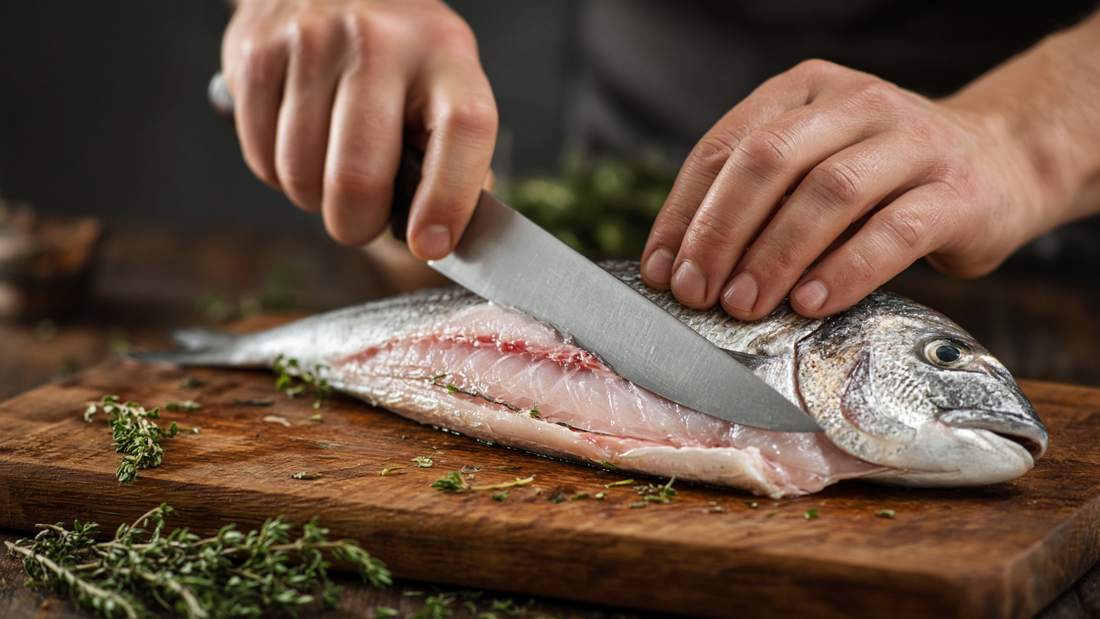
Pan-frying fish without sticking comes down to three habits: dry the fish thoroughly, heat the pan before adding oil, and leave the fillet alone until it releases by itself. Most sticking happens because cooks flip too early.
Pick the right pan
A nonstick skillet is the easiest for beginners. Stainless steel and cast iron work well too, once you master heat. A thin, fragile fillet such as sole benefits from nonstick; a thick salmon or cod fillet does well in any pan.
Prep the fish
- Pat both sides very dry with paper towels. Wet fish steams and sticks.
- Season with salt right before cooking; salt too early draws out moisture.
- Optional: dust lightly with flour or cornstarch for a thin crust that also helps release.
- Let cold fish sit for 10 minutes out of the refrigerator, no longer.
The cooking sequence
- Heat the dry pan over medium-high for 1 to 2 minutes.
- Add a thin coat of oil with a high smoke point, such as canola, avocado or grapeseed. It should shimmer.
- Lay the fillet in, presentation side down, away from you so oil does not splash back.
- Do not move it. After 2 to 4 minutes, a golden crust forms and the fish releases when nudged with a thin spatula.
- Flip once and cook the second side for 1 to 3 minutes. Add a knob of butter at the end for flavor.
How to tell when it is done
Fish is done at 145 F, or when it turns opaque and flakes easily. Thin fillets often finish in 4 to 6 minutes total. Rest for a minute before serving.
If it sticks anyway
- Do not force it. Wait 30 more seconds and test again.
- Slide a thin fish spatula under the crust, not the flesh.
- Skin-on fillets stick less than skinless; learn more in getting crispy fish skin every time.
Good species for the pan
Salmon, trout, snapper, tilapia, catfish, cod and sole all pan-fry well. Check Seafood Watch for sustainable choices.
Sauces and sides
Finish with a squeeze of lemon, brown butter or a quick pan sauce. Ideas are in sauces for seafood: five classics. A full recipe is sole with brown butter.
Safety
Cook fish to 145 F as advised by the FDA in its guidance on safe food handling.
Oil, butter and temperature
Oil alone handles the high heat; butter burns if added at the start. Add a tablespoon of butter in the last minute to baste the fish, tilting the pan and spooning the foaming butter over the top. If the oil smokes heavily, the pan is too hot, so lift it off the burner for a few seconds. If the fish makes no sound when it goes in, the pan was too cold.
Breaded or floured fish
For a golden coating, dredge the fish in seasoned flour, shake off the excess and fry in about 1/8 inch of oil. Fish with a coating needs a little more oil and a gentler flip, since the crust can tear. Drain on a rack, not paper towels, to keep the underside crisp.
The secret to pan-frying fish without sticking is not a special pan but dry fish, a hot pan and a steady hand.