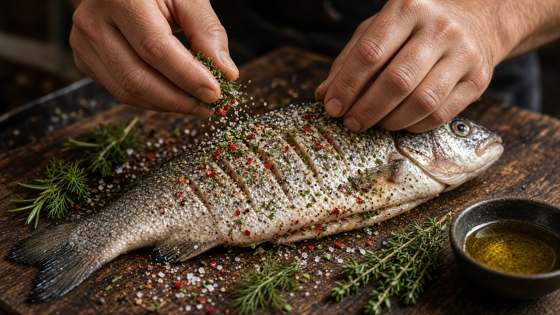
Learning how to fillet a fish at home takes a sharp knife, a steady board and about three tries before it feels natural. The first fillet is rarely pretty, but even a ragged one tastes the same, and you will save money on whole fish.
Gear you need
- A flexible, sharp filleting knife about 6 to 8 inches long. A dull knife tears flesh and is more dangerous than a sharp one.
- A large cutting board with a damp towel underneath so it does not slide.
- Tweezers or needle-nose pliers for pin bones.
- Paper towels, a bowl for scraps and clean cold water.
Start with a clean, scaled fish
Ask the counter to scale and gut the fish, or scale it yourself under running water with the back of a knife, working from tail to head. Rinse and dry. Cold fish is firmer and easier to cut, so keep it on ice until you start.
How to fillet a round fish
- Cut behind the gill. Lay the fish flat. Make a diagonal cut just behind the gill plate and pectoral fin, down to the backbone.
- Run the knife along the spine. Turn the blade toward the tail and slice along the backbone with long, smooth strokes, letting the knife ride against the bones. Short sawing strokes leave jagged flesh.
- Work over the rib cage. Keep the blade tilted slightly down against the rib bones and lift the fillet away.
- Remove the fillet at the tail. Cut free at the tail and set it aside.
- Flip and repeat. Turn the fish over and cut the second fillet, starting again behind the gill.
Trim and skin
Trim the thin belly edge and any dark bloodline if it tastes strong to you. To skin, lay the fillet skin-side down, grip the tail end with a paper towel and slide the knife between flesh and skin at a shallow angle, pulling the skin as you push. Crispy skin is a prize, so leave it on if you plan to pan-sear. See getting crispy fish skin every time.
Pin bones
Run your fingertip along the center of each fillet. Pin bones feel like tiny needles. Pull each one out with tweezers at a low angle in the direction it points. More on this in how to debone a fish.
Flatfish differ
Flounder, sole and halibut yield four fillets, two from each side, cut from a center line along the spine outward. The technique is similar, but the flesh is delicate, so take it slowly.
Do not waste the frame
The head and bones make a light stock. Simmer them gently for 20 to 30 minutes with an onion, celery and herbs, then strain. Freeze it in small containers.
Handle it safely
Wash your hands, board and knife with hot soapy water before moving to other food. Refrigerate fillets promptly and cook them to 145 F. The FDA has a page on safe food handling, and species tips are on FishWatch.
Keeping a knife sharp
Hone the blade before each fish and sharpen it at the start of the season. A blade that glides through a tomato skin without pressure is sharp enough. Wash the knife by hand and dry it right away to protect the edge.
Common beginner mistakes
- Cutting too deep behind the gill. That wastes meat; stop at the bone.
- Pressing straight down. Keep the blade flat and let it follow the bones.
- Starting with a slippery fish. Pat the fish dry and use a towel for grip.
Once you know how to fillet a fish at home, you can buy whatever looks freshest at the market and turn it into dinner with a few clean cuts.