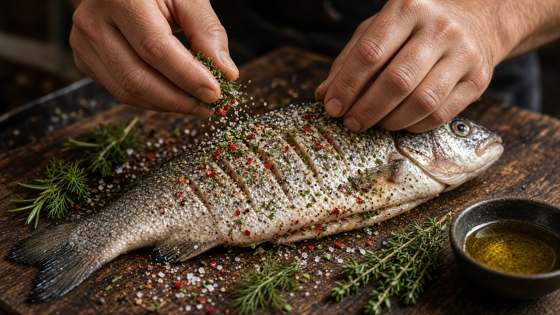
Knowing how to debone a fish means you can serve even bony species without worry, and it takes only a pair of tweezers and a little patience. The bones to deal with are the pin bones in raw fillets, the rib bones in the belly and the backbone of a whole fish.
Pin bones in raw fillets
Many fillets, especially salmon, cod and trout, carry a row of thin pin bones running down the center. Drape the fillet over an upturned bowl so the bones stand up, or lay it skin-side down and run a fingertip against the grain to feel them.
- Grip each bone with clean tweezers or needle-nose pliers.
- Pull at a low angle in the direction the bone points, not straight up, so it slides out without tearing the flesh.
- Rinse the tool between bones and check again with your fingertip.
Rib bones
Small rib bones sit in the belly flap. Slice them off in a thin strip along the rib line with a sharp knife, keeping the cut shallow to avoid wasting meat.
Removing the backbone from a whole fish
A whole fish is easiest to debone after cooking, when the flesh lifts cleanly. Roast, steam or grill it, then:
- Cut along the spine and across the head and tail.
- Slide a knife or fork under the top fillet and lift it off in sections.
- Grasp the tail and lift the whole skeleton away, bringing the ribs with it.
- Serve the bottom fillet from the skin.
You can also ask the fishmonger for a boned or butterflied fish before cooking. See how to butterfly a fish fillet for a related technique.
Small fish like sardines and smelt
Small oily fish are often eaten with their soft bones. To remove them, split the fish along the belly, press it flat, then lift the spine from the head to the tail.
Bony species to know
Shad, pike, carp and some herring have many intramuscular bones that are tough to remove. For a beginner, choose salmon, cod, haddock, snapper or sole. If you start from a whole fish, how to fillet a fish at home walks through the cutting.
Serving children and older adults
Even a carefully deboned fillet can hide a stray bone, so tell diners to take small bites and check each portion by running a fork or fingertip across it. The FDA publishes general advice about eating fish for families.
Cooking safety
Cook fish to 145 F or until opaque and flaking. Wash your hands, tools and board after raw fish, as described by the FDA on safe food handling.
Tools that make it easier
A dedicated pair of fish tweezers with a slightly slanted tip grips better than eyebrow tweezers, but clean needle-nose pliers work. Wash and dry them before use. A flexible boning knife and a pair of kitchen shears also help; shears snip rib bones and fins in seconds.
Troubleshooting
- The flesh tears while you pull bones. The fish is too warm or the angle is wrong. Chill the fillet for 15 minutes and pull in the direction the bone points.
- You cannot feel the bones. Press the fillet gently to arch it; the tips will stand up.
- A bone snaps. Work the remaining stub out with the tweezers, or cut a thin V-shaped strip around it.
Serving tip
When you serve a whole deboned fish, leave the head and tail on for presentation and let guests take portions from the top fillet first. A little care at the table keeps the neat shape of a cooked fish intact.
With a little practice, how to debone a fish becomes a two-minute job, and it makes every fish dinner calmer.