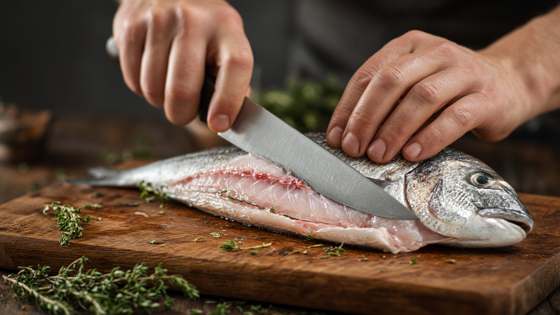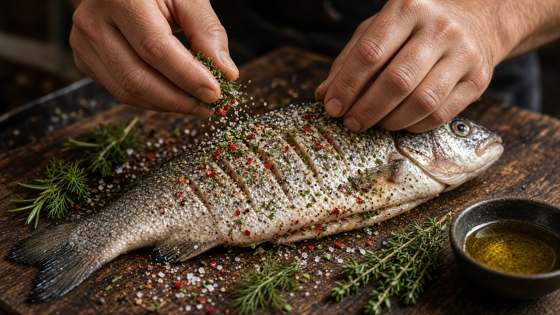
Getting crispy fish skin every time depends on one thing above all: moisture is the enemy. Skin that is bone dry, placed in a properly hot pan and left untouched will turn glassy and crunchy, while damp skin steams into something rubbery.
Which fish work best
Salmon, sea bass, branzino, snapper, trout, mackerel and arctic char all crisp well because their skin is thin and fatty. Thick, tough skins on some large fish, and skins with heavy scales, do not crisp as well. Ask the counter to scale the fish and to leave the skin on, and see how to choose fish at the market for buying tips.
Step by step in a skillet
- Dry: Pat the skin with paper towels until the surface feels tacky, not wet. For extra crunch, leave the fillet uncovered in the refrigerator on a rack for an hour.
- Score (optional): For thick fillets, make 2 or 3 shallow cuts through the skin so it does not curl.
- Season: Salt the skin just before cooking.
- Heat the pan: Use a heavy skillet, medium-high, with a thin film of high smoke point oil.
- Lay it away from you: Place the fillet skin-side down and press gently with a flat spatula for 10 to 15 seconds so the skin makes full contact.
- Wait: Cook, undisturbed, until the flesh is opaque about two-thirds of the way up the side, typically 4 to 6 minutes.
- Flip briefly: Turn for 30 to 60 seconds, or just baste the flesh side with pan juices and serve skin-side up.
Check doneness
Fish is cooked to 145 F per FDA and USDA guidance, though many cooks pull salmon a little earlier for a moist center. Follow the guidance that is right for you and your guests, particularly if serving children, pregnant people or older adults.
Oven method for a crowd
Heat a rimmed baking sheet in a 450 F oven, brush with oil, place the dry fillets skin-side down and roast 8 to 12 minutes depending on thickness. The skin will crisp where it touches the hot pan, and you can cook many pieces at once.
Common problems
- Skin sticks: It is not ready to release; wait another 30 seconds.
- Skin curls: Press it down at the start, and score thick skin.
- Skin soggy: Do not cover the fish, and do not serve it with sauce poured over the skin.
Serving
Put sauce on the plate first and set the fish on top, skin up. Lemon, herbs and a crisp salad suit it; ideas are in herb pairings for fish. Try a full recipe in pan-seared salmon with crispy skin.
Is fish skin safe to eat?
Yes, if the fish is well chosen and cooked. Contaminants such as mercury accumulate in flesh, and some persistent pollutants can sit in the fat under the skin of certain fish, so choose lower-contaminant species and follow the FDA advice about eating fish. You can also look up species on FishWatch.
Keeping the crunch
Crisp skin starts to soften as steam escapes from the fish, so time the cooking to dinner. Rest the fillet skin-side up on a rack or the plate, never covered with foil. Leftover skin will not stay crisp; reheat it in a hot oven or air fryer for a few minutes, and read leftover seafood: safe reheating for storage times.
A note on salt and oil
A light salting a few minutes ahead helps dry the surface, but long salting draws moisture back out. Use just enough oil to coat the pan: too much will fry the skin unevenly and spatter. Wipe out any burnt bits between batches so later fillets do not pick up bitterness.
Once you start getting crispy fish skin every time, you may find yourself buying skin-on fillets just for the crunch.