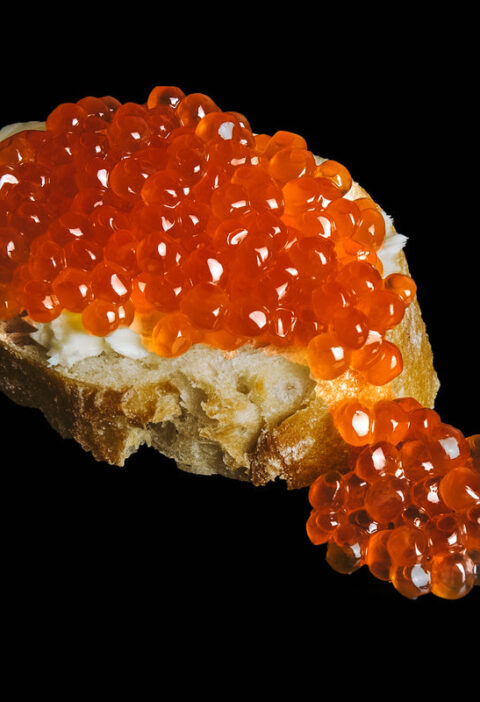
Salmon roe is the cured roe of salmon: translucent orange-to-red eggs known in the United States as salmon caviar or red caviar and in Japanese cuisine as ikura. The species, harvest area, maturity of the fish, handling temperature, brine, and packaging all influence the size, firmness, sweetness, salinity, and finish. That is why two trays labeled “salmon roe” can taste and behave very differently.
This guide explains those differences from the perspective of Global Seafoods founder Oleg Nikitenko, who has worked in the seafood industry since 1993. His experience includes managing fishing vessels, owning a seafood processing plant on Kodiak Island for approximately 20 years, operating a processing facility in Washington State, producing salmon roe for Japanese and former Soviet markets, and training plant personnel with Japanese roe-processing technologists.
Shop the Global Seafoods red caviar collection or continue reading to understand which roe best fits your taste, recipe, and occasion.
What Is Salmon Roe?
Salmon roe consists of the eggs carried by a mature female salmon. Inside the fish, the eggs are held in paired membranes called skeins, commonly known in Russian as yastiki. Commercial processing separates the eggs from the skein, removes blood and membrane, rinses the eggs, cures them with salt or a seasoned solution, drains them, grades them, and packs them under controlled temperatures.
The finished product may be described as salmon roe, salmon caviar, red caviar, or ikura. These terms overlap, but they do not always mean exactly the same preparation:
- Salmon roe is the broad English term for salmon eggs.
- Salmon caviar or red caviar usually means separated and salt-cured salmon eggs sold ready to eat.
- Ikura is the Japanese name for prepared salmon roe and is often associated with salt curing or a soy-based marinade.
- Fresh salmon eggs may refer to unprocessed roe still in the skein; this is not the same ready-to-eat product as cured caviar.
In the strict traditional sense, the unqualified word “caviar” refers to sturgeon roe. In American retail, however, species-qualified names such as “salmon caviar” are widely understood. A trustworthy label should identify the fish species rather than relying only on a luxury-sounding name.
Why Salmon Species Matters
Species is one of the first things an experienced buyer checks. It affects egg diameter, membrane strength, color, fat perception, flavor intensity, and how the roe performs after freezing and thawing. Processing and individual lots still matter: a carefully handled lot from a smaller-egg species can be better than a poorly handled lot from a species known for large eggs.
| Roe | Typical appearance | Texture and flavor | Best uses |
|---|---|---|---|
| Chum (Keta) | Large, translucent orange eggs | Clean, balanced flavor; usually a pronounced pop | Blinis, sushi, rice bowls, gifts, centerpiece service |
| King (Chinook) | Large orange-to-red eggs; appearance varies by lot | Rich flavor; often softer and more delicate than firm-grain chum | Blinis, toast, tasting service, dishes where richness matters |
| Coho (Silver) | Medium eggs, usually deeper orange or red-orange | More assertive salmon character and a slightly stronger finish | Sushi, eggs, potatoes, stronger-flavored appetizers |
| Pink | Small-to-medium orange eggs | Delicate flavor and generally softer presentation | Everyday appetizers, canapés, salads, first-time buyers |
| Sockeye | Smaller, deeper red eggs | More concentrated, distinctive flavor | Small portions, sushi, dishes that can support a stronger roe |
| Trout roe | Smaller orange or golden eggs | Usually firm, bright, and clean; not technically salmon roe | Garnishes, deviled eggs, canapés, tasting comparisons |
Oleg’s practical view: buyers often focus on egg size, but the largest grain is not automatically the best. Membrane strength, clean flavor, uniformity, liquid in the container, salt balance, and the way the lot was handled are equally important. Choose by eating experience, not by diameter alone.
Chum Salmon Roe
Chum salmon roe is often treated as the classic premium red caviar because its large translucent eggs display well and provide a satisfying pop. Its balanced character works for both Russian-style service and Japanese dishes. It is a practical choice when serving guests with different levels of experience because it is visually impressive without necessarily being the strongest-tasting roe.
King Salmon Roe
King salmon roe can be exceptionally rich and attractive, but it should not be described as uniformly firm. Some lots have a naturally softer shell. That softness is not automatically evidence of damage or poor quality; it may be part of the species, maturity, origin, and processing style.
Origin also changes the experience. Based on Oleg’s handling and buying experience, Alaska King salmon roe is often sweeter and softer. Washington State roe commonly has a firmer grain and less sweetness. Canadian Pacific roe frequently falls between those two profiles. These are useful buying tendencies, not guarantees: fishing area, run timing, fish maturity, brine, temperature, and individual lot can change the result.
Coho Salmon Roe
Coho roe is generally smaller than chum roe and can carry a more pronounced salmon flavor. It performs well with ingredients that might overwhelm a very delicate roe, including eggs, potatoes, sour cream, and savory rice preparations. Customers who want a stronger, more recognizable salmon finish may prefer it over milder chum.
Pink Salmon Roe
Pink salmon roe typically offers a smaller grain and approachable presentation. It is useful for canapés, salads, breakfast dishes, and larger gatherings where the roe is one component rather than the sole centerpiece. As with King roe, a softer egg should be judged together with smell, flavor, temperature history, and overall condition—not by firmness alone.
Alaska, Washington, and Canada: Why Origin Changes Roe
“Wild Pacific salmon roe” covers an enormous coastline and many separate salmon runs. Alaska, British Columbia, and Washington do not produce one standardized flavor. Water conditions, species composition, run timing, feed, maturity, harvest method, travel time to the plant, and processor specifications can all influence the finished product.
- Alaska: a major source of wild salmon and roe, with large regional differences among Kodiak, Bristol Bay, Southeast Alaska, Prince William Sound, and other areas.
- British Columbia: Canadian Pacific production can combine characteristics buyers associate with northern and southern runs; individual processors and customer specifications matter greatly.
- Washington State: shorter supply chains can benefit freshness when fish are processed promptly, while local run characteristics can produce a firmer and less sweet King roe profile.
A country or state name alone is not a quality grade. The lot must still be evaluated. Global Seafoods may offer different origins as seasonal availability changes, so customers should read the current product listing or ask which lot is shipping.
From Skein to Finished Red Caviar
Good roe production is a controlled sequence, not simply “adding salt.” Oleg’s Kodiak facility produced frozen roe in skeins for Japanese and former Soviet markets as well as finished salted caviar. Japanese technologists trained the staff, and the plant also worked with soy-seasoned roe. That experience informs how Global Seafoods evaluates finished products today, although the company now purchases and sells caviar rather than operating that production plant.
- Receiving the fish: time and temperature begin affecting roe quality before the skein is removed.
- Removing the skein: careful handling reduces broken eggs, blood contamination, and membrane fragments.
- Separating the eggs: the method must release the eggs without crushing them. Equipment helps, but judgment about maturity and membrane condition is essential.
- Washing and cleaning: blood, connective tissue, and damaged eggs are removed while controlling water quality and temperature.
- Curing: salt concentration, solution temperature, roe-to-brine ratio, agitation, and time work together. A number such as “3% salt” describes the finished style only partially; it does not replace process control.
- Draining: excess brine must leave the roe without allowing the product to warm or dry unevenly.
- Grading: processors assess color, size, shell strength, broken eggs, clarity, flavor, and uniformity.
- Packing and cooling: the cold chain protects texture and shelf life through storage and transportation.
Why temperature matters: the egg membrane is delicate. If the product becomes too warm during processing, the eggs soften and break more easily. If freezing or thawing is poorly controlled, liquid separation and texture loss increase. The best plants manage temperature at every stage rather than trying to correct the product at the end.
Watch Salmon Roe Processing and Tasting
See the product beyond still photographs on the Global Seafoods North America YouTube channel:
Salt-Cured Roe vs. Soy-Marinated Ikura
Salt-cured red caviar and soy-marinated ikura begin with the same basic raw material but are designed for different flavor profiles.
Traditional Salt Cure
A clean salt cure keeps the natural flavor of the species in the foreground. Global Seafoods products are generally lightly salted, often around 3%, but customers should rely on the ingredient statement for the specific item. Salt perception also depends on egg size, moisture, cure time, and serving temperature.
Soy-Based Cure
Japanese-style roe may be seasoned with soy sauce and other ingredients, producing additional umami and sweetness. Oleg’s former plant made roe using this separate technology. Soy curing is not merely pouring soy sauce over finished caviar: concentration, temperature, time, drainage, and the condition of the eggs must still be controlled.
Anyone avoiding wheat or managing sodium should check the ingredient label because soy sauces and marinades vary.
Soft Shell and Hard Shell: What the Terms Mean
Customers sometimes assume “hard shell” means premium and “soft shell” means damaged. That is too simple.
- Soft-shell roe yields more gently and can feel delicate on the palate. It requires careful shipping and handling.
- Firm- or hard-shell roe produces a stronger pop and usually tolerates handling better, but an excessively tough membrane can be unpleasant.
Shell strength reflects species, fish maturity, harvest timing, salting method, freezing history, and processor specification. The ideal texture depends on the customer and the dish. Russian-style buyers often value a clearly defined grain, while some diners prefer a softer egg that releases flavor more gently.
How to Judge Salmon Roe Quality
Evaluate the complete product rather than a single photograph or characteristic.
- Aroma: clean and marine, without sour, rancid, or strongly stale odors.
- Flavor: balanced salt and natural salmon character, without bitterness or an oxidized aftertaste.
- Appearance: species-appropriate color and reasonably uniform eggs. Natural variation is expected.
- Texture: appropriate to the species and style; neither paste-like nor unpleasantly rubbery.
- Liquid: a small amount can occur, especially after thawing. Excessive liquid together with widespread breakage deserves closer examination.
- Temperature and packaging: the container should arrive intact and properly chilled according to the shipping method.
- Label: species, ingredients, net weight, storage instructions, and seller information should be clear.
Color alone is unreliable. Roe can range from light orange to deep red depending on species and lot. Extremely uniform marketing images may not represent every natural batch.
Fresh, Frozen, and Previously Frozen Salmon Roe
Freezing is common in the international roe trade and is not automatically a negative. When suitable roe is frozen promptly, stored consistently, and thawed slowly, it can retain excellent flavor and structure. Many seasonal wild products could not reach customers throughout the year without freezing.
At the same time, freezing is not invisible. Some lots become softer after thawing, and repeated freeze-thaw cycles cause greater damage. Never refreeze thawed roe unless the producer specifically provides a validated process. Follow the label because unopened shelf life varies by product, packaging, salt level, processing method, and whether the roe was previously frozen.
How to Store Salmon Roe Safely
- Refrigerate promptly in the coldest stable part of the refrigerator—not in the door.
- Keep the container sealed until serving.
- Use clean, dry utensils to avoid introducing contaminants.
- Return unused roe to refrigeration quickly; do not leave it on a buffet for extended periods.
- After opening, follow the product label. For best eating quality, smaller containers should generally be consumed promptly.
- For a frozen product, thaw slowly under refrigeration and do not use room-temperature or hot-water thawing.
General rules cannot replace the instructions on the specific package. Commercial formulations and packaging differ. Perishable ready-to-eat seafood also requires extra caution for pregnant people, older adults, young children, and anyone with a weakened immune system.
Nutrition: Concentrated Food in a Small Serving
Salmon roe provides protein, marine omega-3 fatty acids, vitamin B12, vitamin D, selenium, choline, and naturally occurring carotenoids such as astaxanthin. It also contains sodium because curing is part of production. Exact values vary by species, curing recipe, moisture, and serving size, so the nutrition label on the product is the best source for purchase-specific numbers.
Salmon roe can fit into a balanced diet, but it should not be marketed as a treatment for heart, brain, immune, or other medical conditions. For general food-composition information, consult USDA FoodData Central. People who are pregnant or immunocompromised should follow current FDA seafood guidance and ask a healthcare professional whether a particular ready-to-eat roe product is appropriate.
How Much Salmon Roe to Serve
Portion size depends on whether the roe is a garnish or the focus of the course:
- Garnish: about 1–2 teaspoons per person.
- Appetizer tasting: approximately 0.5–1 ounce per person.
- Generous centerpiece or ikura don: approximately 1–2 ounces per person, depending on the dish and budget.
For a mixed group, begin with the smaller estimate and provide additional roe separately. This keeps the eggs cold and reduces waste.
Best Ways to Eat Salmon Roe
Russian-Style Service
Serve chilled roe with warm blini, sour cream or crème fraîche, and restrained garnishes such as dill, egg, or potato. Avoid burying good roe under strongly flavored toppings. Vodka and dry sparkling wine are traditional beverage partners.
Japanese-Style Service
Use ikura for gunkan-style sushi, hand rolls, chirashi, or an ikura rice bowl. Warm—not scorching—rice provides contrast while preserving the eggs. Add the roe after cooking.
American and Contemporary Service
Salmon roe works well on deviled eggs, buttered toast, potato pancakes, oysters, soft scrambled eggs, cucumber rounds, and pasta. Add it at the end. Direct high heat turns the egg opaque, toughens the membrane, and eliminates the fresh pop.
How to Choose the Right Roe
- For large, impressive eggs: begin with Chum or King.
- For a balanced first experience: Chum is a dependable starting point.
- For stronger salmon character: consider Coho or Sockeye when available.
- For a gentler everyday option: consider Pink salmon roe.
- For a firm, smaller garnish: consider trout roe.
- For making caviar at home: purchase properly handled unprocessed roe and follow a validated food-safety process.
Buying Salmon Roe Online
Before ordering, check more than price per container:
- Confirm the species and origin when listed.
- Compare net weight, not only container size.
- Read whether the product is fresh, frozen, or previously frozen.
- Review the ingredient statement and salt or seasoning style.
- Check the shipping method and delivery day before ordering perishable food.
- Read the seller’s damage, quality, and return policies before purchase.
- Choose a package size you can consume promptly after opening.
Global Seafoods North America ships seafood from Washington State and has sold seafood online for decades. Availability changes with wild fisheries, processing schedules, and individual production lots. Current product pages—not a general article—are the controlling source for price, pack size, harvest year, availability, ingredients, and shipping options.
About the Author’s Experience
Oleg Nikitenko has worked in the seafood industry since 1993. He has managed vessels harvesting pollock, cod, shrimp, salmon, and bottomfish; owned a processing plant on Kodiak Island, Alaska, for approximately 20 years; operated a seafood-processing facility in Washington State; participated in tuna-vessel construction; and traded seafood from North America, South America, and New Zealand.
At the Kodiak operation, his team processed salmon roe in skeins for Japanese and former Soviet markets and manufactured finished salted roe. Japanese technologists helped train plant employees, including work with traditional salt curing and soy-seasoned roe. Oleg no longer owns that plant and Global Seafoods does not claim to manufacture every product it sells today. His current role is selecting, buying, explaining, and selling seafood through Global Seafoods North America.
Frequently Asked Questions
Are salmon roe, red caviar, and ikura the same?
They overlap. Salmon roe is the broad term for salmon eggs. Red caviar or salmon caviar usually means separated, cured roe ready to eat. Ikura is the Japanese name for prepared salmon roe and may be salt-cured or soy-seasoned.
Which salmon has the largest roe?
Chum and King salmon are generally known for large eggs, but size varies by individual fish, maturity, region, and production lot. Large eggs do not automatically mean better flavor or quality.
Why is some King salmon caviar soft?
King roe can naturally have a softer membrane, and Alaska-origin lots are often softer and sweeter than firmer Washington lots. Maturity, processing, freezing, thawing, and temperature also affect texture. Softness alone does not prove spoilage or shipping damage.
Can salmon roe be frozen?
Many commercial salmon roe products are successfully frozen, but suitability depends on the product and processing method. Freeze only when permitted by the producer, thaw slowly in the refrigerator, and avoid refreezing. Some softening or liquid release can occur.
How long does salmon roe last after opening?
There is no universal answer because formulations and packaging differ. Follow the label and consume it promptly for the best quality. Keep it cold, covered, and use clean utensils.
How can I tell whether salmon roe has gone bad?
Warning signs may include sour or rancid odor, clearly abnormal flavor, loss of temperature control, damaged packaging, or severe deterioration beyond the normal characteristics of the species. When food safety is uncertain, do not taste the product to test it.
Should salmon roe be cooked?
Commercial cured salmon roe is generally served ready to eat according to its label. For culinary use, add it cold at the end rather than applying direct heat. Raw, unprocessed eggs require proper cleaning, curing, and food-safety controls.
What is the best salmon roe for a first-time buyer?
Chum roe is a useful starting point because of its large grain and balanced flavor. Buyers who prefer softer, richer eggs may enjoy King; those wanting a stronger salmon character can consider Coho.
Explore Red Caviar
Last reviewed September 2026. Product specifications and availability can change by season and lot.
Also in News

The Perfect Salmon Storm of 2026: Alaska & Russia Harvest Numbers Confirm the Warning
We hoped the early scientific warnings about the 2026 Pacific salmon season would prove wrong. They did not. Near-final harvest data from Alaska (83.6 million fish, 69% of projection, all five species below forecast) and Russia (down 60.2% from the comparison period) confirms a historic simultaneous decline across the North Pacific. With Japanese landings still to come, this analysis covers what caused the Perfect Salmon Storm of 2026, what it means for wild salmon and red caviar supply through 2027, and why the geographic buffer that normally protects global supply failed this year.

Snail Caviar: How White Escargot Caviar Is Farmed, Harvested and Made
Snail caviar can sell for more than $100 for a tiny 50-gram jar. Discover how edible land snails produce these rare white eggs, how farmers harvest them from soil, how escargot caviar is cleaned and processed, what it tastes like, its surprising nutritional profile, current prices, food-safety considerations, and how white snail caviar compares with sturgeon caviar and salmon roe.

The Dark Years of Pacific Salmon: A 20-Year Outlook for Alaska, Russia, and the Red Caviar Market
The 2026 salmon season is showing serious warning signs across the North Pacific. Russian Far East salmon catches are running far below forecast, while Alaska is also facing weaker production in several important fisheries. By examining pink, chum, sockeye, coho, and king salmon life cycles, this 20-year outlook identifies the years from 2026 through 2045 when poor generations could return and create new pressure on salmon and red caviar supplies.
Go to Source
Author: Oleg Nikitenko

ScrewTheNews.com
ScrewTheNews.com
2000 Avenue of the Stars
Los Angeles, CA 90067
(214) 875-1305