Norovirus and seafood are linked in two main ways: shellfish that grew in water contaminated by human waste, and any food, seafood included, that is handled by someone who is sick. Norovirus is a very contagious virus that causes vomiting and diarrhea, and a tiny amount can be enough to infect someone.
How shellfish become carriers
Oysters, clams and mussels filter water to feed. If the water has been contaminated by sewage, viruses can build up in the animals. That is why states classify harvest waters and close areas after overflows, as we explain in shellfish harvest area classifications. The classification system lowers the chance of contaminated shellfish reaching shoppers, but it cannot be perfect, especially after sudden pollution events.
Why norovirus and seafood from raw shellfish is riskier
Thorough cooking reduces the risk from viruses in shellfish, while eating them raw or lightly cooked leaves it in place. Chilling does not remove the virus, and freezing does not reliably remove it either. Lemon juice and hot sauce do not make raw shellfish safe.
Norovirus and seafood: the other route is people
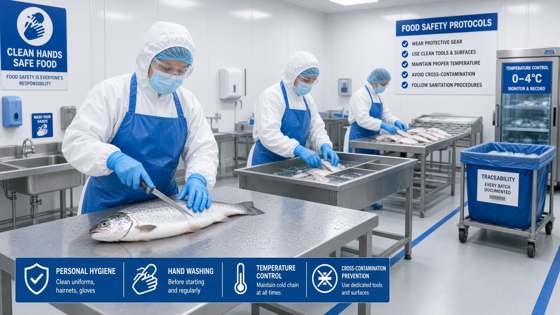
Many norovirus outbreaks tied to seafood involve an infected worker or cook who touched ready-to-eat food, such as a sushi roll, crab salad or a garnish. The same applies in your own kitchen. If you are ill, you can contaminate food for others.
CDC advises that people with norovirus should not prepare food for others while sick and for at least two days after symptoms stop. You can find agency guidance through the FDA's consumer page on people at risk and the EPA fish and shellfish page, and check current rules or recommendations from CDC for the latest wording.
Prevention habits that work
- Wash hands with soap and water for at least 20 seconds before cooking and after using the bathroom. Hand sanitizer is not a replacement.
- Cook shellfish thoroughly. Discard any that do not open when cooked.
- Buy shellfish from sellers who keep tags and can name the harvest area.
- Do not harvest shellfish from closed or unclassified waters.
- Stay out of the kitchen while you have stomach symptoms and for a couple of days after.
- Clean surfaces with a cleaner effective against norovirus. Check the product label for that claim.
Raw-bar and takeout tips
At restaurants, choose places that look clean and keep raw items cold and separate. If you are in a high-risk group, consider cooked options. Our seafood and allergies guide is about a different issue, but it also shows how to ask a kitchen questions about preparation.
Recognizing and handling illness
Symptoms usually begin within a day or two of exposure and often pass in a few days. The main danger is dehydration, especially for young children, older adults and anyone with other health problems. Seek medical advice if you cannot keep fluids down or symptoms are severe.
Keeping it simple
For norovirus and seafood alike, cook shellfish well, buy from careful sellers, and keep sick people out of the kitchen. Those three habits address the main ways norovirus gets from the sea or a food handler to your plate.