The history of the fish market is really a history of speed: fish spoils quickly, so for as long as people have eaten it, there have been places where the catch is landed, sold and carried off within hours. Understanding how those markets developed helps you shop better at a modern fish counter.
Why fish markets exist
Fish cannot wait. Before refrigeration, sellers had to move the catch fast, which concentrated trade near harbors, rivers and tidal landing places. Salting, drying and smoking extended shelf life and let fish travel inland, which is why preserved fish features so heavily in older food cultures. See preserving seafood traditions.
Famous markets
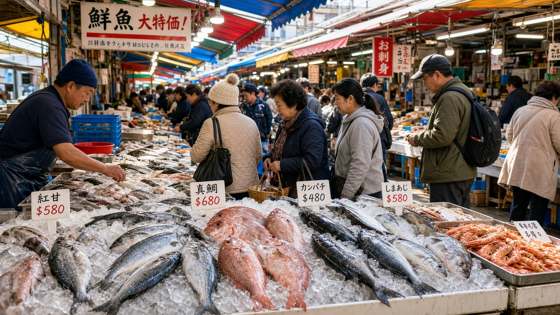
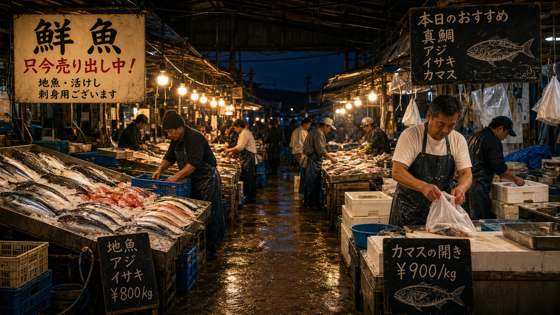
Billingsgate in London has been a wholesale fish market for centuries and now operates from a modern site in east London. Tsukiji in Tokyo was the world's best-known fish market, and its wholesale operations moved to Toyosu in 2018; some outer shops and stalls remain at Tsukiji. Fulton Fish Market in New York, Pike Place in Seattle and the harbor markets of Boston, Marseille, Barcelona and Sydney are other well-known examples. Check current details before a visit.
What changed with refrigeration and transport
Ice, then mechanical refrigeration, trains, trucks and air freight allowed fish to travel hundreds or thousands of miles. Today, the cold chain keeps seafood cold from boat to counter; read the cold chain from boat to plate. Supermarkets now sell most seafood, but many cities still have fishmongers and wholesale-adjacent markets that sell to the public.
How to shop a fish market like a regular
Go early
Early morning means the widest selection and the freshest fish. Wholesale-style markets may have limited retail hours.
Look and smell
- Fish should smell of the sea, not sharp or ammonia-like.
- Eyes on whole fish should be clear and bulging, gills red, flesh firm and springy.
- Fillets should look moist and translucent, not dull or gaping.
- Seafood should sit on plenty of clean ice.
See how to choose fish at the market and recognizing freshness in fish.
Ask questions
Ask what came in today, where it was caught, whether it was previously frozen, and what the fishmonger would cook tonight. Good fishmongers will fillet, scale or portion for you.
Save money
Whole fish usually cost less per pound than fillets, and the fishmonger can clean them. Buy what is in season and abundant. Use FishWatch and Seafood Watch to find alternatives.
Transport and storage
Bring a cooler bag and ice, get seafood into the fridge within two hours (one hour if it is hot), and cook it within a day or two. The FDA's seafood safety page has details.
The history of the fish market in cities and kitchens
Many port cities grew around their fish markets, and traditions such as Friday fish in parts of Europe and the use of salted cod across the Atlantic world shaped what people ate and how they traded. Guilds of fishmongers regulated quality and prices in medieval towns in places, and markets often had rules about when and where fish could be sold, since spoiled fish was a public concern. Those rules are ancestors of modern food safety and inspection systems.
History of the fish market: open stalls to inspected counters
Public health concerns in the nineteenth and twentieth centuries pushed many cities to move markets indoors, add running water and ice, and inspect product. Today, wholesale and retail rules differ from place to place, and a retail shop will usually be covered by local health inspection. For shoppers, the lesson is the same as it was centuries ago: cold, clean and quick is what keeps fish good.
Traditional markets versus supermarkets
- Selection: traditional markets often carry whole fish, live shellfish and local species that supermarkets may not stock.
- Advice: fishmongers can fillet, scale, skin and portion, and suggest recipes.
- Price: can be better for whole fish and in-season catches, though not always.
- Convenience: supermarkets offer longer hours, frozen and packaged options and one-stop shopping.
Where wholesale markets fit in
Some large wholesale markets sell to the public at certain hours, while others restrict access to the trade. Check visiting rules and hours in advance. Prices can be keen, but quantities may be larger than a household needs, and you may need to bring your own cooler, bags and cash.
A fish market shopping plan
- Walk the whole market once before buying to compare quality and prices.
- Pick one or two items and ask what is best that day.
- Ask for fish to be cleaned and bagged separately, with the heads and bones if you plan to make stock.
- Buy shellfish live and last, so it spends the least time out of cold storage.
- Go straight home and cook the fish within a day or two, or freeze it.
Common beginner mistakes
- Arriving late, when the best fish is gone.
- Buying more than you can cook that week.
- Skipping a cooler on a warm day.
- Not asking how to cook an unfamiliar fish. Most fishmongers like to be asked.
Why the old market still matters
A visit to a fish market connects you to where food comes from, and builds a relationship with someone who knows the fish. That relationship is worth more than any single bargain, because a trusted fishmonger will steer you to what is fresh, well priced and well sourced.
A fish market rewards curiosity and early mornings. Knowing the history of the fish market, and why speed and ice mattered, makes the modern counter easier to understand.