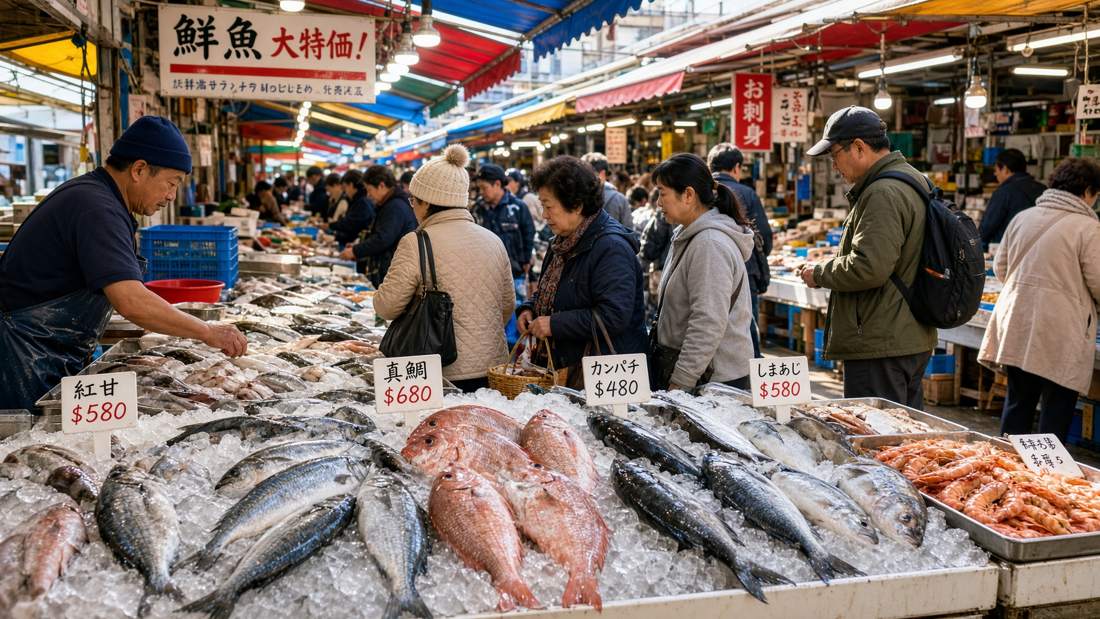
Seafood myths debunked here are the ones shoppers actually repeat at the fish counter, and some of them cost money or affect safety. Each answer below sticks to well-established guidance, and where rules or advice vary, you are pointed to a source to check.
Myth: fresh fish is always better than frozen
Much "fresh" fish at the counter has been previously frozen, and frozen fish is often frozen soon after catch. Well-frozen fish can be as good as, or better than, fish that spent days in transit. Look at the labeling and read fresh versus frozen: nutrition and taste.
Myth: lemon juice or vinegar makes raw fish safe
Acid changes the texture and appearance of fish, as in ceviche, but it does not reliably kill all bacteria or parasites. Rely on proper sourcing, freezing guidance and cooking; see the FDA's page on selecting and serving seafood safely.
Myth: all fish are high in mercury
Mercury varies by species. Shrimp, salmon, pollock, sardines and canned light tuna are among lower-mercury choices, while shark, swordfish, tilefish and king mackerel are high. The FDA and EPA publish a chart; see the FDA advice about eating fish and the EPA's fish and shellfish guide. Most people benefit from eating fish regularly.
Myth: farmed fish is always worse than wild
Quality and sustainability depend on the farm or fishery, not just the label. Some farming systems are well managed and some wild fisheries are overfished. Certification programs such as ASC and MSC and the ratings from Seafood Watch help you decide.
Myth: you should only eat shellfish in months with an "R"
This old rule relates to warm-weather spoilage and spawning, when oysters can be thinner and softer. With modern refrigeration and farming, oysters are sold all year, though quality and safety risks, such as Vibrio, can be higher in warm water. Check local advisories.
Myth: fish is done when it is dry and white all through
That is overcooked. Fish is done when it turns opaque and flakes easily, ideally at 145 F (63 C). Many cooks pull it a little earlier because carryover heat continues cooking.
Myth: a fishy smell means it is fresh
Fresh fish smells clean, mild and of the sea. A strong, sour or ammonia smell signals spoilage. See recognizing freshness in fish.
Myth: you cannot reheat seafood
You can, if it was cooled and stored properly, and reheated to 165 F (74 C) gently. See leftover seafood safe reheating.
Myth: shellfish allergy means fish allergy
They are different allergies, though some people have both. Talk to an allergist; see seafood and allergies.
More seafood myths debunked for shoppers
Myth: bright pink or orange salmon is always wild
Color is not a reliable guide. Farmed salmon get their color from their feed, and wild salmon vary by species. A deep red color does not prove a fish is wild. Read the label, which in the US generally has to say wild or farmed, and use the origin and the seller's information to decide.
Myth: you should rinse raw fish before cooking
Rinsing raw fish, like rinsing raw chicken, can spread bacteria to the sink and counters. Patting fish dry with paper towels is better for cooking, since dry fish browns well. If you do rinse to remove scales or blood, clean the sink and surfaces after. The USDA and FDA provide food handling guidance on their sites.
Myth: thawing on the counter is fine for fish
Counter thawing leaves the outer layer warm while the center is still frozen. The safer routes are thawing in the refrigerator overnight, or in a sealed bag under cold running water for small portions, then cooking promptly. Check the FDA guidance for the current details.
Myths about cooking and eating
- "Fish must be cooked until it is dry." No. Moist, just-opaque fish is better and safe at the right temperature.
- "White wine removes the fishy smell." Acid and herbs can balance flavor, but a strong fishy smell in the raw product means it is old, not that it needs a fix.
- "Canned fish is not real nutrition." Canned salmon, sardines and light tuna are practical, affordable choices; check the FDA/EPA chart for tuna.
- "Frozen shrimp must be bad." Most shrimp sold in the US has been frozen, and shrimp frozen at the source is often better than thawed shrimp displayed for days.
- "Expensive means fresher." Price reflects species, season and handling, not just freshness. Use your senses.
How to tell what is true
- Check whether a claim comes from a government agency, a certifier or a scientific body, not a social media post.
- Look for the date, since advice changes.
- Be wary of "always" and "never" statements about food.
- When safety is involved, follow FDA or USDA guidance and, for health conditions, talk to your doctor.
Why seafood myths debunked today still circulate
Many seafood myths started as sensible rules of thumb before refrigeration and modern supply chains. They survive because they are easy to remember, even when the facts have moved on. Replacing a myth with a source you trust is a small habit that pays off at the counter and in the kitchen.
Questioning old rules is healthy. When you see seafood myths debunked with sources, you spend less, waste less and cook with more confidence.