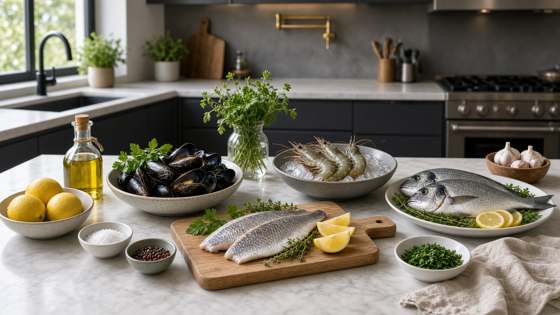
Seasoning seafood well comes down to three levers: salt to bring out flavor, acid to brighten it, and heat (chili, pepper or spice) to add excitement. Seafood is delicate and cooks fast, so the timing of each lever matters as much as the amount.
Salt
Salt fillets just before cooking, or 10 to 15 minutes before for firmer fish, to season without drawing out too much moisture. A rough starting point is 1/2 teaspoon of kosher salt per pound for lightly seasoned fish, and a bit more for a thick steak. Shellfish like clams, mussels and oysters already hold brine, so taste before adding salt to broth. Briefly salting shrimp for 15 minutes in the refrigerator can help them stay plump and juicy. Anchovy, fish sauce, soy sauce and capers are salty seasonings too, so adjust other salt.
Salting tips
- Use kosher or sea salt, which is easier to scatter evenly.
- Finish with flaky salt on cooked fish for crunch.
- Do not salt fish long ahead in a pan sauce, which can overshoot.
Acid
Lemon, lime, vinegar, white wine and tomatoes lift richness and cut any fishy edge. Add acid at the end for fresh flavor, since heat dulls it, or in a short marinade of about 15 minutes. Longer acid marinades make fish firm and opaque, as in ceviche, and can turn it mushy. See citrus in seafood cooking.
Heat
Black pepper, chili flakes, cayenne, paprika, fresh chilies, ginger, horseradish and mustard all add heat. Mild fish carry gentle heat well, while stronger fish like mackerel can handle bold chili.
- Cajun or Creole blends: blackened fish and shrimp.
- Chili and lime: grilled shrimp, fish tacos.
- Ginger and white pepper: steamed fish.
- Harissa or smoked paprika: baked or grilled fish.
Balance with fat and sweetness
Butter, olive oil, coconut milk or cream soften sharp edges. A pinch of sugar or honey in a glaze rounds acid and heat, as in honey glazed salmon.
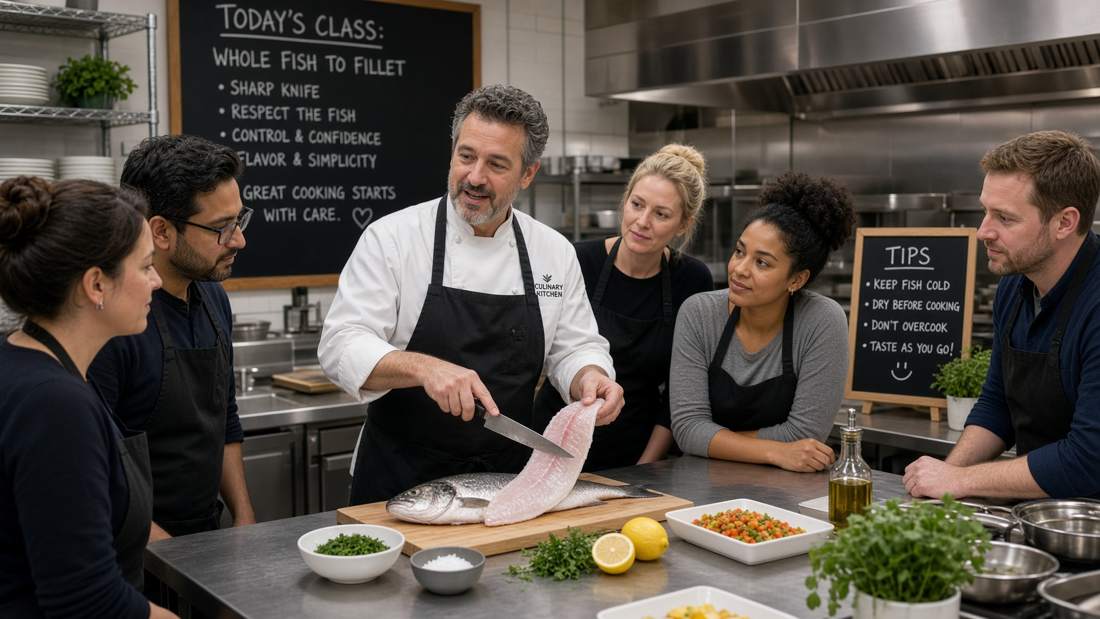
Taste as you go
- Season lightly at the start.
- Cook, then taste.
- Add acid for brightness, salt for depth and heat for lift.
Fresh herbs add the last layer; see herb pairings for fish.
Safety
Marinating in the refrigerator, not on the counter, keeps seafood safe, and marinades that touched raw fish should be thrown away or boiled before use as a sauce. See the FDA safe food handling page, and fish should reach 145 F. Check sustainable species at Seafood Watch.
Seasoning by cooking method
- Grilling and searing: season right before cooking, with oil, so spices do not burn. Sugar-heavy rubs scorch quickly.
- Baking and roasting: a coat of oil or butter helps seasonings stick and protects the fish from drying.
- Poaching and steaming: season the liquid and the fish, and finish with a flavored oil or sauce.
- Frying: season the flour or batter, and add a pinch of salt as soon as the food leaves the oil.
Common mistakes
The most frequent error is under-salting, which leaves fish tasting flat, and the second is adding acid too early, which makes it chalky. Pepper added at the start of high-heat cooking can turn bitter, so grind it on at the end when you can. Taste the raw seasoning in a small spoonful of sauce, not on the fish itself.
Master seasoning seafood with salt, acid and heat and even a simple fillet will taste like it came from a restaurant.