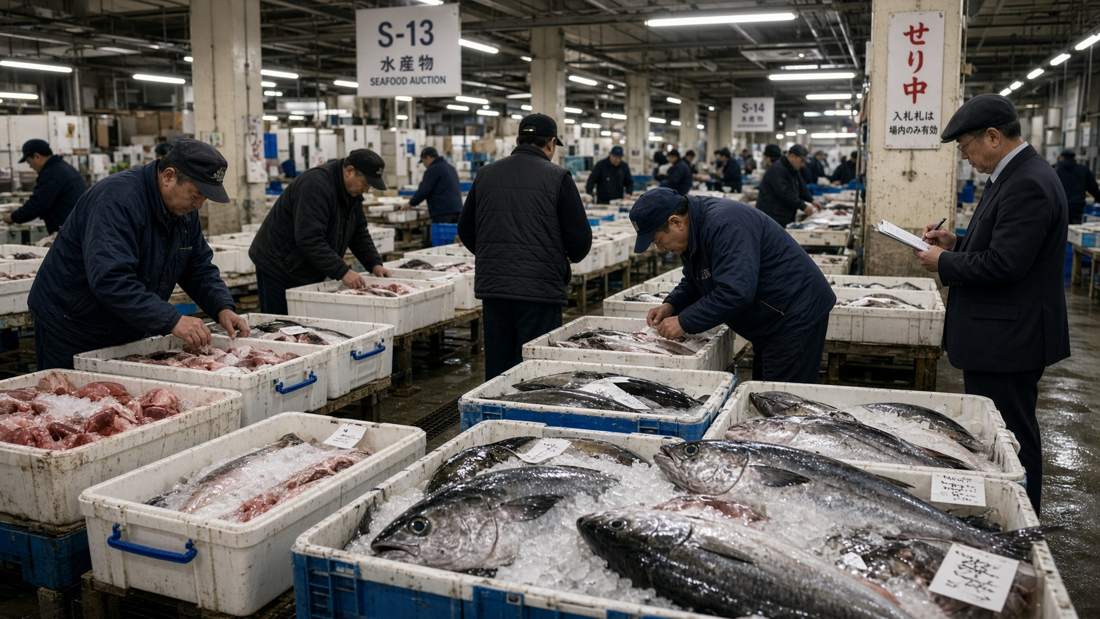
A filleting station does not have to be fancy. Whether you clean a weekend catch or buy whole fish from the market, a little planning about board height, tools and waste keeps the job fast, safe and comfortable.
What a good filleting station needs
- A large, stable cutting board, ideally non-slip, that is easy to clean thoroughly.
- A fillet knife, a chef's knife, tweezers or pliers for pin bones, kitchen shears and a spoon or scaler.
- A bowl of ice or a cold tray for finished fillets.
- A bin or bag for heads, bones and skin, plus another bowl for scraps you want for stock.
- Paper towels, a damp cloth and soap close by.
Layout for a clean filleting station
Arrange the station in a line from dirty to clean. Whole fish goes on one side, the board is in the middle and finished fillets go on the clean side in a bowl set over ice. That way you never reach across raw fish to touch clean fillets. If you work right-handed, whole fish goes on your left and fillets on your right; reverse it if you are left-handed. Keep a bowl for scraps in front so you can sweep waste in as you cut.
Ergonomics: protect your back and wrists
The work surface should be at a height where your elbows are slightly bent and your shoulders relaxed, which for many people is near hip height. If your counter is low, stand on a mat to reduce strain, or raise the board with a sturdy riser. Use a stable stance, a sharp knife and long smooth cuts rather than force. Take breaks if you are doing many fish. Our article on sharpening and maintaining fish knives explains why sharp tools reduce strain.
Keep fish cold while you work
Only take out what you can fillet in a short time and keep the rest in the refrigerator or on ice. Fillets should go on ice or into the fridge as soon as they are cut. The FDA suggests keeping refrigerated food at 40 F or below, as explained in its refrigerator thermometer guidance. For longer storage, see freezing fish techniques for quality retention.
Clean-up that finishes the job
- Dispose of scraps promptly. Fish waste smells fast, so bag it and put it in an outside bin or freezer until trash day.
- Wash boards, knives and the sink in hot soapy water, then sanitize with a diluted unscented household bleach solution if your local guidance recommends it.
- Wipe the counter and anything the raw fish touched.
- Wash your hands and dry the tools before storing.
Where to learn the technique
If you are new to filleting, ask your fishmonger to show you, or watch a trusted instructor video. Species information on FishWatch helps you pick fish that suit your skill level, and flatter or rounder species are easier than some oily or bony ones.
A tidy filleting station turns a messy task into a calm routine. Set up the flow once, keep your fish cold and your knives sharp, and every filleting session will be faster than the last.