Commercial refrigeration options sound like something only shop owners care about, but the type of cooling a seller uses shapes the fish you buy, and the same basics decide how well your home fridge keeps it afterward. A little knowledge helps you choose where to shop and how to store what you bring home.
Commercial refrigeration options you will see in a shop
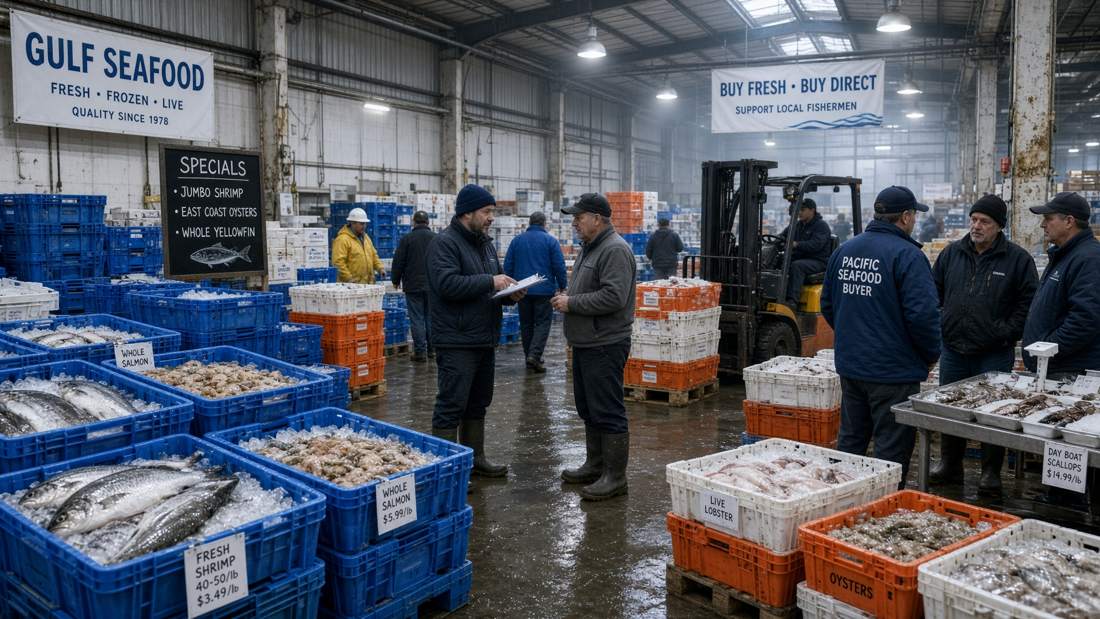
Most seafood sellers use some combination of walk-in coolers for bulk storage, display cases at the counter and freezers for frozen product. Display cases may be open-top, where fish rests on ice, or enclosed, where chilled air keeps fillets cool. Each can work well when maintained. What matters is whether the fish is clearly cold, the equipment is clean and the product is not piled above its load line or left out too long.
Commercial refrigeration options: ice beds versus chilled cases
Ice keeps fish at a steady cold and adds moisture, which suits whole fish and shellfish. Mechanically chilled cases suit packaged or cut product and are easier to keep neat. Neither is automatically better. Look for fish that is kept cold and wet, not warm and dry. See our guide to display ice and ice machines for how shops make and use ice.
Choosing refrigeration for home: fridge and freezer basics
For home, the FDA advises keeping the refrigerator at 40 F or below and the freezer at 0 F, and recommends using a thermometer to check, as explained on its refrigerator thermometer page. Many built-in dials are not accurate, so a cheap appliance thermometer is worth having. Fresh fish should go in the coldest part of the fridge, usually the back of a lower shelf, away from the door.
Do you need a separate freezer?
If you buy fish in bulk, split shares of a catch or order frozen seafood boxes, a chest or upright freezer can pay for itself in convenience. Chest freezers hold cold well when opened because cold air stays in, and uprights are easier to organize. Look for a unit with a good seal, a built-in alarm if your budget allows and an efficient rating. ENERGY STAR lists certified models on its freezers page. Buy the size you will actually fill, since a nearly empty freezer wastes power.
Features worth looking for
- A fridge with a drawer or zone you can keep very cold for fish, or space at the back of a lower shelf.
- Adjustable shelves so you can put fish in a covered tray on the bottom.
- A freezer with baskets or bins that let you sort by date.
- A door alarm or temperature display if you plan to store a lot of seafood.
Using it well
Whatever you buy, cold equipment works only if you use it properly. Do not overpack, so air can circulate. Wrap fish tightly or vacuum seal it and label it with the date. Keep a thermometer in both fridge and freezer. Our article on organizing your fridge for seafood has layout ideas that keep raw fish away from ready-to-eat foods.
Thinking through commercial refrigeration options as a shopper helps you read a shop's cold chain and plan your own, so the freshness you pay for at the counter is still there when the fish reaches the pan.