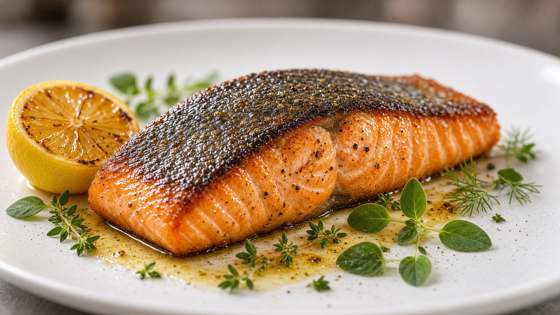
Citrus and salmon are old friends, and ginger gives them a warm backbone. This ginger orange glazed salmon uses a single marinade twice: half flavors the raw fish, the other half is simmered with maple syrup into a glossy glaze you brush on as it bakes. The effort is mostly waiting, and the weeknight payoff is a bright, lightly sweet fillet.
Serves 4. Prep 30 minutes including marinating, cook 20 minutes. Difficulty: easy.
Ingredients
- 4 salmon fillets or steaks, about 6 oz (170 g) each
- 1 cup (240 ml) fresh orange juice
- 1 teaspoon finely grated orange zest
- 1 tablespoon minced or grated fresh ginger
- 1 garlic clove, minced
- 1 teaspoon salt
- 1 1/4 teaspoons black pepper
- Pinch of cinnamon
- 1/4 cup (60 ml) maple syrup or honey
- 1 teaspoon cornstarch mixed with 2 tablespoons water
Method
- Whisk the juice, zest, ginger, garlic, salt, pepper and cinnamon. Pour half over the salmon in a zip bag or dish and marinate in the refrigerator for 30 to 60 minutes, no longer. Reserve the other half in a saucepan.
- Heat the oven to 375 F (190 C) and line a baking dish with parchment or foil.
- Add the maple syrup to the saucepan. Discard the used marinade, since it held raw fish. Simmer the reserved half gently 5 minutes to reduce slightly.
- Stir in the cornstarch slurry and cook 1 minute until thick. Cool a few minutes.
- Bake the salmon about 20 minutes, brushing on glaze two or three times in the last 10 minutes. It is done at 145 F (63 C) when it flakes easily.
- Spoon any remaining glaze over the fish and rice to serve.
Shopping and swaps
Use fresh oranges for the brightest flavor; bottled juice is sweeter and can taste flat. Lemon or blood orange works too. Pick fillets cut from the thickest part so they stay juicy. Salmon is one of the most-studied seafoods, and NOAA FishWatch has profiles for the main Atlantic and Pacific kinds. The consumer guide to choosing sustainable seafood helps you read labels at the counter.
For extra caramelization, finish under the broiler for 1 to 2 minutes, watching closely because sugar scorches fast. Honey makes a stickier glaze than maple, and a splash of soy adds savor.
What goes with it
Plain steamed rice soaks up the extra sauce. Roasted broccoli, snap peas or a shaved fennel salad add crunch. A dry Riesling or an off-dry Chenin Blanc handles the sweetness.
Storing leftovers
Cool and refrigerate within two hours, and eat within three days. Leftover salmon flakes well into salads or fried rice. Reheat gently to avoid drying it out. Learn more about safe handling in our leftover seafood reheating guide.
Troubleshooting
- Glaze too runny: simmer another minute or add a little more slurry.
- Fish tastes mushy: the marinade sat too long. Keep it to an hour.
- Edges burn: bake lower in the oven and glaze later.
- Salmon sticks to the dish: line with parchment or oil lightly.
The FDA advice about eating fish publishes guidance on which fish are best choices for frequent meals, and salmon is one of them.