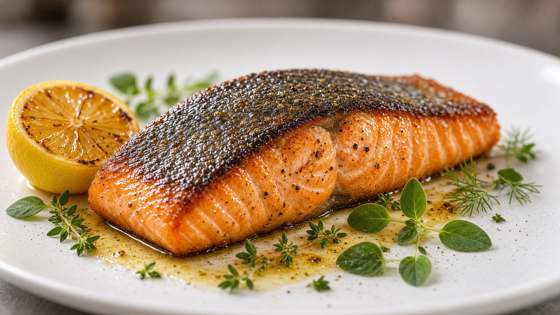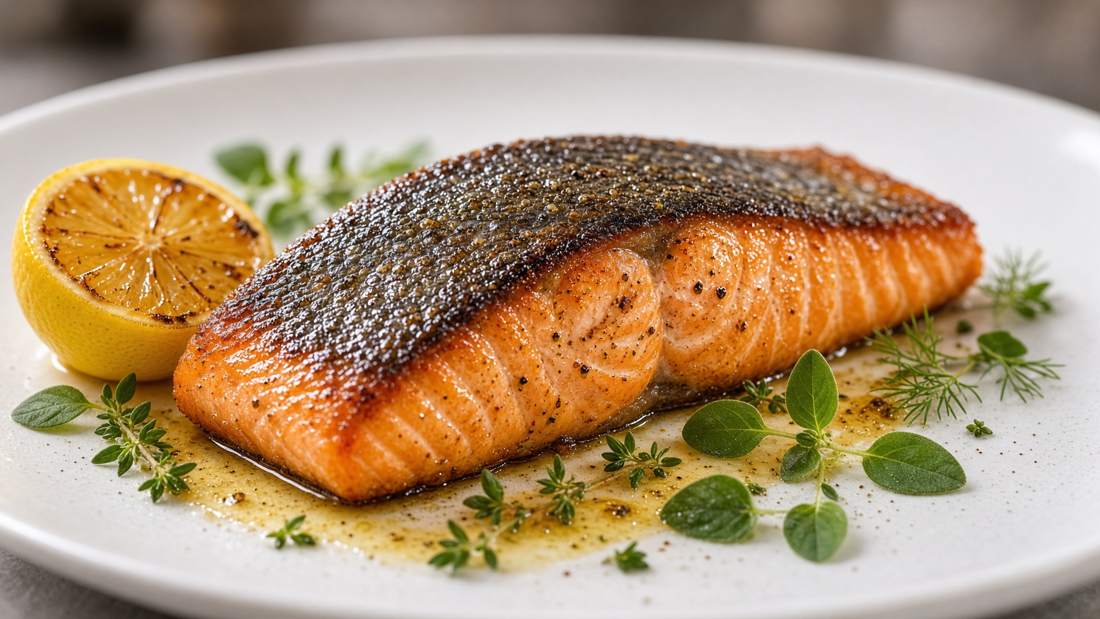
Salmon teriyaki works because the glaze is sweet and salty enough to stand up to rich fish, and it takes only a few pantry ingredients. Make the sauce yourself and you skip the corn syrup and excess salt that bottled versions often carry, and you control exactly how thick and sticky it turns out.
Serves 4. Prep 10 minutes, cook 10 minutes. Difficulty: easy.
Salmon teriyaki ingredients
- 4 salmon fillets, 5 to 6 oz each, skin on or off
- 3 tablespoons soy sauce
- 3 tablespoons mirin (or 3 tablespoons dry sherry plus 1 teaspoon sugar)
- 1 tablespoon sake or water
- 1 tablespoon brown sugar or honey
- 1 teaspoon grated fresh ginger
- 1 small garlic clove, grated
- 1 tablespoon neutral oil for the pan
- Sesame seeds and sliced green onion to finish
Method
- Whisk the soy sauce, mirin, sake, sugar, ginger, and garlic in a small bowl.
- Pat the salmon very dry. Marinate in a third of the sauce for 10 to 15 minutes only; longer firms the surface too much.
- Heat the oil in a nonstick or cast-iron skillet over medium-high heat. Cook skin-side down first for 4 minutes if skin is on, otherwise start with the nicer side down.
- Flip and cook 3 to 4 minutes more. The salmon is done at 145 F (63 C), though many cooks pull it a little earlier for a softer center.
- Pour the remaining sauce into the pan, reduce the heat, and simmer 1 to 2 minutes, spooning it over the fish until syrupy.
- Serve with rice, sprinkled with sesame seeds and green onion.
Oven and broiler salmon teriyaki
For hands-off cooking, bake the glazed fillets at 400 F (200 C) for 10 to 12 minutes, basting once. For a caramelised top, broil 4 to 5 minutes about 6 inches from the element and watch closely, since the sugar scorches fast. Line the pan with foil for easy cleanup.
Buying salmon
Choose fillets of even thickness so they cook evenly. Wild and farmed salmon differ in price, fat, and sustainability; compare at Seafood Watch and look for certifications from the MSC for wild fish. The FDA advice about eating fish lists salmon as a lower-mercury choice, so check the current chart for suggested servings.
Substitutions
- Gluten-free: use tamari
- Less sweet: reduce sugar to 2 teaspoons
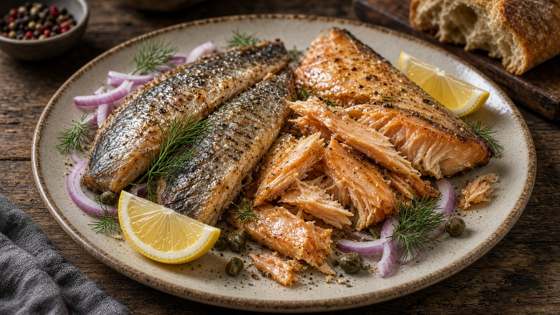
- Other fish: arctic char, trout, or mackerel
- Different style: the Japanese miso-glazed salmon is richer and more savoury
For a sweeter, simpler dinner, compare honey-glazed salmon.
Storage
Cool leftovers quickly and refrigerate for up to 3 days. Reheat gently in a covered pan or microwave at 50 percent power, or flake cold into rice bowls.
Troubleshooting
- Sauce burns: add water, a tablespoon at a time, and lower the heat.
- Salmon sticks: preheat the pan fully and do not flip too early.
- Too salty: use low-sodium soy and extra mirin.
Salmon teriyaki rewards a hot pan and a watchful minute at the end, and the leftover glaze is excellent over steamed broccoli.