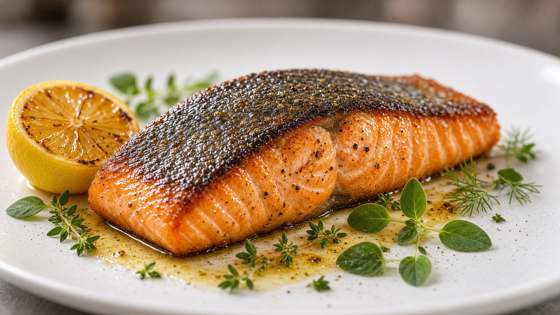
Pan-seared salmon with Dijon maple butter sauce is simple enough for a weeknight and polished enough for guests. The fillets get a brown crust, and the sauce built from white wine, mustard, maple syrup and capers has a sweet, tangy balance that suits rich salmon.
Serves 4. Prep 10 minutes, cook 15 minutes. Difficulty: easy to moderate.
Ingredients for the salmon and sauce
- 4 salmon fillets, 6 to 8 oz (170 to 225 g) each, about 1 inch thick
- Salt and pepper
- 2 to 3 tablespoons canola oil
- 2 cloves garlic, minced
- 5 tablespoons (70 g) butter
- 3/4 cup (180 ml) dry white wine
- 2 tablespoons Dijon mustard
- 2 tablespoons pure maple syrup
- 3 tablespoons capers
- 1/4 teaspoon cracked black pepper and a pinch of salt
Method for pan-seared salmon with Dijon maple butter sauce
- Heat the oven to 200 F (95 C) to keep the fish warm. Pat the fillets dry and season both sides.
- Heat the oil in a large skillet over medium-high heat until it shimmers.
- Lay the fillets in the pan, presentation side down. Sear 3 to 5 minutes without moving. Watch the side of the fillet: when the pale cooked color reaches halfway up, flip.
- Cook the second side for about the same time. Turn only once. Aim for 145 F (63 C) at the thickest part, or a little lower for a softer center if you prefer; the FDA figure is 145 F.
- Move the salmon to a plate in the warm oven.
- Pour off excess oil, leaving the browned bits. Cook the garlic in 1 tablespoon of the butter for 30 seconds, add the wine and simmer until reduced by about half.
- Whisk in the mustard, maple syrup, capers and pepper, then the remaining butter a piece at a time off the heat for a glossy sauce. Spoon over the salmon.
Getting a good sear for pan-seared salmon with Dijon maple butter sauce
Dry fish, a hot pan and patience are the whole secret. Choose fillets of equal thickness so they finish together; thin tail pieces overcook. If your fillets have skin, start skin side down for crispness, as in pan-seared salmon with crispy skin. A heavy stainless or cast iron skillet holds heat better than thin nonstick.
Buying, swaps and serving
Salmon is available wild and farmed, fresh and frozen; frozen fillets are often high quality and thaw well. FishWatch from NOAA Fisheries and Seafood Watch explain the differences and sustainability ratings. For a sweeter finish, compare honey glazed salmon. Arctic char and steelhead trout work in place of salmon. Serve with roasted potatoes, asparagus or rice, and a Chardonnay or Pinot Noir.
Storage
Store leftovers within 2 hours in the refrigerator for up to 3 days. Flake cold salmon into salad or reheat gently to 165 F. The sauce separates when chilled; whisk it with a splash of water as it warms.
Troubleshooting
- Fish sticks to the pan: it needs more time to form a crust; do not force it.
- Sauce too sweet: add a teaspoon of lemon juice.
- Sauce broke: whisk in a spoonful of cold butter or water off the heat.
Master pan-seared salmon with Dijon maple butter sauce and you will have a dinner-party main that takes about 25 minutes.