Sushi-grade tuna at home sounds like a simple shopping trip, but "sushi grade" is not a government standard, so the label alone tells you very little. What matters is how the fish was caught, chilled, frozen and handled, and your own health. This guide explains what to ask, how to keep and slice the fish, and when to cook it instead.
Serves 2 as a starter (8 oz / 225 g tuna). Prep 15 minutes. Difficulty: easy, if the fish is right.
What Sushi-Grade Tuna at Home Really Means
There is no federal definition of "sushi-grade" or "sashimi-grade." Stores use it to mean fish they judge suitable to eat raw. The FDA does set guidance for killing parasites in fish intended for raw eating, based on freezing: the fish is frozen at -4 F (-20 C) or below for 7 days, or at -31 F (-35 C) until solid and held for 15 hours, or frozen solid at -31 F and held at -4 F for 24 hours. Tuna species such as yellowfin and bigeye are commonly exempt from parasite freezing guidance, but handling still matters. Check the current FDA fish and fishery products hazards and controls guidance, and note that most home freezers are not cold enough to do this job; do not rely on yours.
How to Buy It
- Shop at a fishmonger or market with fast turnover, and ask when the tuna arrived and whether it was frozen.
- Look for deep red or pink, translucent, moist flesh with no brown, dull or rainbow-sheen patches and no sour or fishy smell.
- Buy a thick, rectangular loin (saku block) rather than ragged scraps.
- Bring a cooler bag, and get it home and into the coldest part of the refrigerator right away.
Our guides to recognizing freshness in fish and histamine and scombroid poisoning prevention explain the signs of poor handling.
Safe handling for sushi-grade tuna at home
Keep the fish at 32 to 38 F (0 to 3 C) on a tray of ice in the refrigerator, and use it the day you buy it. Wash your hands, and use a clean board and a sanitized sharp knife. Do not leave it out more than 2 hours total.
How to Slice and Serve
- Chill the block until very cold, and wipe it dry.
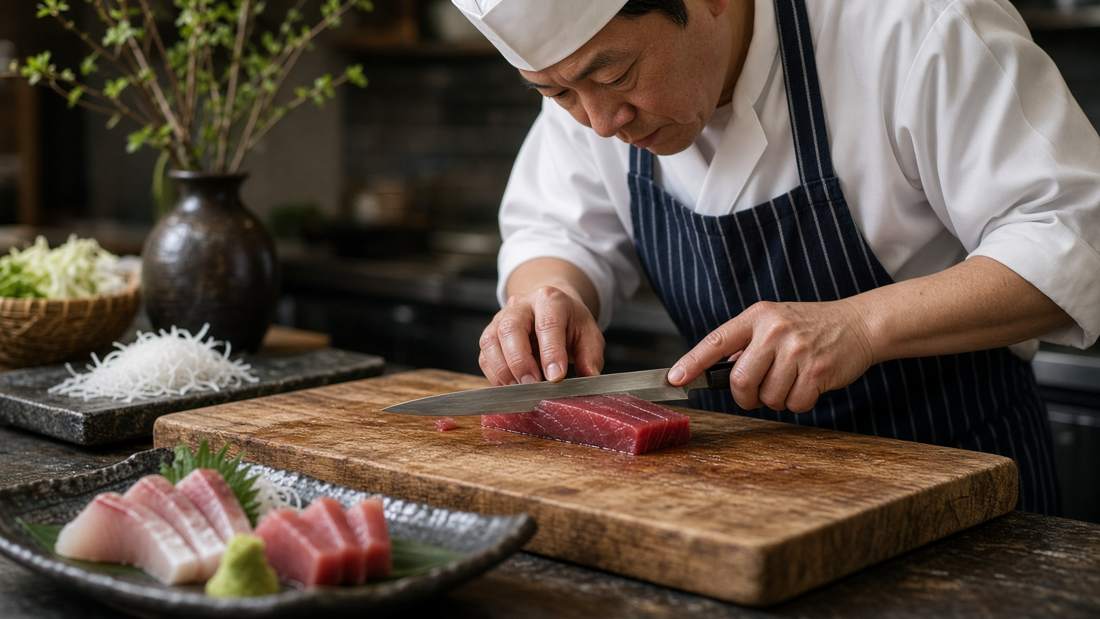
- Using a long, very sharp knife, cut across the grain in one smooth pull, about 1/4 inch (6 mm) thick for sashimi, or 3/4 inch (2 cm) cubes for poke.
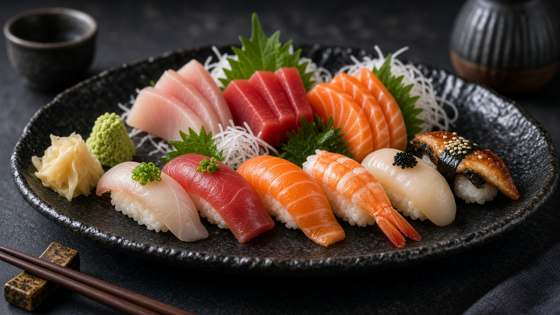
- Serve at once with soy sauce, wasabi, pickled ginger or over seasoned rice, or toss for poke with sesame oil and scallions.
Who Should Avoid Raw Tuna
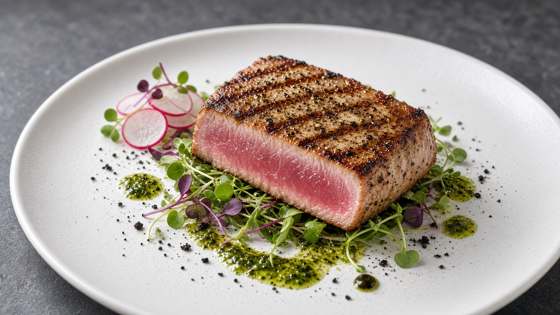
Pregnant women, young children, older adults and people with weakened immune systems should eat fish fully cooked; see the FDA advice about eating fish. Tuna also contains mercury, so limit it per the EPA fish guidance or our mercury in seafood consumer guidance. For a cooked option, see seared rare tuna steaks.
Storage and Troubleshooting
Eat raw tuna the same day; discard leftover raw tuna after 24 hours at the very most. If the fish smells sour, feels slimy or looks brown, do not eat it raw, and cook it only if you are confident of its quality; when unsure, throw it out.
- Mushy slices: knife was dull or the fish too warm.
- Stringy bits: cut across the white tendons.
- Brown surface: oxidation; look for a fresher cut.
Ask the right questions at the counter and sushi-grade tuna at home becomes a safe, special meal.