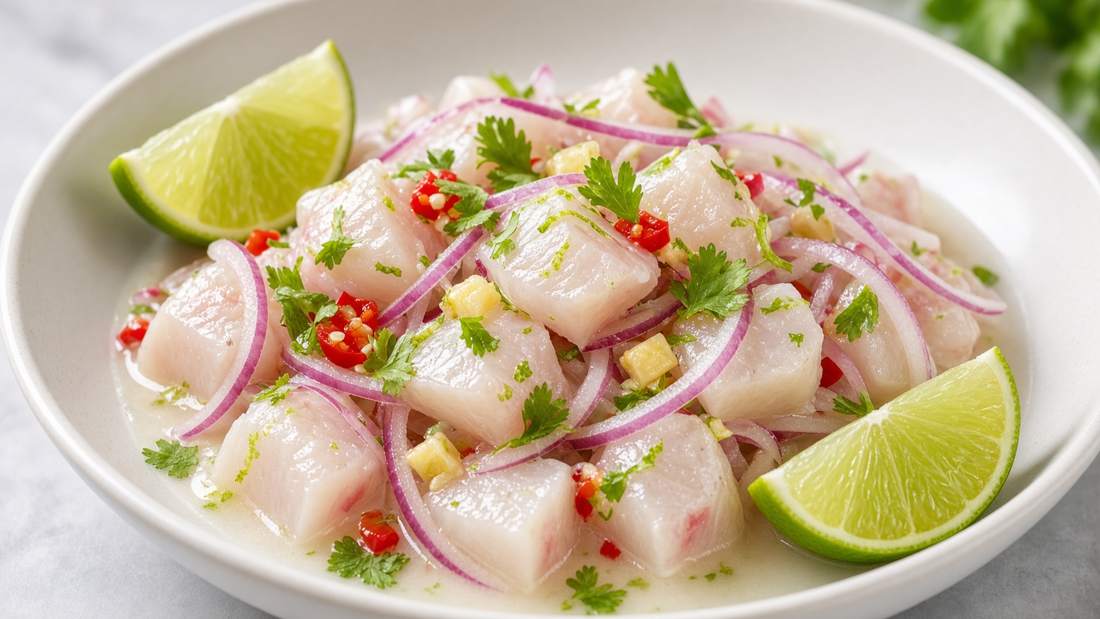
Ceviche for beginners is easier than it sounds: cubes of very fresh raw fish are tossed in lime juice, which turns the surface opaque and firm, then dressed with red onion, chili and cilantro. It is bright, cold and ready in about 30 minutes, ideal for hot days.
Serves 4 as a starter. Prep 20 minutes, marinate 15 to 30 minutes. Difficulty: easy, but buying the fish well matters.
Ingredients for Ceviche for Beginners
- 1 lb (450 g) very fresh, skinless, boneless firm white fish such as halibut, sea bass, snapper or fluke
- 3/4 cup (180 ml) fresh lime juice, about 6 to 8 limes
- 1/2 small red onion, very thinly sliced, rinsed in cold water
- 1 to 2 chilies (jalapeno or aji), seeded and minced
- 1/2 cup chopped cilantro, 3/4 teaspoon salt
- Optional: diced mango or avocado, a little orange juice, cooked sweet potato and corn kernels
Method
- Chill a bowl in the freezer. Cut the fish into 1/2-inch (1.25 cm) cubes with a sharp knife, and keep it on ice.
- Toss the fish with the salt in the cold bowl, then add the lime juice so it is mostly covered.
- Refrigerate 15 to 30 minutes, stirring once. The outside should look opaque while the center stays slightly translucent for a tender texture; longer makes it chalky.
- Add onion, chili and cilantro, taste, and adjust salt or lime.
- Serve immediately in chilled glasses with tostadas, plantain chips or saltines.
Is Ceviche Safe?
Lime juice changes the texture of the fish but does not reliably kill bacteria or parasites, so it is not equivalent to cooking. Federal guidance puts safe cooking at 145 F (63 C). Pregnant women, young children, older adults and people with weakened immune systems should avoid raw or marinated raw fish; see the FDA advice about eating fish. For a safer approach, use fish that the seller says was frozen to meet FDA parasite-destruction guidance (home freezers often do not get cold enough), or briefly poach shrimp or scallops first, as in our scallop ceviche.
Buying fish for ceviche for beginners
Tell the fishmonger you are making ceviche and ask what is freshest that day, and how it was handled and kept cold. Look for translucent flesh with no odor, per recognizing freshness in fish. Keep the fish below 40 F (4 C) until the moment you cut it, as in ideal storage temperatures for fresh fish. Seafood Watch can help with sustainable choices.
Serving and Storage
Eat within an hour or two of mixing. Do not keep leftovers more than a day; texture and quality drop quickly, and anything left at room temperature over 2 hours should be thrown out.
Troubleshooting
- Rubbery or chalky fish: marinated too long; keep to 30 minutes.
- Bitter taste: you squeezed the limes too hard or used bottled juice. Use fresh.
- Watery: drain some juice before serving and drink it as a chaser (leche de tigre).
Start with top-quality fish and a short marinade, and ceviche for beginners will turn out clean, bright and tender.